

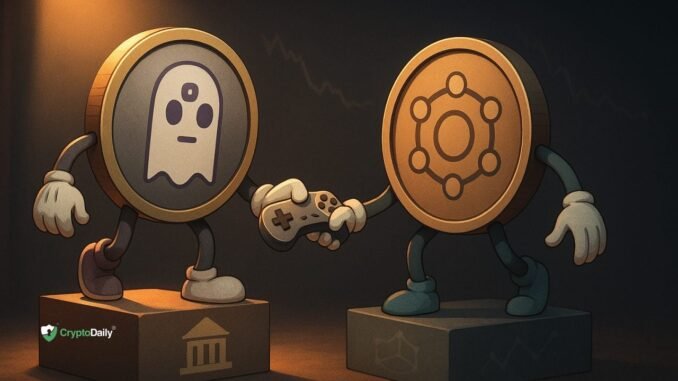

Aavegotchi’s community has long been one of Web3 gaming’s most hands-on, blending on-chain assets with a playful, pixel-art universe. As discussion intensifies around a deeper handover of responsibilities from the original studio to AavegotchiDAO, a bigger question looms: can a live Web3 game truly thrive without a traditional lead studio at the helm?
This article examines the practical realities of a DAO-led game: what a handover includes, which roles must be covered, how a treasury can fund work, and the governance patterns that keep features shipping. We’ll also lay out the red flags that suggest a handover is faltering and the metrics to watch after the transition.
None of this is financial advice. Web3 games and tokens are volatile. Treat the following as educational guidance and apply your own diligence.

| Point | Details |
|---|---|
| What a DAO handover means | Shifts control of budgets, upgrades, and roadmap priorities from a core studio to token-governed processes and service providers. |
| Why Aavegotchi is a test case | It already blends on-chain assets (GHST, NFTs) and community governance, making it a credible candidate to decentralize further. |
| Critical success factors | Clear mandates, stable funding rails, strong product leadership, rigorous security, and a governance model that won’t stall releases. |
| Key risks | Decision paralysis, fragmented clients, smart-contract or bridge risks, IP and brand drift, and unsustainable burn rates. |
| Signals of health post-handover | Consistent shipping cadence, retained players, diversified revenue, active but lightweight governance, and audited upgrade pathways. |
What a DAO Handover Means for a Live Game
A DAO handover isn’t a single switch. It’s a sequence: control of treasuries and multisigs, decision-making over roadmaps and priorities, and ultimately custody of IP and critical infrastructure. For a live game, that extends beyond smart contracts to game clients, art direction, community operations, and publishing.
At minimum, a handover typically addresses these areas:
- Governance scope: What does the DAO actually control—treasury, protocol parameters, content cadence, or brand?
- Operational execution: Who writes code, ships art, runs events, and monitors incidents day-to-day?
- Security and safety: How are upgrades scoped, audited, and timelocked? Who has emergency powers and under what guardrails?
- Commercial model: How is ongoing development financed without a lead studio fronting capital?
- Legal wrapper: What entity, if any, holds trademarks, signs vendor contracts, and manages compliance exposure?
Healthy decentralization doesn’t mean everyone voting on everything. It means the DAO sets intent and constraints while specialized teams deliver within that mandate.
The Aavegotchi Context: Governance Levers and Constraints
Aavegotchi combines on-chain collectibles with a community-governed economy anchored by the GHST token. The project has historically operated across Ethereum and the Polygon ecosystem for activity and gameplay, with a vibrant community of builders and collectors. You can review the project and token basics via the official site and documentation:
Within that framework, a DAO-led future hinges on clarifying levers and constraints:
- Smart contracts: Who controls upgrade keys, proxies, and timelocks? Is governance already enforcing delays and audits before changes?
- Game clients and servers: Which repositories are open-source? Are release pipelines reproducible and documented on GitHub so new teams can ship safely?
- Economy parameters: How are drop schedules, rarity farming, sinks/sources, and marketplace fees adjusted, and through what process?
- Brand and IP: What license covers art and lore? If trademarks are retained, which entity holds them, and how does the DAO grant usage?
- Governance process: Where are proposals posted and executed (e.g., off-chain signaling with on-chain execution)? Tools like Snapshot and Safe help, but mandates must be explicit.
If those components are vague, a handover risks confusion and turf wars. If they’re explicit—ownership, permissions, and expectations—a DAO can coordinate effectively even as contributors rotate.
Operating Without a Lead Studio: Roles the DAO Must Cover
Studios are bundles of functions. Without one, the DAO must reassemble the bundle with vendors, grants, and working groups. A practical map of roles:
- Product direction: Sets a coherent roadmap, kills weak features, and prioritizes the highest-impact work.
- Game design and economy: Balances progression, rarity, emissions/sinks, and live ops rewards to retain players.
- Client engineering: Maintains web, mobile, and/or desktop clients; integrates wallets; ensures performance and accessibility.
- Protocol and contracts: Designs upgrades, coordinates audits, and manages migrations with rollbacks and timelocks.
- Art and narrative: Preserves visual identity and lore while empowering community content in a curated way.
- Data, analytics, and anti-cheat: Tracks health metrics, fights bots, and enforces fair play.
- Community, support, and publishing: Runs seasons, events, help desks, and content calendars.
- Finance and procurement: Budgets treasury, runs RFPs, negotiates milestones, and monitors delivery.
Pro tip: Assign clear mandates with single-threaded owners (an accountable workstream lead) even if execution is distributed. Mandate without ownership invites drift.
Funding and Procurement After the Studio Steps Back
A DAO can fund game development through a mix of recurring budgets, competitive grants, and milestone-based contracts. The right blend depends on runway and volatility tolerance.
Common revenue and funding rails
- Treasury allocations: Regular workstream budgets (quarterly/biannual) with KPI gates and clawbacks.
- Marketplace fees and royalties: Subject to market conditions and venue fragmentation; stress-test for bear markets.
- Primary sales or season passes: Caps overuse; avoid inflationary flood that dilutes existing holders.
- Grants and partnerships: Ecosystem grants (e.g., L2 incentives) or co-marketing with launchpads and infra providers.
- Bounties and hackathons: Efficient for discrete features; less suited for core roadmap ownership.
Procurement playbook
- Define scope: Problem framing, success metrics, dependencies, and non-negotiables (security, performance).
- RFP and vendor shortlists: Publish budgets and evaluation criteria, require public repos or credible portfolios.
- Milestone contracts: Pay against shipped code/content, audits, and live metrics where applicable.
- Service-level expectations: Uptime, response times, and maintenance windows for critical components.
- Post-mortems and renewals: Tie renewals to retrospectives and delivery quality, not just popularity.
| Operating Model | Strengths | Trade-offs | Best Used When |
|---|---|---|---|
| Core vendor (ex-studio) on retainer | Continuity, fast ramp, preserves art direction and tech context | Vendor lock-in risk, pricing power shifts to supplier, may slow decentralization | Short/medium term to avoid service gaps while DAO matures |
| Multi-vendor by workstream | Specialization, price competition, resilience if one team exits | Requires strong product leadership and integration discipline | When governance and PMO are capable and budgets are clear |
| Volunteer-first with bounties | Low fixed costs, community ownership, high surface for experimentation | Inconsistent velocity, fragile accountability, risk of abandoned features | For non-critical features and community tools |
Technical Foundations: Clients, Contracts, and Upgrades
DAO-led games live or die on technical clarity. Fragmented clients and opaque upgrade paths frustrate players and terrify auditors.
Clients: one or many?
- Single “core” client: Faster iteration and cohesive UX; must be open-source or at least reproducible so vendors can maintain it.
- Multi-client approach: Encourages forks and mods; requires stable APIs, content standards, and compatibility testing to avoid fragmentation.
Smart-contract governance
- Upgrade discipline: Use timelocks, change logs, and release candidates on testnets before mainnet deployment.
- Audits and bounties: Budget recurring audits; run continuous bug bounties via platforms like Immunefi.
- Emergency response: Pre-authorized multisig with narrow, time-bound powers and mandatory post-incident reports.
- Bridge and chain risk: If gameplay spans chains, document dependencies, replay protection, and failure modes.
Whatever path Aavegotchi chooses—core client plus supported mods, or a multi-client ecosystem—the DAO should publish a technical constitution: versioning, standards, and minimum security requirements for any code that touches player assets.
Governance That Keeps Shipping, Not Stalling
Games need tempo. Governance must empower workstream leads to ship within a mandate, not seek a vote on every UI tweak.
Patterns that work
- Delegate and council layers: Tokenholders elect delegates and domain councils (e.g., Game Economy, Contracts, Art) with rotating terms.
- Budget-first, scope-later: Voters approve spending caps and KPIs; leads decide tactics inside those caps.
- Fast paths for low-risk changes: Predefined risk tiers route small tweaks to expedited review, not a full DAO vote.
- Public roadmaps and post-mortems: Trust grows when expectations and outcomes are transparent.
Mistakes to avoid
- Everything-on-chain voting: Burns time, invites brigading, and delays patches.
- Unlimited mandates: Leads without KPIs or term limits drift and accumulate power.
- Opaque multisigs: If signers and policies aren’t public, every incident becomes a crisis of confidence.
- Free-for-all art direction: Brand incoherence confuses players and weakens external partnerships.
Security, Compliance, and IP: Non-Negotiables
DAO-led or not, players expect safety and continuity. A handover should harden, not soften, the project’s risk posture.
- Admin key decentralization: Migrate critical permissions to timelocked safes with distributed signers and published policies.
- Incident drills: Run tabletop exercises for oracle failures, bridge issues, or exploit response. Publish the runbooks.
- Data and privacy: If off-chain services store user data (support tickets, emails), specify retention, access, and breach notifications.
- IP custody: Clarify trademark ownership and licensing. If art is permissively licensed, set brand usage rules to prevent scams.
- Legal wrapper: Many DAOs use foundations or associations to sign contracts, employ staff, and limit liability. Seek specialist counsel.
Risk reminder: Smart-contract, market, governance, and regulatory risks can all impact GHST and in-game assets. Never commit funds you cannot afford to lose.
Post-Handover Health Metrics and Early Warning Signals
What gets measured gets managed. Define a balanced scorecard that blends on-chain and in-game metrics.
Engagement and retention
- Daily/Monthly active unique wallets (DAU/MAU) and cohort retention (D1, D7, D30).
- Session length and return frequency for core loops (e.g., events, farming, crafting).
- New-player activation: Wallet connect to first meaningful action conversion rate.
Economy and revenue
- Primary sales and cosmetic/battle pass sell-through; watch for overreliance on one-off mints.
- Secondary volume and fee capture across major venues; track royalty leakage.
- Balance of sinks vs. sources: Inflation/deflation of key in-game resources.
Governance and delivery
- Shipping cadence: Releases per quarter, average lead time from proposal to live.
- Participation: Voter turnout, delegates’ activity, proposal throughput, and abandoned proposals.
- Security posture: Audit coverage, bounty submissions, and time-to-patch for criticals.
Early warnings include stalled releases, sharp drops in retention post-update, treasury outflows without measurable impact, and governance sessions consumed by procedural disputes rather than outcomes.
Can a Web3 Game Survive Without a Lead Studio?
Yes—if the DAO replaces the studio’s invisible glue with explicit mandates and reliable funding. The essential ingredients are:
- A credible product authority model (delegates/councils) to keep decisions moving.
- Technical standards for clients and contracts so multiple contributors can ship safely.
- Security-first processes with audits, timelocks, and incident response.
- Sustainable economics that don’t rely on perpetual primary sales.
- Clear IP and brand stewardship to prevent fragmentation and scams.
Conversely, a DAO that tries to crowdsource every decision, underfunds audits, or treats shipping as a popularity contest will struggle. Players reward fun, fairness, and continuity—regardless of who signs the paycheck.
For ongoing coverage of DAO governance experiments and Web3 game economies, you can follow reporting at Crypto Daily.
Frequently Asked Questions
What exactly would AavegotchiDAO “take over” in a handover?
In practice, a DAO-led model could include treasury control, roadmap prioritization, upgrade approval, and appointing vendors or workstream leads. The specifics depend on how permissions over smart contracts, brand/IP, and client repositories are assigned and documented.
Does moving to a DAO-led model mean the original studio disappears?
Not necessarily. Many projects keep the original studio as a core vendor under a DAO mandate and budget, especially during a transition. Over time, responsibilities can be diversified across multiple service providers.
How can a DAO prevent decision paralysis?
Use elected delegates or domain councils with time-bound mandates and pre-approved budgets. Route low-risk changes through fast paths, and reserve full token votes for high-impact or irreversible decisions.
What are the biggest security risks in a handover?
Key risks include mismanaged admin permissions, unaudited upgrades, bridge dependencies, and slow incident response. Mitigate with timelocked multisigs, recurring audits, public runbooks, and continuously funded bug bounties.
Can community developers safely build new Aavegotchi clients or tools?
Yes, if the DAO publishes stable APIs, versioning, and content standards, and if contributors follow security guidelines. Open repositories, reproducible builds, and compatibility testing help maintain a coherent experience.
How should the DAO finance long-term development?
Blend recurring workstream budgets with milestone-based vendor contracts. Diversify revenue beyond primary sales—e.g., cosmetics, passes, partnerships—and maintain a treasury runway target with scenario planning.
What metrics show the handover is working?
Consistent releases, stable or improving retention, diversified revenue, timely security updates, and active but streamlined governance participation all suggest healthy decentralization.
Disclaimer: This article is provided for informational purposes only. It is not offered or intended to be used as legal, tax, investment, financial, or other advice.





Be the first to comment