



What to know:
- China’s BIS property index hit a 20-year low of 86.79 in Q4 2025, down 21.5% from its 2021 peak.
- 85% of post-2021 gains are erased, with falling sales, vacant homes, and major developer defaults pressuring banks.
- As real estate falters, analysts track capital flows to bitcoin and crypto, highlighting demand for diversification and regulatory clarity.

Newly published data from the Bank for International Settlements underscores the ongoing correction that is draining household wealth and investor confidence in conventional markets. China has experienced the sharpest drop in real house prices since 2005 based on recorded values, and it demonstrates the continued sad state of the country’s housing market.
BIS Data Signals Historic Housing Decline
The Bank of International Settlements (BIS) real residential property price index fell to 86.79 in quarter four 2025, from 88.85 in quarter three 2025. The index has consistently declined since reaching a high of 112.

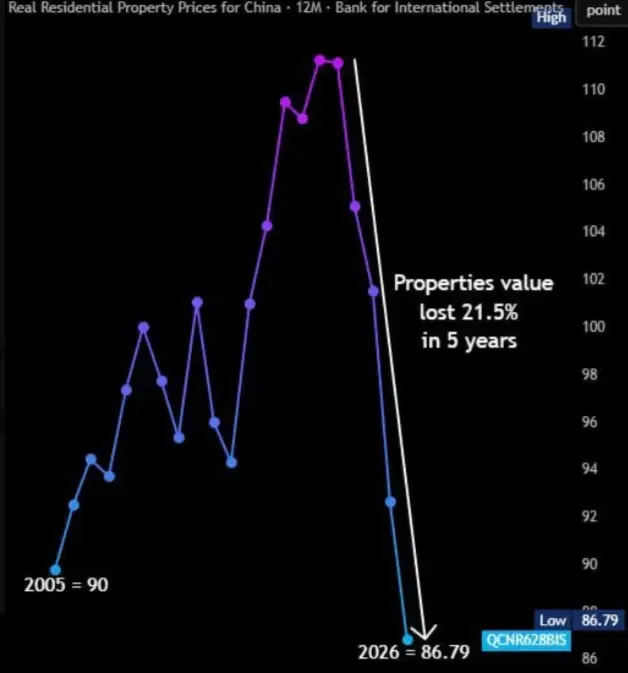
99 back in September 2021, a fall of 21.5% and the lowest index figure in 20 years signals longer-term downward momentum. The decline is consistent with macroeconomic headwinds and the loss of demand in the property market.

Also Read: China’s Xpeng Flying Cars Expected to Enter Large-Scale Production in 2027
Household Wealth and Developer Defaults Under Pressure
Real estate has historically been the main store of value for hundreds of millions of Chinese households; around 85% of the gains in prices supporting that wealth since 2021 have now been erased. Property markets continue to decline across the board, with falling sales and prices nationally.
There is a glut of property, with thousands of housing units vacant and unsold. The defaulting of several of China’s biggest private property developers, owing immense amounts of debt, is cause for systemic concern in banking and credit markets.
Also Read: Circle CEO Signals Yuan Stablecoin Push as China Tightens Regulation
Property Decline Highlights Need for Transparency
As the long downturn in Chinese property continues, analysts are turning to other asset classes, such as bitcoin and the wider crypto market, to see if there are any spillovers. As wealth preservation methods weaken, we are watching capital flows, authorities, and trends in blockchain usage. Persisting drops in China’s real estate market demonstrate how vulnerable concentrated household balance sheets are.
The numbers underscore the case for diversification, transparency, and regulatory certainty in both the traditional financial markets and the nascent digital asset space as investors adjust to new profiles of risk. Property still makes up a major part of the Chinese economy, but the scale of the correction points to difficulties around liquidity, leverage, and investor confidence.
Also Read: European Union Unleashes New Sanctions to Cripple Russia’s War Machine and Crypto Workarounds



Be the first to comment