

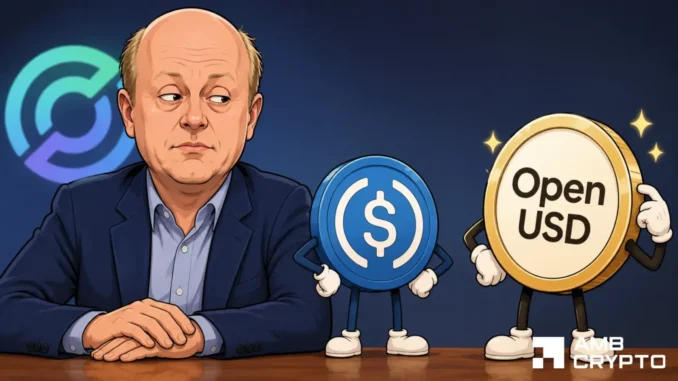

Circle CEO Jeremy Allaire has defended USDC’s competitive position following the launch of the Open USD consortium. He argues that stablecoin success depends on long-term network effects rather than fee structures or shared governance models.
In a lengthy post on X, Allaire welcomed Open USD into the stablecoin ecosystem but said Circle’s nearly decade-long investment in liquidity, regulatory approvals, and developer infrastructure has created advantages that would be difficult for new entrants to replicate.
Allaire says stablecoins compete on network effects
Responding to questions from investors about Open USD, Allaire said stablecoin networks function more like internet platforms than traditional financial products, with their value increasing as more developers, businesses, and financial institutions integrate them.
He argued that USDC’s ecosystem has grown through thousands of integrations, expanding liquidity and interoperability while reinforcing demand for the stablecoin.

Allaire added that Circle has strengthened those network effects through infrastructure such as Cross-Chain Transfer Protocol [CCTP], Gateway, and other interoperability tools. Also, years of investment in global banking relationships, regulatory licensing, and reserve management.
Citing data from blockchain analytics firm Artemis, he said USDC processed nearly $30 trillion in on-chain transactions during the first quarter of 2026. This accounted for roughly 80% of all dollar-denominated stablecoin transaction volume, while USDT accounted for the remaining 20%.
According to Allaire, all other dollar stablecoins combined accounted for less than 0.5% of transaction activity.
Circle CEO challenges consortium model
Much of Allaire’s post addressed Open USD’s core value propositions, including fee-free minting and redemption, shared reserve economics, and consortium governance.
He argued that redemption policies are shaped by broader market realities rather than headline fee structures. He said Circle already shares the majority of its income with distribution partners while retaining sufficient revenue to continue investing in infrastructure.
Allaire was particularly skeptical of large consortium-led governance models. He argues that organizations composed of numerous large companies often struggle to innovate due to competing incentives and slower decision-making.
“We actually tried this in the early days of USDC,” he wrote, adding that Circle found smaller strategic partnerships more effective than broad industry consortia.
The Circle CEO also addressed speculation surrounding Coinbase’s participation in the Open USD initiative. He says the companies’ partnership around USDC “remains as strong as ever”.
He also expresses confidence that many Open USD founding members would continue using USDC alongside the new network.
Despite his criticism of the consortium model, Allaire concluded by welcoming Open USD to the broader stablecoin ecosystem. He reiterated Circle’s commitment to supporting multiple issuers through its expanding infrastructure products.
Final Summary
- Circle CEO Jeremy Allaire said USDC’s decade-long investment in liquidity, regulation, and developer infrastructure gives it network advantages.
- In response to Open USD’s launch, Allaire challenged consortium governance and shared-economy models while welcoming the new stablecoin initiative.




Be the first to comment