



What to know:
- CLARITY Act faces growing debate over whether stablecoin rewards could pull deposits away from community banks.
- Senator Cynthia Lummis says rising bank deposits and Section 404 show the bill would impose strict limits on stablecoin yield.
- Supporters argue stablecoins could help smaller banks access cheaper payment infrastructure and develop new financial products.
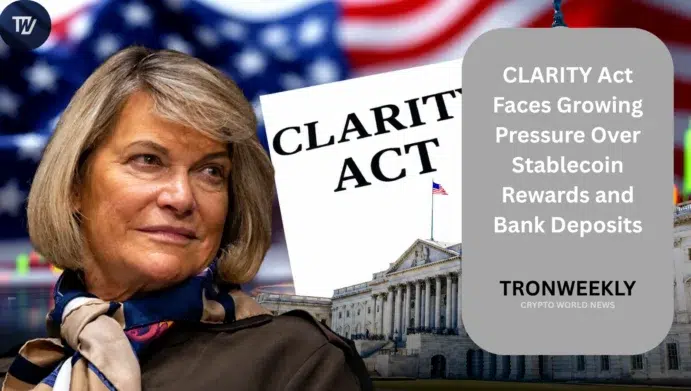
CLARITY Act controversy has reached its peak as lawmakers, community banks, and heads of the cryptocurrency industry clash on whether stablecoin incentives could take money away from small US banks. The proponents of stablecoins insist that the available data about banking activities proves that no such process takes place.
However, Senator Cynthia Lummis disagreed with those community banks who were raising fears about the impact of stablecoins.
CLARITY Act Faces Debate Over Stablecoin Rewards
Lummis highlighted the Bank of America numbers on household deposits rising among various income groups. Lummis further mentioned FDIC numbers that domestic deposits had risen for the seventh successive quarter. Community banks have seen roughly 5% growth in deposits, and according to Lummis, this was better than the rest of the banking sector.

In addition to the above-mentioned, she emphasized Section 404 of the CLARITY Act, which would set strict limitations on stablecoin yield. Under this section, stablecoin issuers would not be allowed to provide interest-yielding rewards and market their coins as deposits in banks or FDIC-insured accounts.
According to Senator Lummis, Section 404 would not create a loophole for stablecoin yield but, on the contrary, it would set stricter regulations for stablecoin issuers than the current regulations for some financial instruments.
Also Read | Securitize Drives Avalanche RWA Market Near $2 Billion
Bank Consolidation Remains a Bigger Concern
Lummis also questioned the claim that stablecoins are primarily responsible for the disappearance of community banks.
As per statistics quoted by her, about 2,000 community banks have vanished over the last ten years, but only 62 new banks have been established. It has been reported that regional banks have been primary purchasers of small banks.
She also noted that the Banking Committee had already added nine provisions addressing community bank issues to housing legislation. The provisions would allow banks to retain their deposits, but the CLARITY Act would impose stricter rules on stablecoin rewards.
Stablecoins Could Benefit Smaller Banks
Analyst James E. Thorne further pointed out that the records of banks do not provide any evidence of loss of deposits due to rewards offered by the stablecoins.
There has been an increase in U.S. commercial bank deposits from around $12 trillion to $19.4 trillion. This loss, witnessed in 2022 and 2023, happened amid higher interest rates and pressure on the banking sector.
However, Faryar Shirzad claimed that despite the fact that community banks require regulatory relief and financial instruments, they should not limit the use of incentives that stablecoins offer.
According to Faryar Shirzad, stablecoins can present opportunities for small banks to access cheaper payment infrastructure and launch new products for their clients.
September Deadline Puts CLARITY Act in Focus
However, Vincent Van Code made another observation in his post on how overly stringent crypto regulations in the United States may drive crypto activities to other crypto-accepting regions like Europe and Japan, where people will be able to benefit from stablecoin and yield-bearing products.
The CLARITY Act is facing the challenge of reconciling issues related to community banks and the increasing importance of stablecoins in the payments and digital financial world.
As the deadline for the CLARITY Act approaches, on September 15, legislators will have to reconcile their differences regarding stablecoin incentives without making regulations that may make crypto firms, customers, or capital flee to other countries.
Also Read | ONDO Price Targets $0.375 as Ondo Finance Expands Tokenized Stocks Access



Be the first to comment