



The CLARITY Act odds jumped to 43% on Kalshi hours after Trump agreed to new ethics rules, and Bitcoin bounced off support the same night before Tuesday.
Bitcoin had been sitting in almost the exact same spot for the better part of three weeks, going nowhere in particular, when it suddenly wasn’t. Sometime Sunday into Monday, price ripped off a support shelf near $76,400 and printed a green candle that caught a few overnight charts off guard.
The move itself wasn’t dramatic. Something like two percent, which by Bitcoin’s own standards barely counts. What actually got people’s attention was the timing of it, not the size.
A Fight Nobody Expected to End
Tuesday brings a Senate cloture vote on the Digital Asset Market Clarity Act, the crypto market structure bill that’s spent over a year stuck on basically one question. How much crypto money is Donald Trump personally allowed to keep making while he’s still in the White House. And sometime late Sunday, that exact question apparently moved.

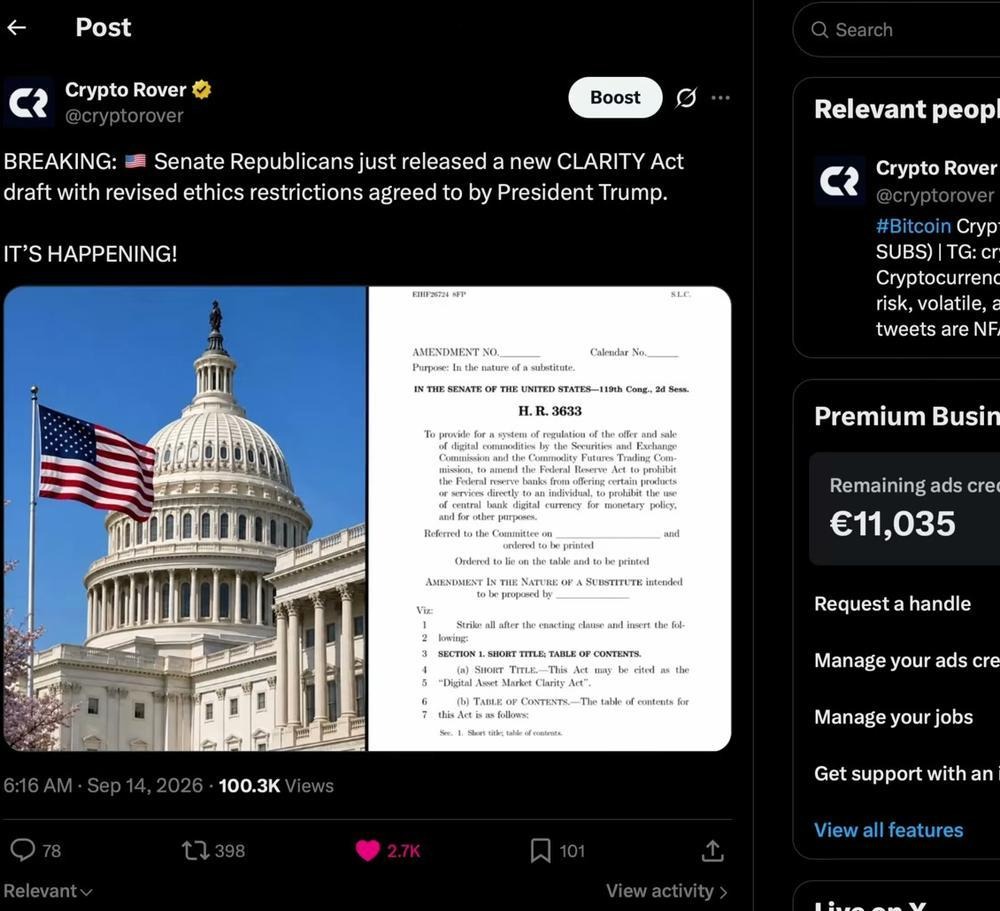
Source: Crypto Rover on X
Crypto YouTuber Crypto Rover flagged it first for a lot of traders, a Capitol dome photo paired with a scanned page of the actual bill text, captioned with the kind of enthusiasm that either means something real happened or means absolutely nothing. This time it was the former.
What Actually Changed In the Text
Senator Cynthia Lummis, alongside Chairmen John Boozman and Tim Scott, put out what they’re calling the final draft on Monday, September 14. A year of negotiating, 126 separate changes made at Democrats’ request, all landing two days before the floor vote.

Source: Senator Cynthia Lummis, official press release
Buried in there is the actual headline. The new ethics language reflects, in Lummis’s own words, substantially all of a proposal Senators Thom Tillis and Ruben Gallego had been pushing on the White House since July. State attorneys general get a real enforcement role. Officials and their spouses have to divest significant crypto holdings or park them in a blind trust. Trump apparently signed off on it.
There’s a second, quieter provision in the same draft that’s easy to miss. The Treasury Secretary gets new authority to step in if a payment stablecoin starts triggering deposit flight out of community banks, which regulators elsewhere have been circling too. Thailand’s own SEC just floated a similar idea, a $151,000 daily cap on stablecoin transfers, and separately, a cross-chain protocol called Chainflip is still cleaning up after a $736,000 TRON USDT exploit of its own this week. Stablecoins, in other words, are getting poked at from every direction right now, not just Washington.
Two Prediction Markets, Two Different Stories
Here’s where it gets a little messy, in a way that’s kind of the whole point. Kalshi’s own contract on whether the Clarity Act becomes law before January 1 jumped to 43 percent, up something like eighteen points from where it sat just a day earlier.

Source: Kalshi, “Will the Clarity Act become law?”
Polymarket’s version of essentially the same bet, resolving on basically the same date, sits at 31 percent as of writing. Down more than a third over the past month, actually, even after Monday’s news. Two crowds, same underlying event, and they don’t agree with each other. Prediction markets do this more often than people assume.
The Levels Traders Are Actually Watching
None of this is investment advice, worth saying plainly before going further. Rover’s own read on the chart, laid out in a video posted early Monday, leans on a fairly specific set of buy and sell walls sitting just above and below the current price.
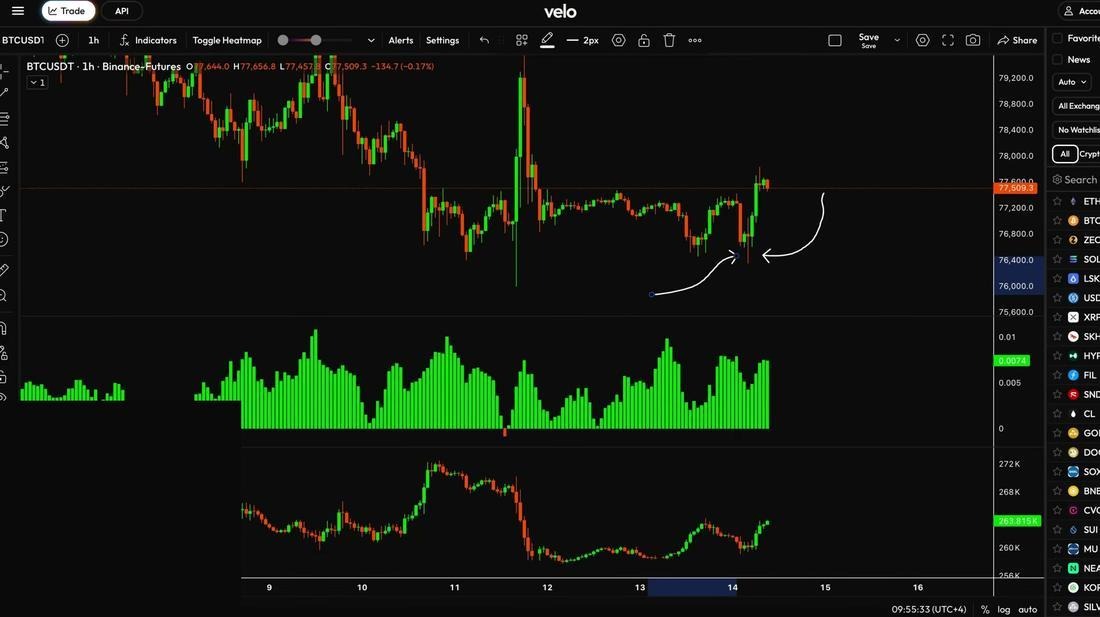
Source: BTC/USDT, 1H, Binance Futures, via Velo
On the downside, he’s watching roughly $76,000, $75,000, $72,000 and $70,000, each one lining up with a meaningful buy-order cluster. Above price, resistance stacks up faster. Around $81,000 and $82,000 sit two of the heavier sell walls he’s tracking, and clearing that whole zone is what he thinks actually opens the door toward $85,000 and, not coincidentally, the 50-week moving average that’s capped every real bounce since the bear market started.
Derivatives data leans the same direction, for what it’s worth. CoinGlass’s own liquidation map shows cumulative long liquidation leverage sliding while short liquidation leverage keeps climbing, exactly the kind of setup that tends to precede a squeeze in one direction or the other.
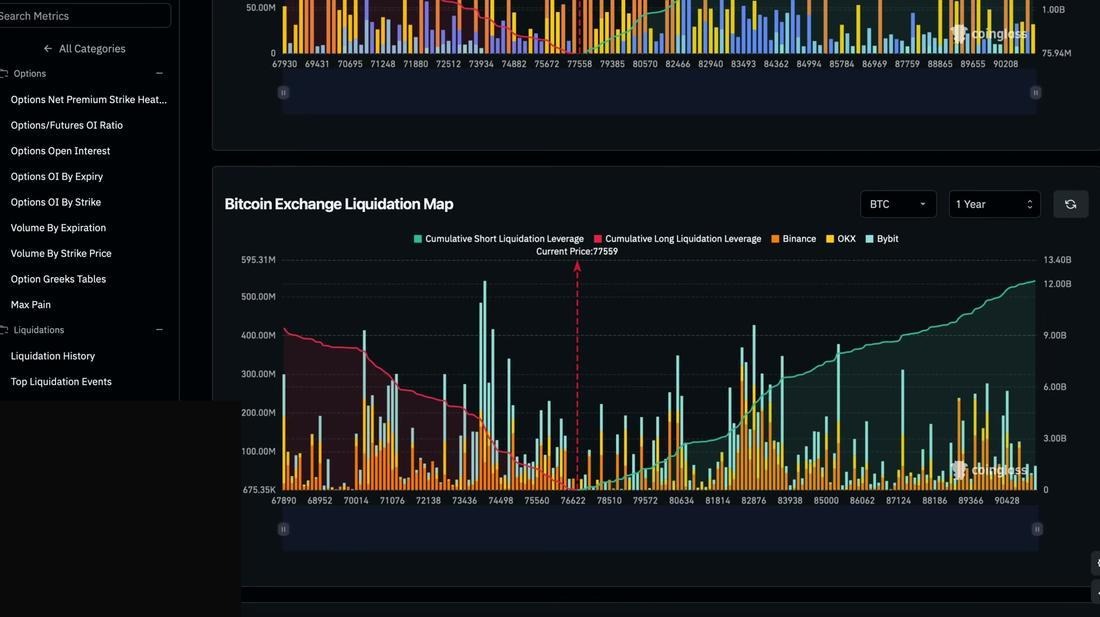
Source: Bitcoin Exchange Liquidation Map, CoinGlass
Rover’s own trade, for context, is already long from what he calls the actual bear market low. He’s said he’d add near that $70,000 area with three to five times leverage if price gets there. Volatility, meanwhile, has been sitting near a 24-day low, and stretches like that have historically preceded a bigger move rather than more of the same drifting. More ongoing coverage sits on LiveBitcoinNews’ Bitcoin hub and its price analysis section, for anyone tracking this past today.
Ether Is Doing Something Different
While Bitcoin’s been stuck in a range, Ether’s been quietly coiling in what looks more like an uptrend on the same weekly timeframe. Rover argues most people are still underexposed to it after last cycle’s underperformance, and points to the ETH/BTC pair carving out a higher-low structure that, in his view, marks a multi-year reaccumulation phase rather than a dead trade.
Whether that plays out the way he thinks probably depends on the same thing everything else in this market is waiting on right now. Tuesday’s vote, and whatever Bitcoin decides to do in the hours right before it.



Be the first to comment