



What to know:
- Renewed U.S. strikes on Iran revive supply fears across vital Middle East oil routes.
- U.S. crude inventories fall 7.2 million barrels, reaching their lowest level since 2018.
- OPEC+ plans an August supply increase as Brent holds above $90 and WTI stays near $85.
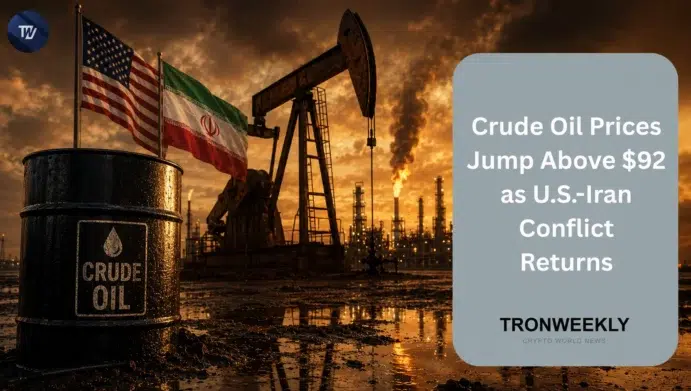
Crude oil prices rose on Thursday, July 30, 2026, after renewed U.S. strikes on Iran raised supply concerns. Brent traded above $92 a barrel. WTI held near $85 as falling American inventories supported the market.
Brent futures rose $1.48, or 1.6%, to $92.22. West Texas Intermediate gained 43 cents, or 0.5%, to $84.89. Both benchmarks had settled about 7% to 8% higher on Wednesday.
Also Read: South Korea Reaffirms 2027 Crypto Tax Plan as Police Uncover $19M XRP Scam

Why Crude Oil Prices Rose After U.S. Strikes on Iran
The United States resumed attacks on Iran after a pause. The escalation restored part of the geopolitical risk premium in crude oil prices. Traders apply that premium when conflict threatens energy production or transport routes.
U.S. stockpile data gave the market another source of support. Crude inventories fell by 7.2 million barrels to 404.5 million barrels in the week ended July 24. The Energy Information Administration reported the figures.
The draw was larger than the 1.3 million-barrel decline expected by analysts. It reduced commercial crude stocks to their lowest level since 2018. The fall gave crude oil prices further market support during the renewed conflict.
Shipping data showed that key regional waterways remained operational. MarineTraffic said 53 confirmed vessel crossings through the Strait of Hormuz and Bab el-Mandeb on July 28. The total included 12 Hormuz transits and 41 Bab el-Mandeb crossings.
How Shipping Risks Shape Brent’s $90 Rebound
Traffic served as a buffer against worries about an imminent supply stoppage. Nonetheless, some of the odd routes and lack of visibility for vessels illustrated that risks were still high. The factors kept exporters wary of potential disruptions within the main export routes.
According to Reuters, a Qatari LNG tanker passed through the Iran-declared route through Hormuz with the approval of Iranian officials. On its part, the Caspian Pipeline Consortium ceased oil shipments following an attack by drones against a tanker.
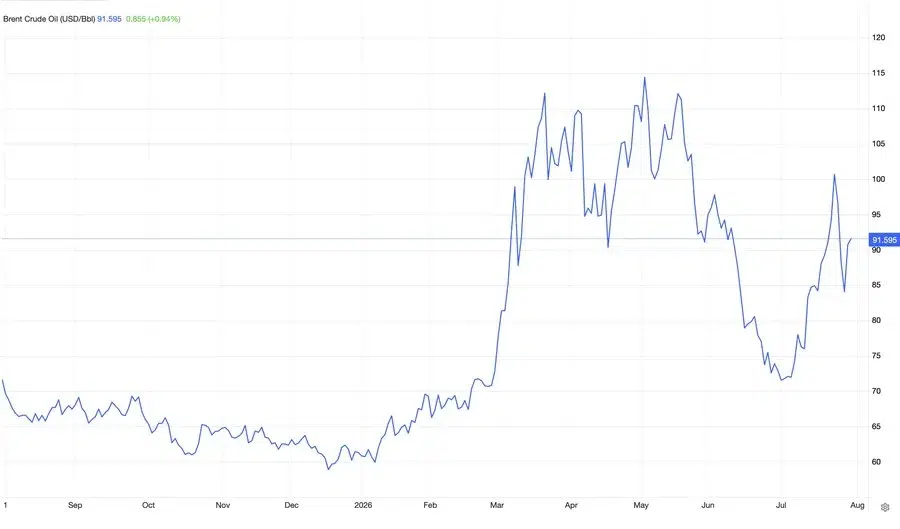
Technical charts showed that crude oil prices had bounced back significantly from the July low levels. The supplied chart for Brent indicated that the previous drop occurred at around the low $70s. Brent prices later increased to around $100, fell slightly, and reversed to around $91.60.
Brent has the $90 level as the first significant one for prices. Prices holding above the level would maintain the rally and make the levels of $95 and $100 visible. Failure to hold above $88 would result in the $80 levels becoming vulnerable.
What OPEC+ Supply Means for WTI
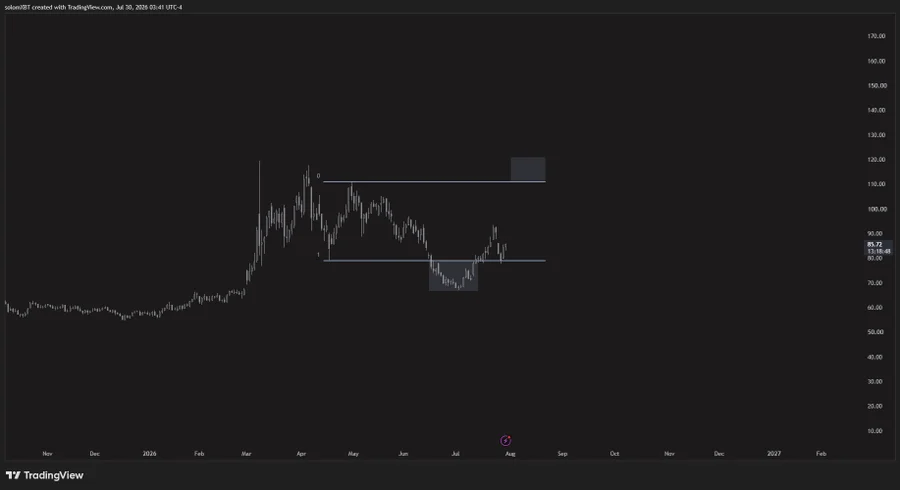
According to a chart provided by Solom, WTI has rallied from a July low of around $68 to $70. The U.S. benchmark went above $80 and hit around $85.72 by early Thursday. In other words, the key support level is currently at $80.
The ability to sustain above $80 can enable WTI to retest the $90 level, while a breakdown below it means that the current rally is weakening. The chart suggests $110, however, the current momentum does not confirm this far-away target.
OPEC+ will be the next policymaker to test the prices for crude oil. There are seven producers that will increase their supply by 188,000 barrels per day in August. Their next review of market dynamics is scheduled for August 2.
Brent is still supported above $90, while WTI sustains above $80. Further increases in the prices for crude oil will depend on whether the ongoing conflict affects physical oil shipments. Otherwise, temporary headlines may not be enough for a sustainable rally.
Also Read: Meta Stock Plunges 9% as Massive AI Spending Shakes Investors
This article contains market analysis and price predictions. These are not guarantees. Crypto markets are volatile. Always DYOR. Not financial advice.


Be the first to comment