

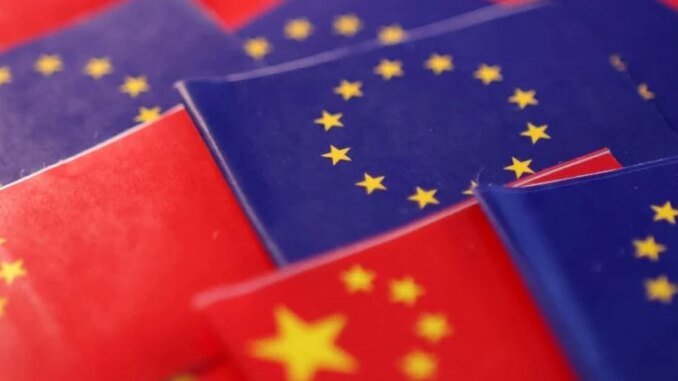

The European Union is weighing a move that would transform its “please diversify” suggestions into something with actual teeth. Brussels is considering rules that would require firms operating in sensitive sectors to purchase components from suppliers outside China.
The dependency problem keeps getting worse
Between 2018 and 2023, the EU’s import concentration from China actually increased. Meanwhile, both the US and China managed to diversify their own import sources during the same period.
A 2025 brief from the European Parliamentary Research Service (EPRS) acknowledges the uncomfortable reality head-on. The EU’s dependency on Chinese goods vital for the green transition has risen despite stated efforts to diversify supply chains.
The European Union Chamber of Commerce in China paints a more nuanced picture at the corporate level. Over 70% of EU firms are reportedly reassessing their supply chains. About one-third are actively looking to source outside China.

Around 22% of EU firms still lack any alternatives to Chinese components. For those companies, diversification isn’t a strategic choice they’re delaying. It’s a problem they haven’t solved.
The legislative toolkit taking shape
The Critical Raw Materials Act targets the minerals and metals that underpin everything from electric vehicle batteries to wind turbines. China dominates the processing and refining of many of these materials, and the Act aims to build up alternative supply chains within Europe and among allied nations.
The European Chips Act takes a similar approach to semiconductors. The global chip shortage of 2021-2022 made painfully clear what happens when a few countries control bottleneck technologies. Europe’s goal is to bolster domestic production capacity and reduce the risk of supply disruptions.
The potential new rules under consideration would go further than either existing Act by making diversification a regulatory requirement rather than an aspirational target. Companies in sensitive sectors, think defense, energy, digital infrastructure, could face mandates to demonstrate that their supply chains don’t run exclusively through Chinese intermediaries.
Why this matters beyond trade policy
Semiconductor chips are foundational to mining hardware, data centers, and the physical infrastructure that underpins blockchain networks. If the EU tightens rules on chip sourcing, companies building digital asset infrastructure in Europe could face higher costs and longer lead times for critical hardware.
Europe’s climate ambitions require massive quantities of lithium, cobalt, rare earth elements, and processed materials that China supplies more cheaply and at greater scale than anyone else. Mandating diversification could slow the transition or raise its cost, forcing policymakers to choose between strategic autonomy and climate timelines.
The 22% of firms with no current alternatives to Chinese suppliers represent a meaningful vulnerability. If regulations arrive before alternatives do, those companies face a genuine operational squeeze. Sectors with the longest and most complex supply chains, semiconductors, batteries, rare earth magnets, will feel the pressure first.



Be the first to comment