

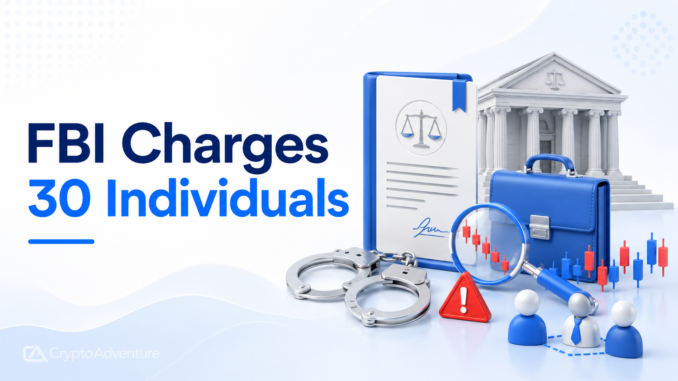


Federal prosecutors in Boston have charged 30 people in an alleged insider trading network built around confidential merger-and-acquisition information stolen from major U.S. law firms. The FBI said the case involved a global ring of corporate attorneys, financial professionals, middlemen, and traders accused of turning private deal information into tens of millions of dollars in illicit profits.
Nineteen defendants were arrested on Wednesday, while two defendants in Russia and Israel are considered fugitives. The Justice Department said the trades were tied to nearly 30 M&A deals involving public companies, including some of the largest transactions of the last decade.

The SEC filed a parallel civil case against 21 individuals, alleging that Los Angeles M&A attorney Nicolo Nourafchan and New York attorney Robert Yadgarov helped orchestrate a tipping network that passed material nonpublic information through multiple layers of traders. The SEC complaint seeks injunctions, disgorgement, prejudgment interest, and civil penalties.
How Prosecutors Say The Ring Worked
The core allegation is misappropriation. Prosecutors say Nourafchan accessed confidential law-firm systems to view deal documents, including transactions he was not working on, and shared the information with others in exchange for kickbacks. Nourafchan and Yadgarov allegedly recruited additional attorneys and insiders as sources, then passed the information into a wider network of middlemen and traders.
The alleged concealment methods were familiar to market-abuse investigators: burner phones, encrypted apps, coded language, shell companies, foreign brokerage accounts, and cash or disguised loan payments. Prosecutors highlighted one coded exchange around an iRobot deal where conspirators allegedly discussed a “rabbi” and “surgery” before shifting into more direct language about whether to trade.
FBI Boston Special Agent in Charge Ted E. Docks said insider trading “fundamentally undermines the trust necessary” for financial markets to function. U.S. Attorney Leah Foley also tied the alleged conduct to the duties that come with legal access, saying the trading exploited “special access and ethical duties” attached to a law license.
The Justice Department stressed that the charging documents contain allegations and that defendants are presumed innocent unless proven guilty.
Why Crypto Markets Should Watch The Case
The case is not a crypto prosecution, but the enforcement logic is directly relevant to digital assets. Regulators are applying the same core theory across markets: confidential information becomes legally dangerous when someone with special access trades on it, tips it, or helps others profit from it.
That logic already reached crypto through the former Coinbase product manager case. Ishan Wahi was charged in the first U.S. cryptocurrency insider trading tipping case after prosecutors alleged that Coinbase listing information was shared before public announcements. He later received a two-year prison sentence in the federal case.
Prediction markets and onchain platforms are facing similar pressure. Polymarket recently tightened insider trading surveillance after concerns over privileged information in event markets, while a separate case involving a U.S. soldier accused of using classified information to profit on Polymarket showed how market-integrity law can extend beyond traditional securities.
The law-firm case sharpens the broader message for crypto exchanges, token issuers, market makers, listing teams, and compliance departments. The asset class can change, but the risk pattern is the same when private information moves from insiders to traders before the public gets access.
For professional gatekeepers, the allegations are especially damaging because law firms sit inside the trust layer of capital markets. M&A lawyers, bankers, exchange employees, token-listing teams, and market operators often see sensitive information before prices move. The Boston case shows how quickly that access can become a criminal-risk channel when private deal flow turns into tradeable advantage.



Be the first to comment