



The conversations at the Fintech Revolution Summit 2026 in Manila highlighted a clear shift: fintech’s next chapter won’t be defined by how fast the industry can innovate but by how well it can build systems people can trust.
Across keynotes and panel discussions, regulators, fintech leaders, and compliance experts pointed to a shift already underway, from rapid digitization to responsible, resilient growth.
Opening the discussion, Bangko Sentral ng Pilipinas (BSP) Assistant Governor Atty. Arifa Ala emphasized that innovation must be anchored in governance. She outlined the BSP’s principle-based approach to artificial intelligence (AI), which is centered on transparency, fairness, accountability, and security while reinforcing the importance of stronger cybersecurity frameworks and coordinated enforcement.
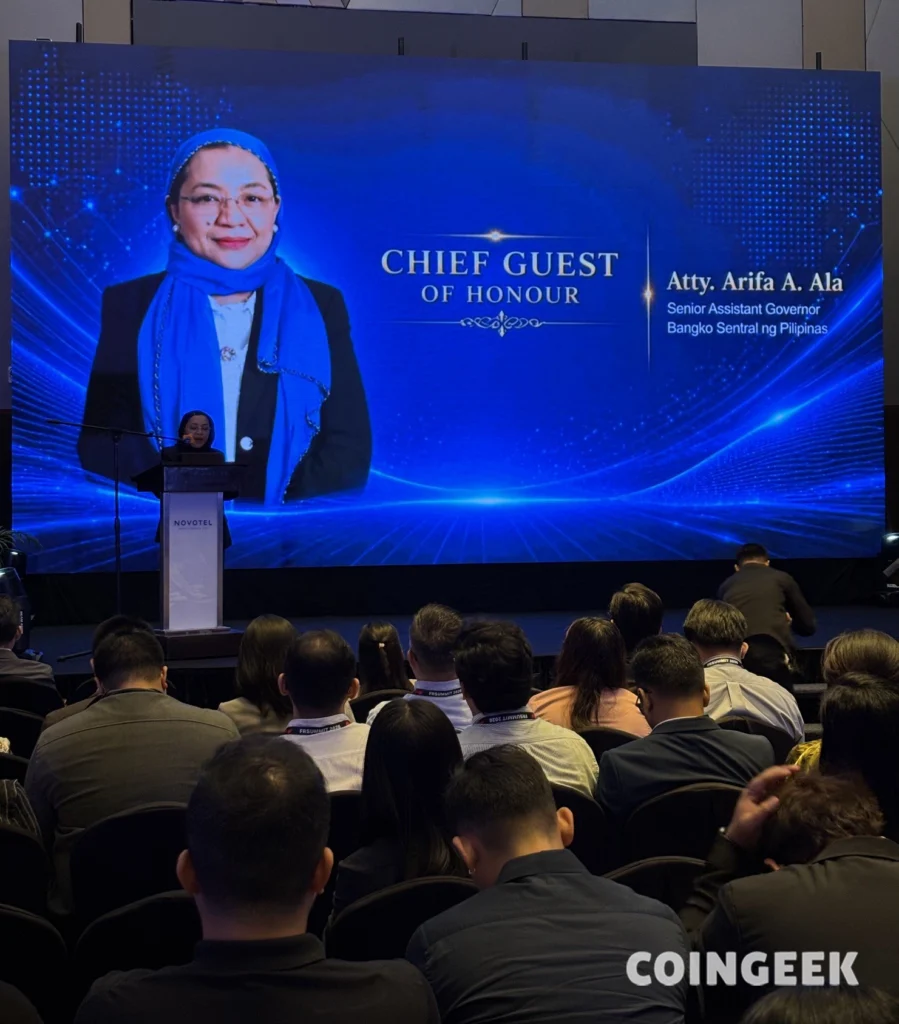
Her remarks posed a critical question for the industry: As financial access expands, how do institutions ensure that inclusion leads to meaningful, sustainable outcomes?

That question was echoed and sharpened by OJ Olivier, Director of Transformation Enablement at EmbedIT, who challenged the industry’s approach to digital growth.
“We focused on speed of delivery, many times at the expense of safety,” Olivier said. “That quick onboarding resulted in fraudsters bypassing checks… what we built as a payment rail became a scam rail.”
Drawing on recent data, Olivier noted a 72% increase in reported fraudulent transactions in the Philippines in early 2025. For him, the issue isn’t a lack of effort but a structural imbalance.
“Trust is not just a soft concept,” he said. “In regulated environments, it is almost the infrastructure that everything is built on.”
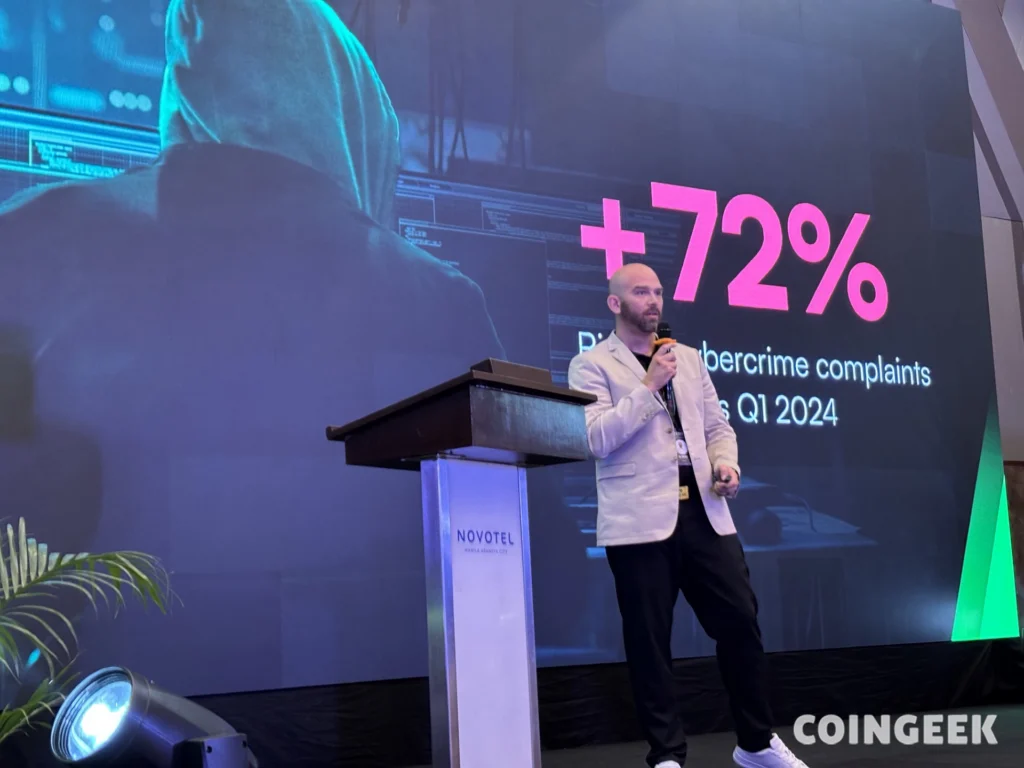
His call to action was direct: organizations must stop treating compliance as a checkbox and start designing trust as a core product feature. With regulations like the Anti-Financial Account Scamming Act (AFASA) now in force, this is no longer optional; it’s a legal and operational imperative.
While trust anchored the risk conversation, interoperability emerged as a defining theme for growth.
Audrey Mae Peñaranda, Regional Director for Southeast Asia at Pine Labs, described a clear shift in how fintech systems are being built.
“It’s not about creating something that will stand on its own,” she said. “It’s about building something that can operate with other systems.”
From cross-border payments to API-first infrastructure, Peñaranda highlighted how the industry is moving away from standalone products toward interconnected ecosystems. In this model, value comes not from control but from integration.
“The scalable platform today is not just about handling volume,” she added. “It’s about being interoperable, not just within your market, but across markets.”
That shift is particularly important in Southeast Asia, where initiatives are pushing toward real-time, cross-border payment connectivity.
At the same time, financial inclusion remains a central driver of fintech innovation in the Philippines.
Mike Singh, President and CEO of Tendo by Tonik, pointed to a fundamental gap: a highly digital population with limited access to formal credit.
“There’s less than 10 million unique credit cards in a country with around 50 million adults,” Singh said. “Yet over 80% of deposits come from consumers. Only a small portion is lent back to them.”
For Singh, solving this imbalance requires rethinking how risk is assessed. Traditional banking relies on formal documentation, but much of the population operates outside those systems. His answer is to leverage alternative data.
“Your smartphone has up to 50,000 data points about your behavior,” he explained. “We can use that to predict risk in seconds.”
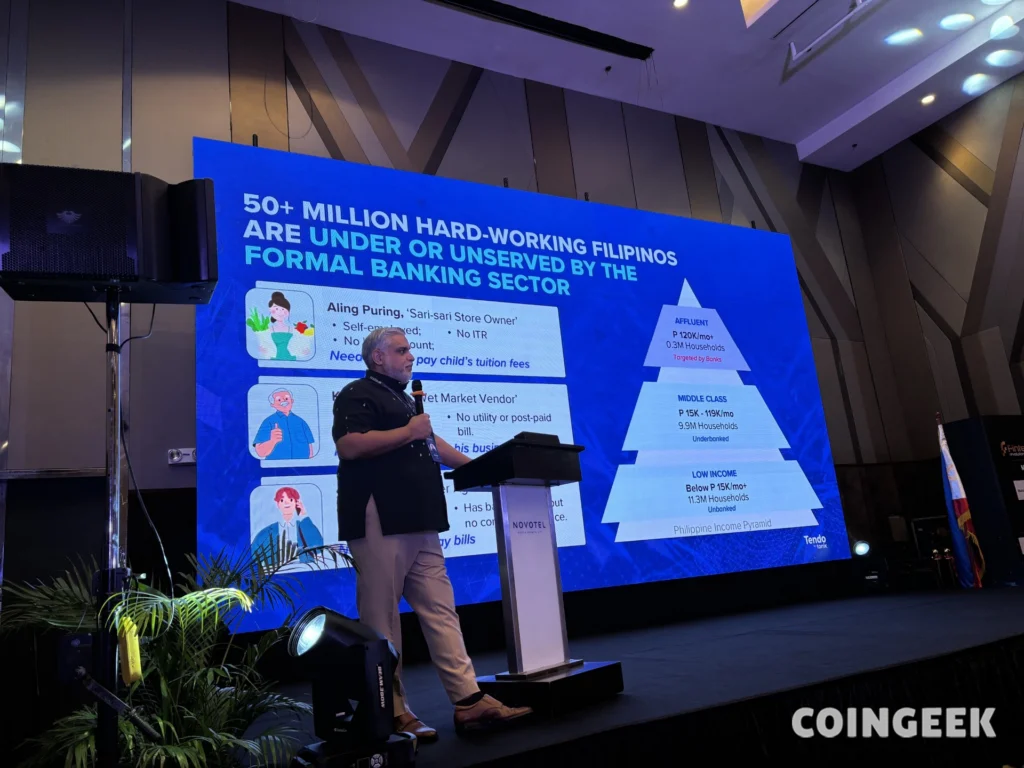
This approach, combining AI and behavioral data, allows digital banks to extend credit to previously underserved segments. But Singh emphasized that accessibility must be paired with trust.
“It’s fine to make banking relatable and accessible,” he said. “But you have to be trusted.”
That balance between innovation and accountability was further explored during a panel featuring Jef Lacson (UnionDigital Bank), Catherine de Joya Urtola, CAMS (Bank of China), and OJ Olivier.
A recurring theme was the importance of data integrity as the foundation of both compliance and innovation. “Bad data translates to wrong reports,” Lacson noted. “And wrong reports create regulatory exposure.”
Urtola reinforced the collaborative role of compliance within organizations, pushing back against the idea that regulation slows progress. “We are not here to prevent business,” she said. “We are here to support it while ensuring we operate safely and protect our clients’ money.”
The panel also addressed the rise of AI, with a shared view that automation should augment, not replace, human decision-making. “AI is a tool,” Urtola said. “But the decision-making still lies with human beings.”

Olivier added a longer-term perspective, warning against over-reliance on automation at the expense of talent development. “If you remove junior roles today, you risk losing your future leadership pipeline,” he said. He emphasized that the real challenge is not replacement, but integration: “How do we make sure that the two can coexist rather than replacing them?”
As fintech enters its next phase, we now ask: what will matter more, speed or sustainability?
The discussions at the summit point to a fintech industry entering a more disciplined phase of growth. The focus is no longer just on expanding access or accelerating innovation, but on building systems that can sustain trust at scale. That means embedding security into user experience, designing interoperability from the ground up, and ensuring that data, AI, and compliance frameworks evolve alongside the technology they support.
For fintech and Web3 players alike, the opportunity ahead lies not in moving faster than the market but in building with the kind of resilience, accountability, and long-term thinking that the market increasingly demands.
Watch: Fintech Revolution Summit sheds light on fintech’s impact on Filipinos



Be the first to comment