



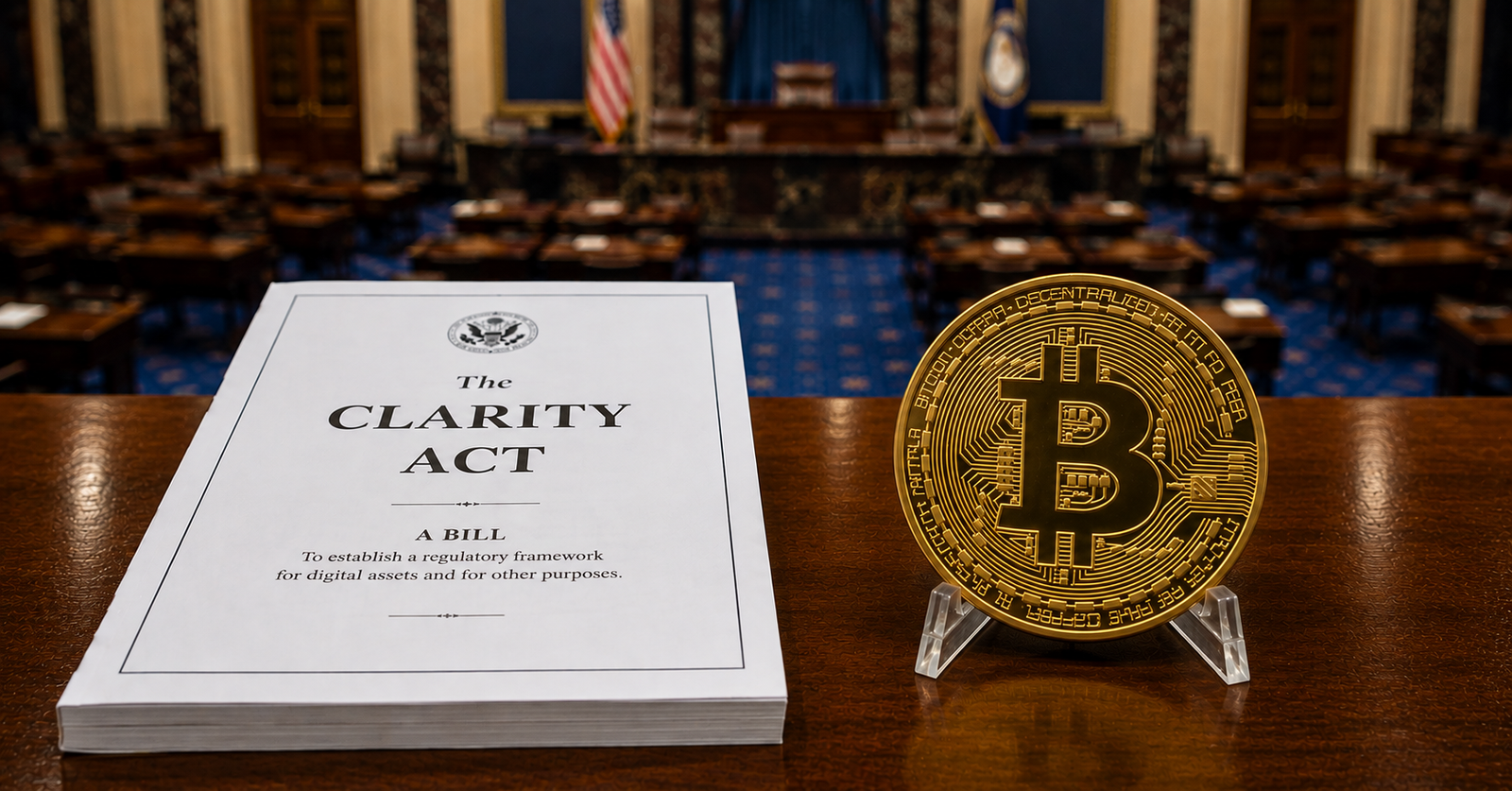
The CLARITY Act setback has shifted the focus from the ongoing negotiations in Congress to the custody management practices adopted by American crypto companies. According to a report, CEO of GenLayer Labs, Albert Castellana highlighted that regulatory uncertainty can have an impact on the product development process despite its ongoing nature.
The motion for cloture on the consideration of the bill H.R. 3633 was not agreed to on September 15 in the Senate. The vote was 49-50, which is short of 60 votes needed for the progress of the CLARITY Act.
Product Design Becomes Part of the Regulatory Question
In contrast to other categories such as centralized or decentralized, Castellana’s approach relies on control. According to him, regulators need to analyze whether there is the possibility to freeze assets, stop any transactions, or make changes in terms and conditions.
Also Read: Cardano Price Gains 8.14% as Leios Testing Highlights 1,000 TPS

This difference is critical for software developers since publication of the software does not imply that the developer can manage the customers’ assets and operate the network.
It is possible to revise a company’s products as long as the question of its legal liabilities is ambiguous. Castellana argued that companies would use custodians, permissioned frontends, centralized service providers, or administrator keys, as they have a responsible party.
Such decisions might impact the user experience since the blockchain protocol will stay open-source, but the primary interface will require verification of identities or limit access according to the geographical location of the user.
The House version of the CLARITY Act partially covers this aspect. In particular, the text says that some non-controlling blockchain developers and service providers cannot be considered money transmitters as long as they only publish software, support self-custody, and offer blockchain infrastructure.
Moreover, the definition of a non-controlling provider is based on its ability to control or execute the user’s digital asset transactions unilaterally.
Regulators Are Already Addressing Narrower Issues
As a result of the impasse in the passage of the CLARITY Act, government agencies are pursuing some initiatives in selected areas within their existing mandate. The CFTC made a move in this direction on September 17 by issuing a no-action position for passive software providers that qualify.
The staff stated that they would refrain from recommending enforcement of certain requirements for registering an introducing broker when certain conditions are satisfied.
The relief covers software that allows for trading in connection with registered futures commission merchants, introducing brokers, and designated contract markets. It covers less ground than a blanket exemption for blockchain developers.
On the other hand, the SEC made moves to deal with tokenized securities on the very same day. They provided temporary and conditional relief for tokenized securities venues.
The relief allows limited trading in tokenized NMS stocks through permissioned automated market makers and liquidity pools. Chairman Paul Atkins described the exemption as temporary and in place until longer-term rulemaking.
Stablecoins Already Follow a Separate Federal Path
Payment stablecoins have progressed even further. President Donald Trump signed the GENIUS Act into law in July 2025, giving a regulatory framework for payment stablecoins at the federal level.
According to Castellana, this means that stablecoin payments do not rely upon the CLARITY Act the way other cryptocurrencies do. The issue arises with these assets’ transactions through DeFi protocols, self-custodial wallets, custody services, and trading platforms.
This distinction emphasizes the importance of application-layer regulations. Regulators will need to figure out when a software company is an intermediary and when it is just a software developer.
Congress Still Has a Legislative Route
The House approved H.R. 3633 on a 294-134 vote in July 2025 prior to its consideration in the Senate. The possibility of another CLARITY Act vote cannot be taken for granted. Nevertheless, the fact that the attempt at invoking cloture failed in itself was not a repeal of the bill and/or the underlying law.
At the moment, businesses have two regulatory paths to consider. The agencies deal with narrower issues by virtue of their existing powers, while Congress may reconsider more fundamental legislation governing market structure.
However, a revised CLARITY Act may be brought back again by the legislative process. While Castellana analyzes what happens in the meanwhile, he asks himself whether the compliance process creates additional intermediaries for users of the blockchain technology.
Also Read: CFTC Moves on Crypto Rules After Senate Blocks CLARITY Act



Be the first to comment