



Hackers are increasingly leveraging Zcash to launder stolen crypto. According to renowned Web3 security researcher Specter, stolen funds from the recent Ledger supply chain attack and $12M from a payment firm, Triple-A, have been moved to a Zcash shielded pool.
Threat actors are actively using ZEC to move stolen funds. Stay smart.
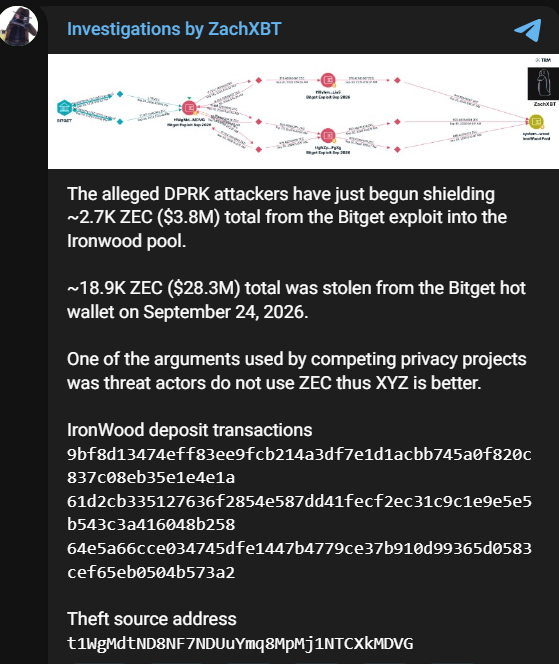
In late September, Zachary Wolk, another popular security researcher and investigator going by ZachXBT on X, flagged North Korea’s threat actors’ use of Zcash. Wolk found that out of the $28.3M ZEC from the Bitget exploit, the hackers moved about $4M into Ironwood’s shielded pool.
In fact, Wolk cast doubt on Zcash’s prior virtue signaling and slammed,
One of the arguments used by competing privacy projects was that threat actors do not use ZEC, thus XYZ is better.
Zcash has emerged as a top privacy alternative. Many Bitcoin OGs jumped on it, including serial investor Naval Ravikant, who called it ‘insurance against Bitcoin.’

But will Zcash suffer Monero’s fate amid increased use by criminals to launder stolen funds?
Will Zcash follow Monero’s fate?
For the unfamiliar, Monero has privacy features by default, and the recipient’s true public wallet address is never revealed. For Zcash, privacy is optional, and one can opt in by shielding funds via Ironwood and other pools.
In other words, you can trace Zcash in some instances, but not when the funds hit shielded pools. For Monero, there is no traceability at all, and it became a haven for criminals to bypass freezing and seizures on centralized exchanges.
That’s why Monero was delisted from Binance and other platforms, and was even banned in the EU.
Currently, stablecoins can be seized and frozen, and Tether and Circle have been doing this for a while.
Similarly, coordinated industry efforts can easily freeze funds, whether it’s BTC or other crypto assets that land on centralized platforms. This is part of anti-money laundering (AML) compliance mandated by several jurisdictions.
That leaves decentralized crypto mixers and privacy platforms such as Thorchain, Tornado Cash, and Zcash, among others, as alternatives to launder stolen funds. These are the only ways hackers can bypass seizures and freezes.
Unlike centralized platforms, most privacy platforms do not have screening against sanctioned addresses. So, one can’t tell legit funds from stolen ones.
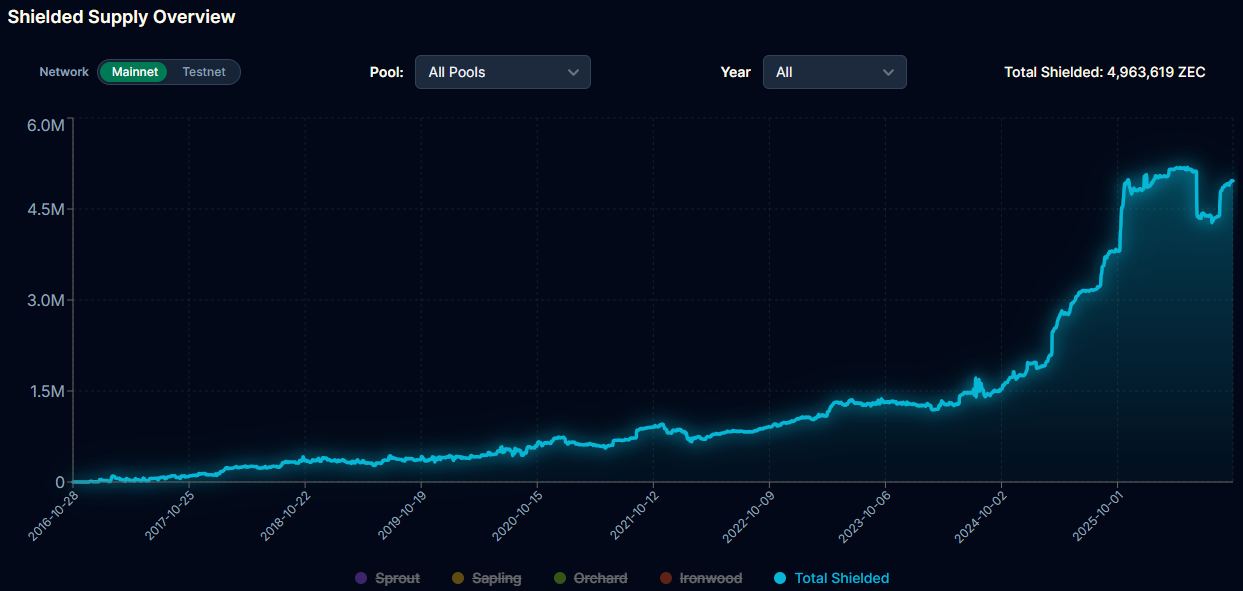
As of writing, ZEC shielded supply has increased by 16% from 4.3M ZEC to 4.96M ZEC since July.
Impact on ZEC sentiment
And like Monero, Zcash will likely face regulatory scrutiny and pressure if it becomes a major laundering node for stolen crypto funds.
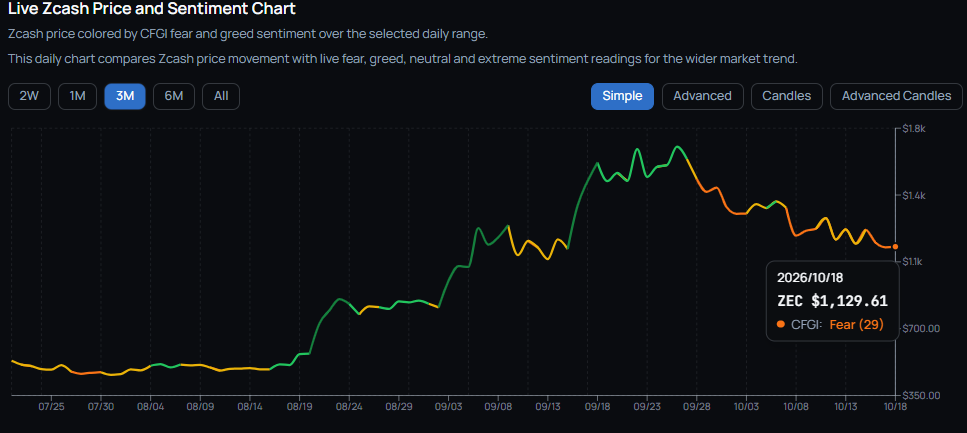
That said, ZEC’s market sentiment soured further after the update, dipping to a ‘fear’ level of 28. It’s unclear whether ZEC will slip below $1000 if regulatory and broader market pressure deepens.
Final Summary
- Some of the stolen funds from Ledger, Bitget, and Triple-A are being hidden in ZEC shielded pools
- ZEC shielded supply has increased 16% since July, and stolen funds remain untraceable.


Be the first to comment