



The Bitcoin price is facing renewed selling pressure after the Federal Reserve raised interest rates by 25 basis points on September 16. The move placed the federal funds target range at 3.75%-4.00%, while the Federal Open Market Committee maintained its focus on elevated inflation and price stability.
Although the rate increase was widely expected, the market reaction has centered on what could come next. The Fed’s latest projections leave the door open to another rate increase, while elevated Treasury yields are adding pressure to risk assets.
Against this backdrop, crypto analyst Ali Charts has identified the $71,200 short-term holder realized price as a level he would watch if Bitcoin experiences another sell-off.
Why Does This Matter for Bitcoin Price?
The latest Fed decision changes the near-term macro backdrop for Bitcoin by keeping borrowing costs elevated.

The central bank said economic activity has continued to expand at a solid pace, while inflation remains elevated. The unemployment rate has also changed little, giving policymakers room to maintain a restrictive approach while they continue watching incoming economic data.
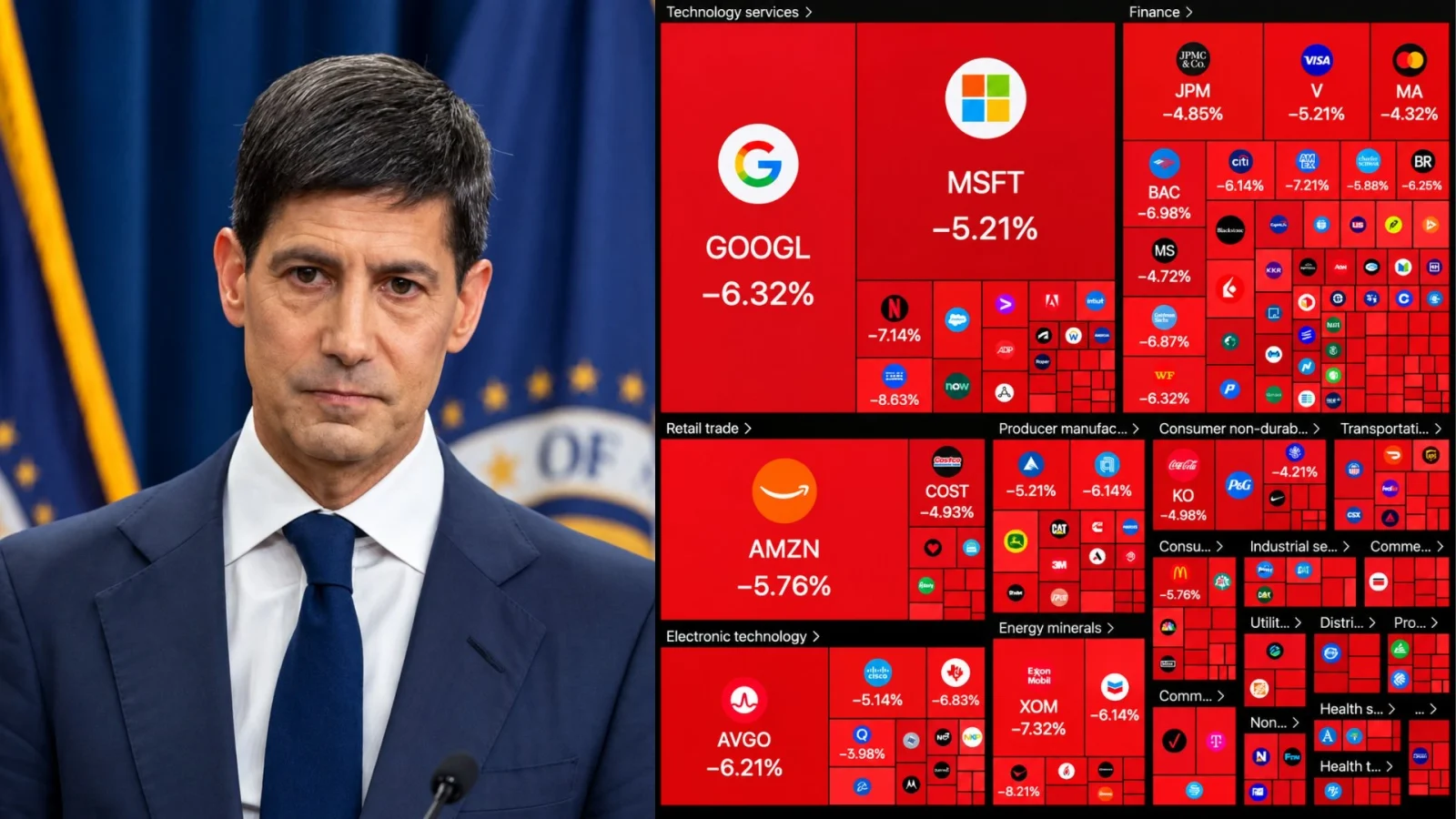
Source: Crypto Rover’s X Post
The Fed’s projections indicate that another rate increase remains possible. However, 16 of 18 policymakers see at least one more rate increase by the end of 2026. However, the median projection points to one additional hike rather than two.
This distinction matters because expectations for future policy can influence Treasury yields, the dollar, and investor demand for risk assets.
However, Crypto Rover also highlighted the potential for further tightening in his market commentary. His post focused on persistent inflation, economic resilience, and comments attributed to Fed Chair Kevin Warsh regarding price stability and the possibility of additional rate increases.
For Bitcoin, the issue is therefore not simply the latest 25-basis-point increase. Market participants are also assessing how long restrictive monetary policy could remain in place.
Also Read: Celsius Sues BitMEX for $495 Million Over 6,360 BTC Before Exchange Shutdown
Ali Charts Identifies $71,200 BTC Level
While macroeconomic conditions are creating pressure, Ali Charts is focusing on a specific on-chain level for Bitcoin.
The analyst said he would not panic if a Fed-driven sell-off pushes BTC lower. Instead, he identified the short-term holder realized price near $71,200 as his next major accumulation zone.
The Short-Term Holder Realized Price represents the realized cost basis associated with newer Bitcoin holders. Because of that, the $71,200 area can provide a reference for assessing whether recent buyers are holding their positions during a market decline.
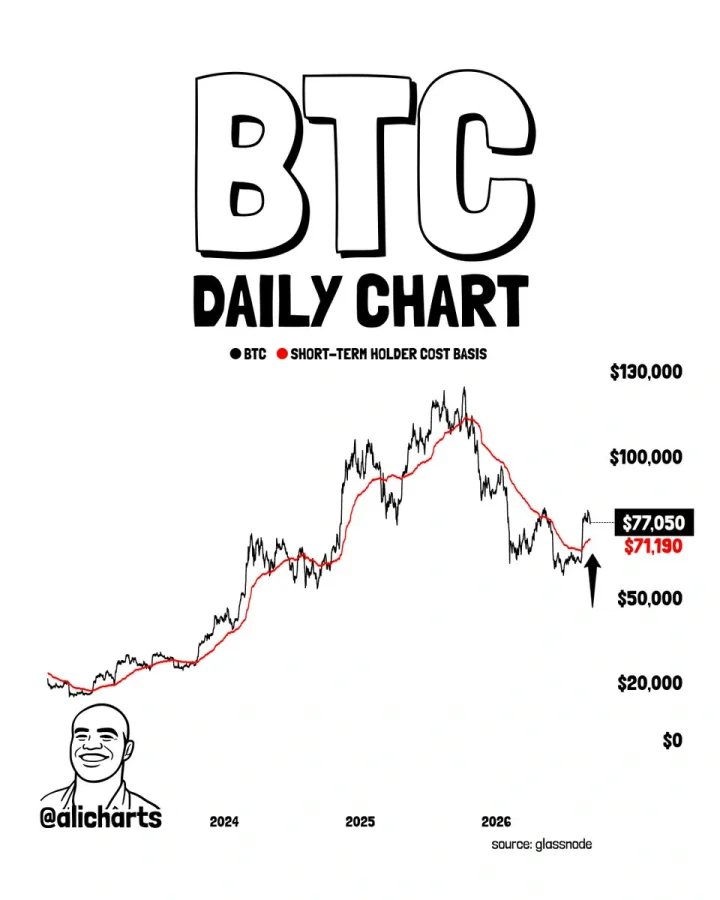
Source: Ali Charts’ X Post
Ali’s analysis does not suggest that Bitcoin must fall to $71,200. Rather, the level represents the price area he would monitor if additional selling develops.
The direction towards the level will thus bring into focus the buyer’s actions near the short-term holder cost base. The performance of BTC in relation to the level will tell us more about the intensity of demand in the correction.
Bitcoin Joins Broader Cross-Asset Sell-Off
The weakness has extended beyond cryptocurrency.
Bull Theory focused on the drops in various important financial assets after the most recent market reaction in a hawkish manner. Bull Theory mentioned that the S&P 500 had fallen by 1.46%, the Nasdaq had dropped by 1.41%, gold was down by 3.01%, silver fell by 4.02%, and Bitcoin fell by 1.96%.
The analyst also estimated substantial losses in market capitalization across those markets.
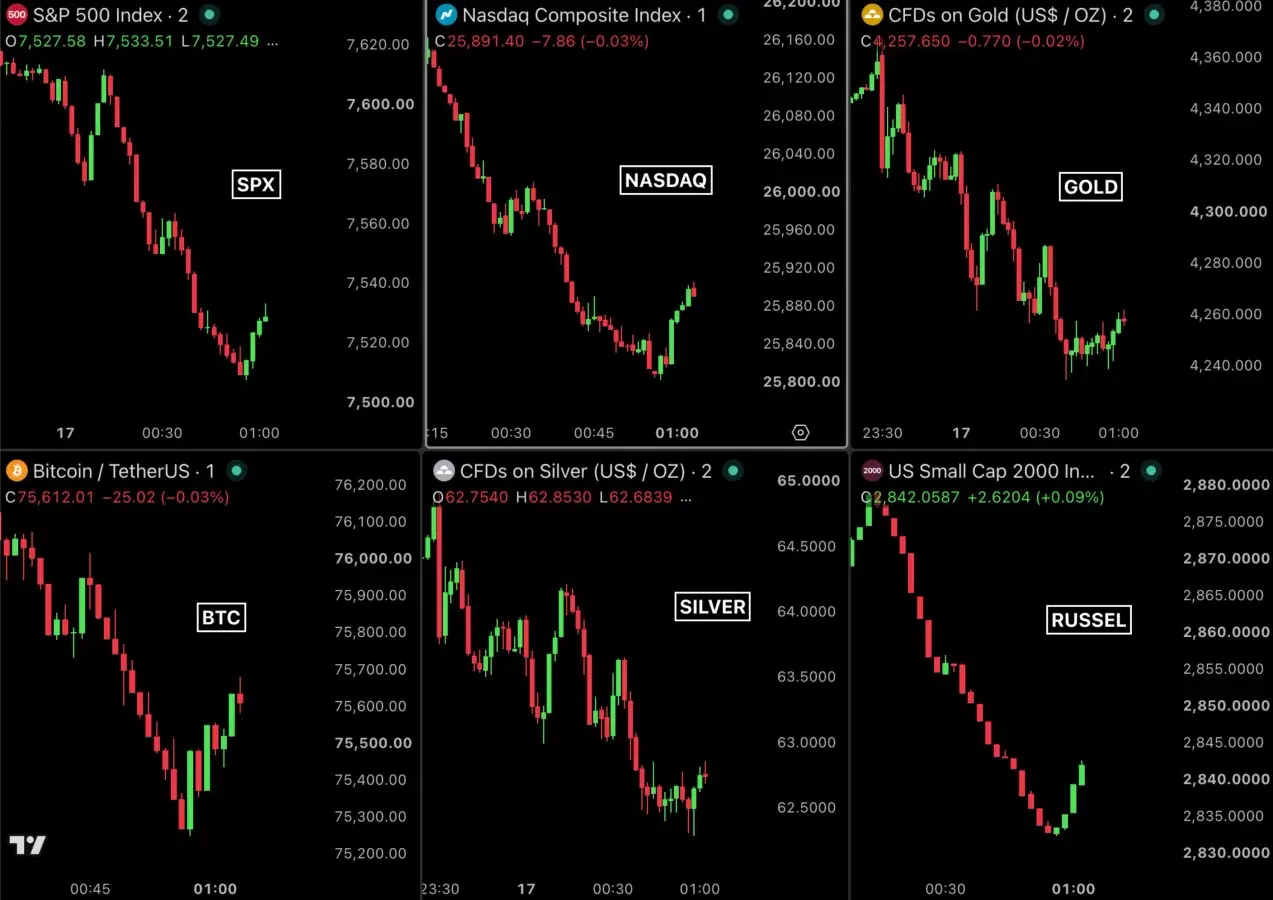
Source: Bull Theory’s X Post
However, such estimates of loss should be considered numbers mentioned in the post and not independent figures. The sum total of the individual amounts comes to about $2.6 trillion, which is different from the approximate $2.2 trillion mentioned in the commentary.
However, what should be noted is the wide scope of the sell-off that was happening. Not only Bitcoin but also stocks and precious metals were getting sold off too.
This can potentially increase the challenge of a quick recovery for BTC, since there will be many different asset types being reduced at once.
Treasury Yields Keep Pressure on Markets
Bond-market conditions are another factor Bitcoin traders are watching.
The U.S. 10-year Treasury yield has been high, which has risen above 5%, the highest point in the decade since 2007. High treasury yields increase the cost of borrowing while providing higher returns to investors.
It can impact the demand for risky assets, especially where the markets have already reacted to tightened monetary policy.
The Fed has made changes to some aspects of its economic forecast, such as its inflation and economic growth forecast. The future release of inflation, jobs, and economic growth statistics will be important in influencing the decision that policymakers will make going forward.
In the case of Bitcoin, the Treasury yield and US dollar also matter besides the rate decision by the Federal Reserve.
Trump’s Rate Demand Contrasts With Fed Policy
There are also demands by President Donald Trump to reduce interest rates substantially amidst this monetary-policy backdrop.
On September 16, Trump expressed his opinion about U.S. interest rates having to be lowered. Trump wanted low interest rates at 1% or less, while currently the Fed is targeting 3.75%-4.00%.
The difference between those positions creates a clear contrast in the current U.S. economic policy discussion.
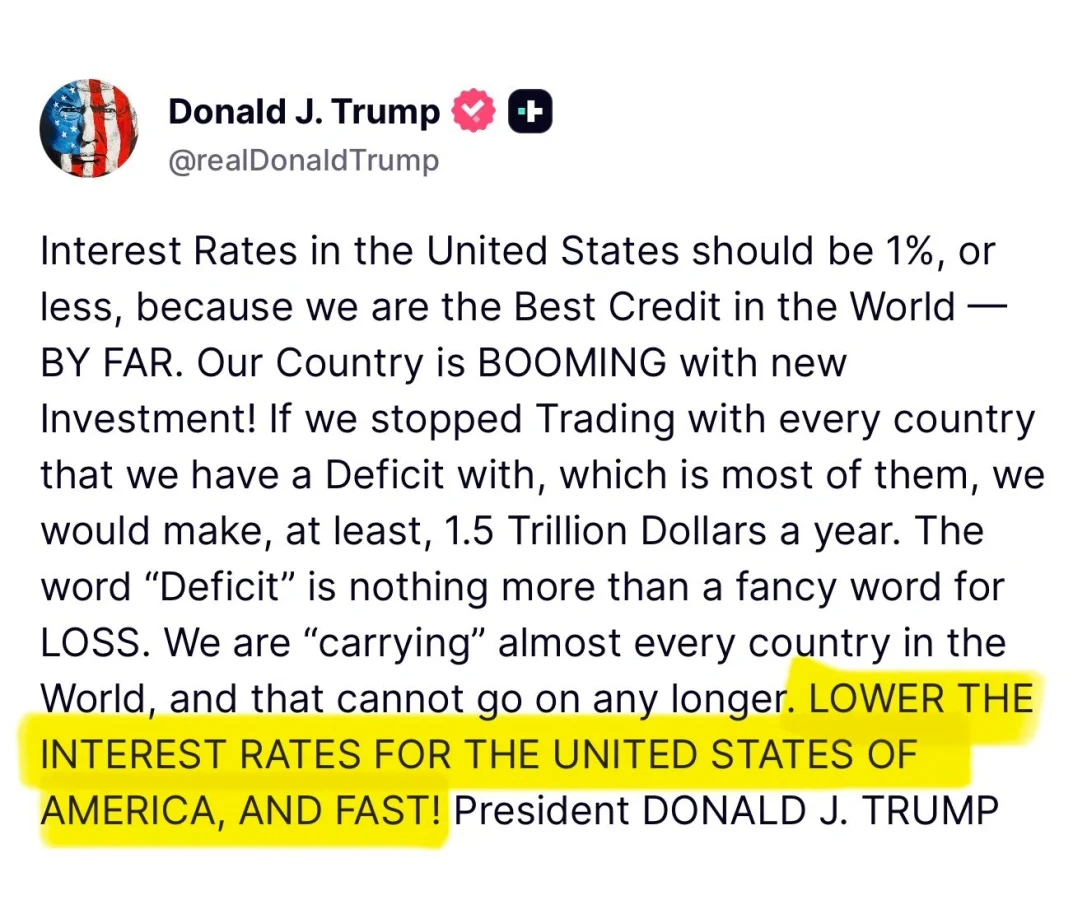
Source: Ash Crypto’s X Post
As far as financial markets are concerned, the main concern relates to the influence of interest-rate expectations on liquidity, borrowing, and risk appetites. But the Fed operates in a free environment and remains committed to achieving its inflation target of 2%.
In other words, Trump’s statements do not affect the Fed’s current interest rates. In fact, the market will remain interested in the forecasts made by the central bank and economic figures.
What Happens Next for Bitcoin Price?
Bitcoin’s next major technical focus is the $71,200 short-term holder realized price highlighted by Ali Charts.
In case BTC continues towards the area, traders will pay attention to how demand develops near the cost basis of short-term holders. Any breakdown below this level will bring focus on lower levels of support, while a breakout above it may suggest that buyers are absorbing recent selling pressure.
The macro environment will remain a separate driver.
Fed projections allow for another hike, while higher yields on Treasuries and a stronger dollar could keep impacting the risk mood. At the same time, the market correction across assets proves that weakness today is not limited only to BTC.
The immediate Bitcoin price outlook will thus be dependent on the interaction of these factors: Fed monetary policy, US Treasury yields, risk appetite of markets, and Bitcoin’s response to $71,200.
In the meantime, $71,200 is the pivotal area pointed out by Ali Charts as the possible accumulation zone, with the recent move by the Federal Reserve and the overall market weakness setting the stage for Bitcoin to reach that zone.
Also Read: CFTC Chairman Michael Selig Vows Bold Crypto Push in 2026
This article contains market analysis and price predictions. These are not guarantees. Crypto markets are volatile. Always DYOR. Not financial advice.



Be the first to comment