



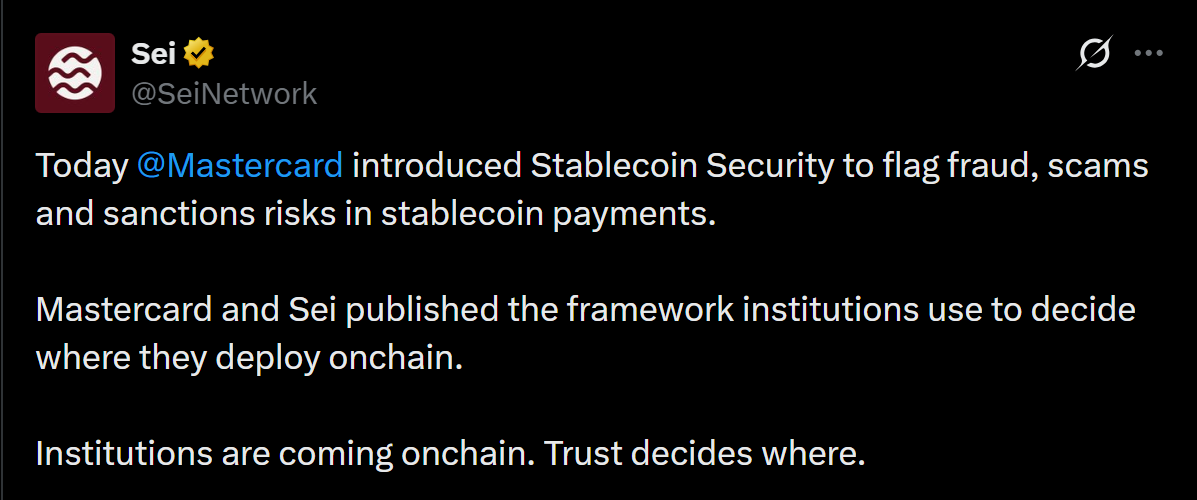
Mastercard launched stablecoin security to provide banking and finance firms. The security feature comes with tools to detect fraudulent activities, scams, and potential violations of sanctions laws associated with stablecoin transactions.
In doing so, this provides financial institutions with the opportunity to evaluate possible risks prior to suspicious transactions being processed.
With more complex types of stablecoin payments becoming increasingly common, early detection of potential problems is becoming more important.
These payment chains can complicate risk assessment and make post-settlement monitoring less effective.
Borderless.xyz and Keyrails are among the first participants to support the new product’s North American launch, and Mastercard expects to offer it globally beginning in 2027.
Coinbase and Thunes expand stablecoin payout reach
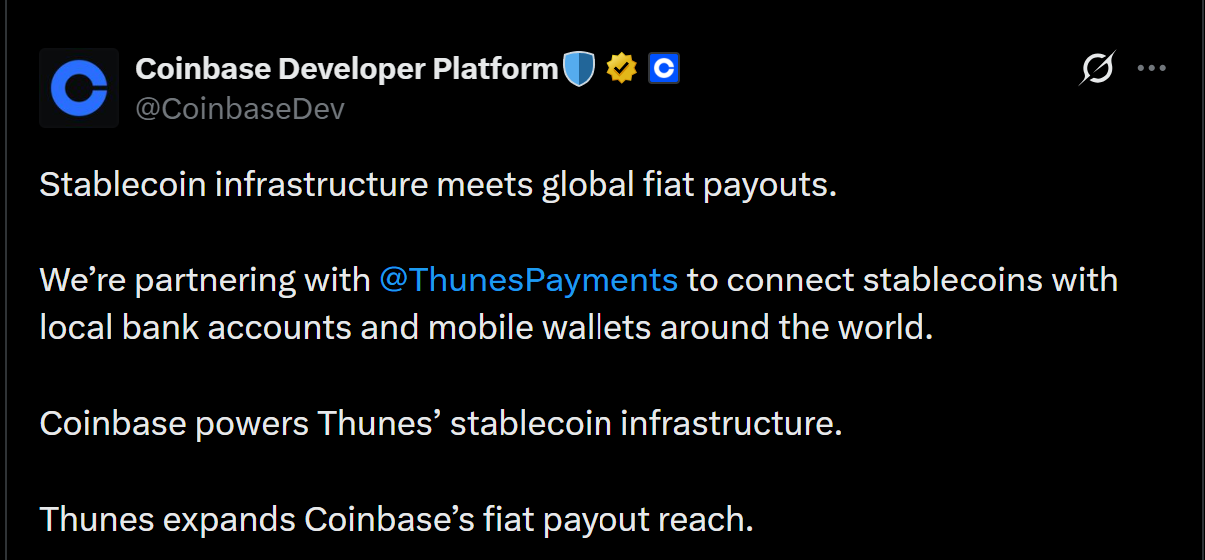
Following the push to make stablecoin payments safer, Coinbase and Thunes are working together to solve another major issue in enabling the widespread adoption of stablecoin payments. This is done by providing recipients with immediate access to stablecoin payments at their local bank account or mobile wallet.
Through their joint effort, Coinbase’s stablecoin-enabled payment systems will connect directly to Thunes’ Direct Global Network. This provides direct connections to over 140 countries and 90 different currencies via bank accounts and mobile wallets.
Ultimately, whether Coinbase and Thunes’ actions will result in significant adoption will depend on several factors. This includes the availability of payout options, the performance of the payout process itself, and actual usage levels among merchants, customers, and recipients.
Could better infrastructure drive stablecoin adoption?
Better infrastructure is key to converting greater stablecoin adoption into higher volume payment activity. Mastercard is improving transaction screening, while Coinbase and Thunes are expanding access to local payouts.
Together, these initiatives address two major barriers preventing wider adoption of stablecoin security and accessibility. Institutions can assess risks earlier and reach recipients through local banks and mobile wallets.
As such, these improvements could make cross-border transactions easier for both consumers and business owners.
However, stronger infrastructure does not guarantee sustained demand. Allium’s 2026 data shows payment volumes rising while stablecoin supply remains largely flat.
Notably, the data suggests that existing amounts of stablecoins are increasing in frequency as they continue to circulate. So, if repeated utilization increases along with settled value, then stablecoins could experience broader appeal outside of the crypto ecosystem.
Conversely, if actual usage fails to increase despite improved infrastructure development, then infrastructure growth may outpace actual usage.
Final Summary
- Mastercard’s Stablecoin Security could boost trust by screening fraud and sanctions risks before settlement.
- Coinbase and Thunes expand stablecoin payouts, but adoption depends on real transaction demand.




Be the first to comment