



NOWPayments provides the infrastructure a digital skin marketplace needs to manage the entire crypto transaction lifecycle. Rather than connecting separate services for checkout, blockchain monitoring, settlements, conversions, and seller payouts, a platform built like SkinSwap can run these operations through one integration.
The model connects customer payments, verified transaction notifications, Steam-based fulfillment, and crypto payouts to sellers. This turns what is usually a chain of different systems into one continuous operating layer.
For skin-trading platforms, the payment layer is not only a checkout feature. It determines how quickly a buyer receives an item, how reliably a seller gets paid, and how much blockchain infrastructure the marketplace must maintain.
This case study unpacks the “one infrastructure, several functions” model for crypto payments in the skin-trading industry.
Who SkinSwap Is
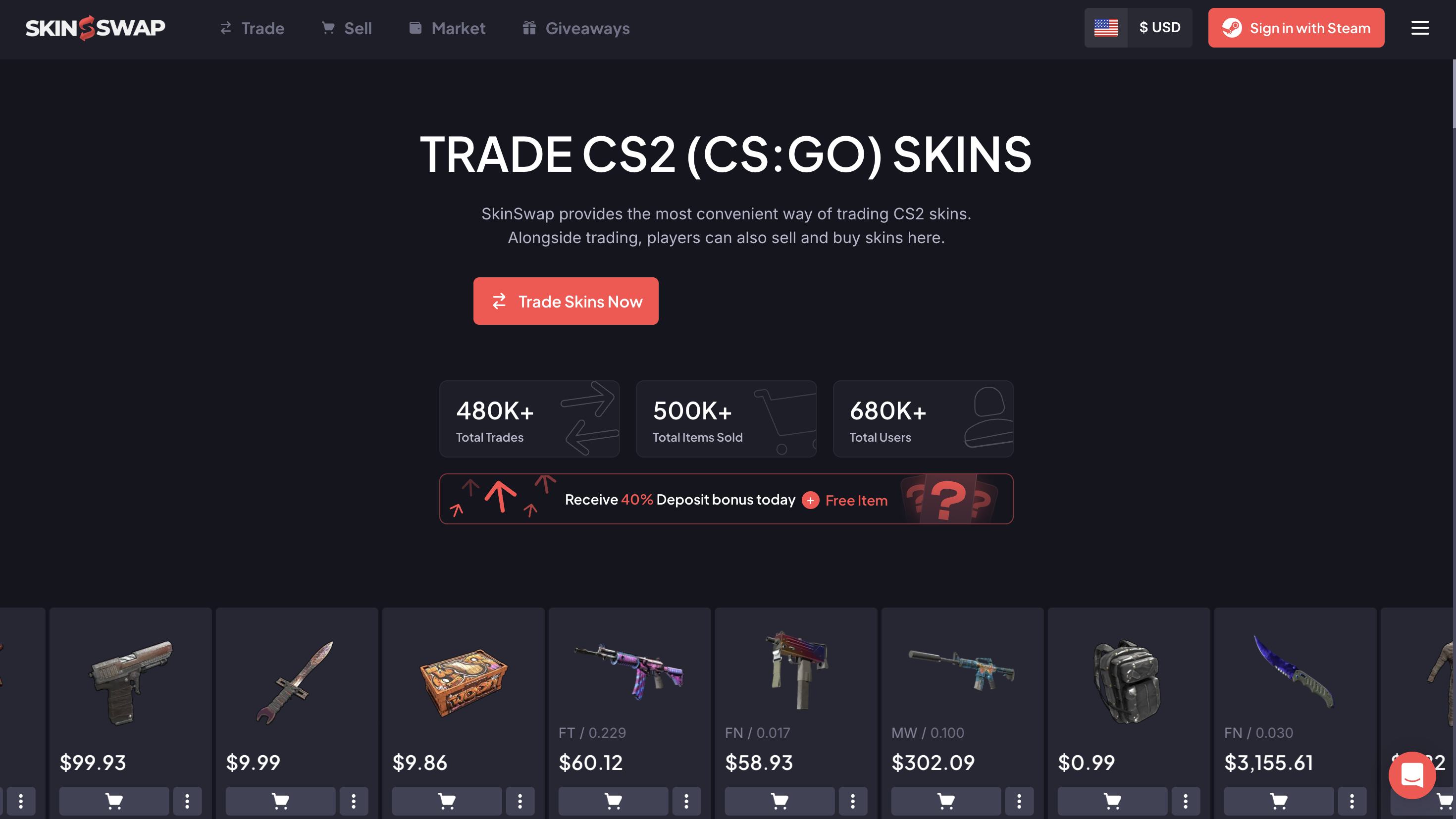
SkinSwap is a digital marketplace where players can trade, buy, and sell CS2 and Rust skins.
A user signs in through Steam, adds a valid Steam trade URL, and selects items from their inventory. The platform can then generate an automated trade offer, provide access to marketplace inventory, or purchase the user’s skins for a cash or cryptocurrency payout.
The business model covers three connected customer journeys:
- Players trade existing skins for different items.
- Buyers purchase skins from marketplace inventory.
- Sellers exchange unwanted skins for a crypto or fiat payout.
SkinSwap’s public website lists Bitcoin, Ethereum, Litecoin, and PayPal among its seller payout methods. That makes the platform a useful example of a marketplace where digital inventory and digital payments must move together.
The customer does not want to think about blockchain confirmations, wallet infrastructure, or settlement rules. A buyer wants to pay and receive a Steam trade offer. A seller wants to transfer a skin and get paid.
The marketplace must make both sides work quickly and reliably.
The Challenge
A skin-trading marketplace has two financial flows operating in opposite directions.
It accepts payments from customers buying skins and sends payouts to users selling them. Both flows must be connected to Steam trades, marketplace orders, wallet details, and internal risk controls.
That creates four hard requirements:
- A checkout that accepts the cryptocurrencies customers already hold.
- Payment confirmation reliable enough to trigger item delivery automatically.
- A payout system that can send crypto to sellers without manual wallet operations.
- One transaction record connecting the payment, Steam trade, payout, and fees.
Building all of this internally means maintaining wallets across multiple assets and networks, monitoring several blockchains, writing chain-specific confirmation logic, managing hot-wallet balances, handling network upgrades, and developing a separate seller payout system.
The marketplace must also account for late payments, underpayments, overpayments, expired orders, wrong-network transfers, payout failures, and reconciliation.
For a team focused on inventory, pricing, Steam trading, and customer experience, maintaining a separate blockchain infrastructure for every supported coin would create a significant operational burden.
Using one provider collapses the process into one payment flow, one confirmation mechanism, one operating balance, and one payout infrastructure.
That is the role the NOWPayments marketplace solution can play.
Why NOWPayments Fits Skin-Trading Marketplaces
Instead of building crypto payment infrastructure from scratch, a skin marketplace can use a provider that already supports customer payments, settlements, conversions, custody operations, and mass payouts.
The assets customers actually use
NOWPayments supports more than 350 digital assets across multiple blockchain networks. For a gaming marketplace, this means customers can pay with assets such as:
- USDT and USDC across supported networks.
- Bitcoin and Litecoin.
- Ethereum and Solana.
- Other cryptocurrencies available through the NOWPayments ecosystem.
Broad asset coverage reduces the need for customers to leave the checkout, exchange funds, or bridge assets to another network before completing a purchase.
The buyer can use an asset already held in their wallet, while the marketplace can define its preferred settlement currency.
One infrastructure for payments and payouts
The same ecosystem can support both sides of a skin marketplace.
Incoming customer transactions are processed through the payment infrastructure. Seller withdrawals can be automated using NOWPayments Mass Payouts.
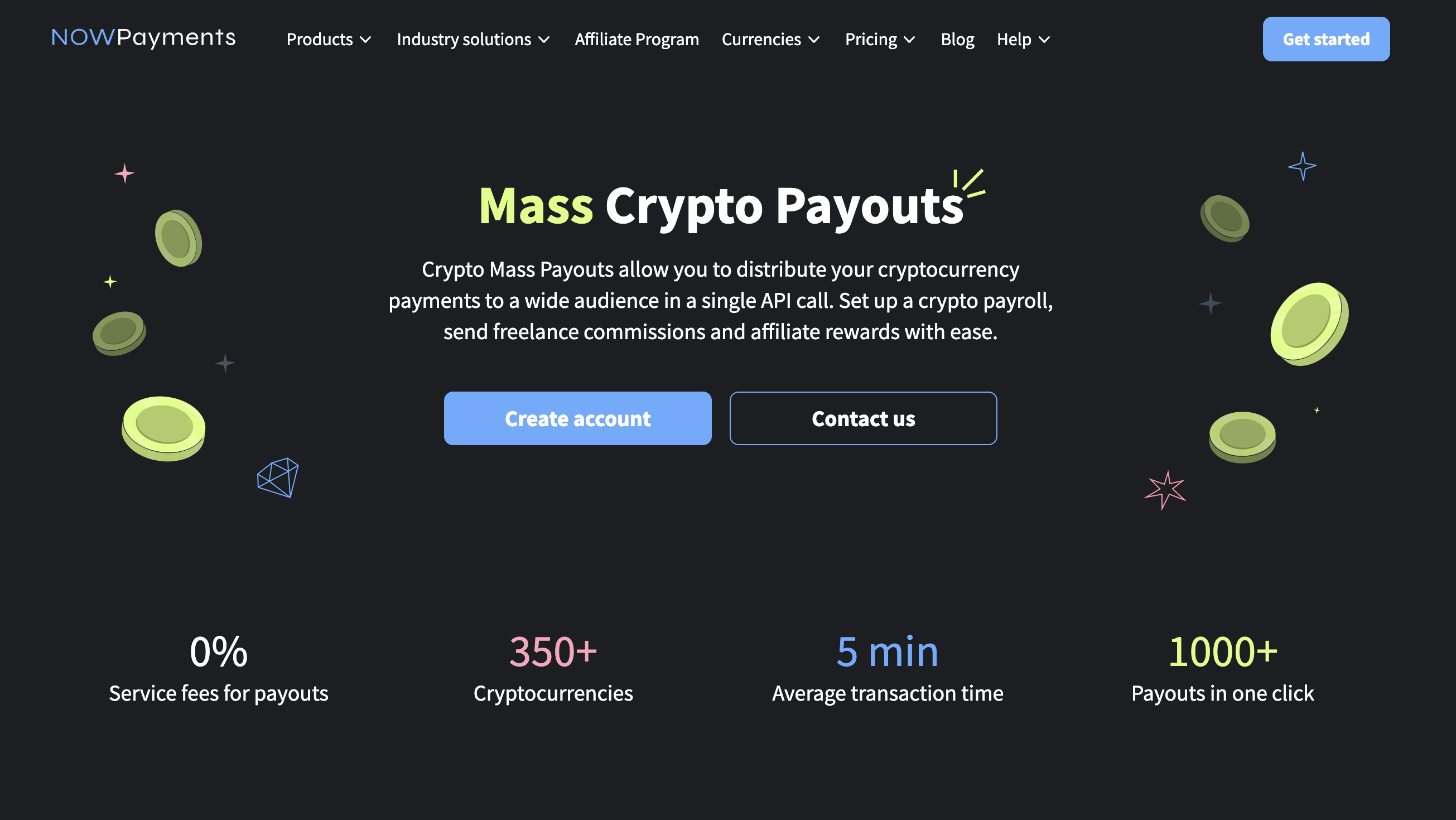
That gives the marketplace one operating layer for:
- Accepting crypto payments from buyers.
- Monitoring transaction statuses.
- Triggering Steam item delivery.
- Converting assets when necessary.
- Sending crypto payouts to sellers.
- Reconciling the complete transaction lifecycle.
There is no need to maintain a separate payout provider for every supported cryptocurrency.
Zero-fee payouts inside the ecosystem
Seller payouts are especially important for skin marketplaces. A payout fee applied to every sale can reduce the final amount received by the user or place additional pressure on marketplace margins.
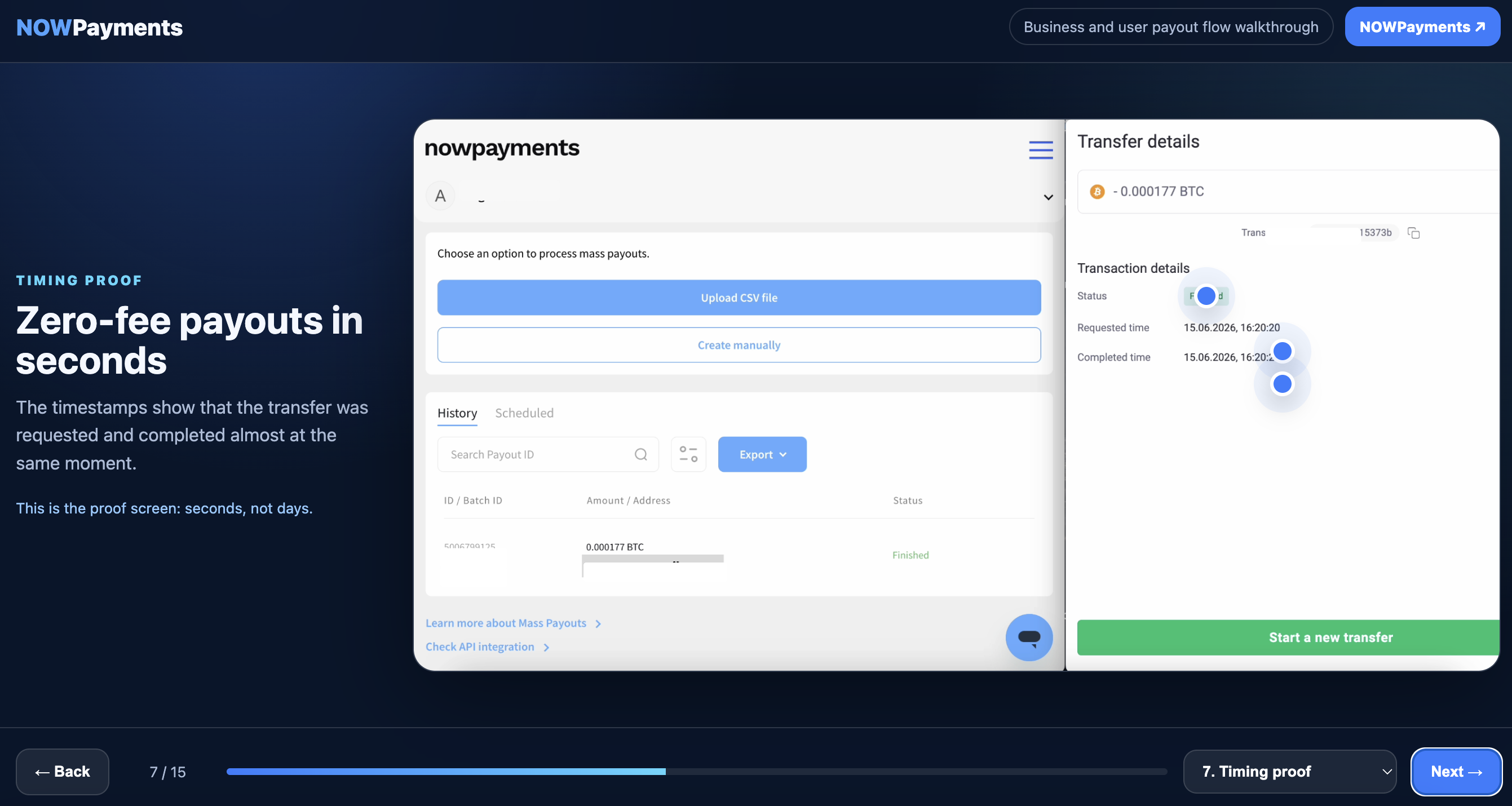
NOWPayments Zero-Fee Ecosystem Payouts allow businesses to send funds to ChangeNOW Pro accounts without service or network fees inside the ecosystem. Instead of collecting and manually verifying a separate wallet address, the marketplace can create a payout using the recipient’s email.
The recipient follows the email link, accesses ChangeNOW Pro, and finds the funds already available. From there, the user can hold the asset, convert it, or use the withdrawal options available through the account.
For a skin marketplace, this creates an additional seller payout route alongside standard on-chain withdrawals. It can be particularly useful for frequent sellers, affiliates, creators, traders, or other users receiving repeated marketplace payments.
The complete business and recipient journey is shown in the interactive zero-fee payouts guide, including payout creation, email confirmation, transaction timing, and recipient access to funds.
Payment costs that protect marketplace margins
Skin marketplaces compete on price, payout value, and transaction speed. Processing and conversion costs affect the margin available on every skin purchase or sale.
The service fee starts at 0.3%, excluding applicable network and conversion costs. The marketplace can also evaluate lower-cost networks for stablecoin settlements and payouts instead of automatically routing every transaction through a more expensive blockchain.
When zero-fee ecosystem payouts are available, the business can further reduce the cost of sending funds to eligible recipients through ChangeNOW Pro.
Integration and Implementation
The main advantage is not only a faster integration. It is all the blockchain infrastructure the marketplace no longer needs to maintain.
| Without NOWPayments | With NOWPayments |
| Maintain wallets across multiple assets and networks | Use one payment and custody infrastructure |
| Monitor transactions on several blockchains | Receive one verified payment notification |
| Build separate confirmation logic for every network | Use normalized payment statuses |
| Manually connect payments to Steam trades | Trigger fulfillment from verified payment events |
| Develop a separate seller payout system | Use standard or zero-fee ecosystem payouts |
| Reconcile payments and withdrawals across providers | Track the full transaction lifecycle in one flow |
At checkout, the marketplace uses the NOWPayments Payment API to create a payment linked to its internal order ID and priced in a reference currency such as USD.
The customer selects a supported cryptocurrency and receives the corresponding payment instructions.
Once the payment reaches the required status, NOWPayments sends an IPN notification. The marketplace verifies the signature, checks the payment amount and order ID, marks the order as paid, and triggers the Steam trade offer.
One payment request and one verified notification cover the customer side of the transaction. The marketplace does not need to build separate blockchain monitoring and confirmation logic for every supported asset.
The seller flow uses the same infrastructure in reverse.
After the marketplace receives and validates a skin, it creates an approved payout instruction. Depending on the seller’s chosen method, the payout can be sent to a crypto wallet or delivered to a ChangeNOW Pro account using the recipient’s email.
The final operating flow becomes:
Customer payment → verified notification → Steam trade → seller payout → reconciliation
Every payment ID, payout ID, order ID, Steam trade ID, transaction hash, fee, and exchange value can be stored in one connected record.
Results
Because this is an implementation model rather than a report on a confirmed SkinSwap integration, the results below describe the outcomes a skin marketplace can target and measure.
- Fewer abandoned crypto checkouts. Broad asset and network coverage allows customers to pay with the cryptocurrency they already hold instead of leaving the marketplace to exchange or bridge funds.
- Faster item delivery. A verified payment notification can move the order directly to the Steam fulfillment process without manual blockchain checks or batch delays.
- Faster seller payouts. Once a skin transfer and internal risk checks are complete, the marketplace can initiate a crypto payout instead of processing wallet transfers manually.
- Lower payout costs. Eligible payouts to ChangeNOW Pro accounts can move inside the ecosystem without service or blockchain network fees.
- Simpler recipient onboarding. An email-based payout can remove the need to collect a wallet address before every transaction.
- Lower infrastructure overhead. The engineering team does not need to maintain separate wallets, chain listeners, confirmation rules, and payout scripts for every supported cryptocurrency.
- Simpler reconciliation. Payments, Steam trades, seller payouts, and blockchain transaction details can be connected to the same marketplace order.
To turn these outcomes into a confirmed success story, the marketplace should measure checkout completion, average confirmation time, payout speed, payment-related support contacts, infrastructure costs, and transaction cost per order before and after launch.
Global Customer Reach and Scaling
Skin trading is global, but card availability, local payment systems, and bank payouts vary by country.
Crypto gives eligible customers another way to buy and sell digital items without depending exclusively on traditional payment rails.
As a skin marketplace expands, the payment infrastructure does not need to grow chain by chain.
- One API and checkout flow can serve buyers across multiple regions.
- New supported cryptocurrencies do not require a separate marketplace integration.
- The same payout infrastructure can serve sellers in different markets.
- Email-based payouts can simplify delivery to users who do not have a wallet ready.
- Additional games and item categories can use the existing payment flow.
- The product team can focus on inventory, pricing, trading, and customer experience.
A phased rollout can begin with selected stablecoins and established cryptocurrencies. The marketplace can then expand its payment options based on checkout completion, network costs, payout demand, fraud patterns, and support volume.
Scaling the catalogue from CS2 and Rust skins into other digital item categories does not require rebuilding the core payment and payout architecture.
What Is Next for Skin-Trading Marketplaces
Digital skins are already established as transferable items with real market value. As the industry grows, users will expect marketplaces to provide the same payment choice and transaction speed they receive from other digital platforms.
To support that growth, the payment layer must continue to deliver on several fronts:
- Accept a wide and growing range of assets.
- Support efficient settlements across multiple networks.
- Connect payment confirmation directly to Steam fulfillment.
- Enable fast crypto payouts to sellers.
- Provide zero-fee payout options where available.
- Handle new games and item categories without additional chain integrations.
- Maintain clear transaction records for support and reconciliation.
For a platform built like SkinSwap, the opportunity is larger than adding another cryptocurrency button to checkout.
The stronger model is one continuous transaction infrastructure connecting the buyer’s payment, the marketplace order, the Steam trade, and the seller’s payout.
A payment layer that keeps pace with new assets, lower-cost networks, zero-fee payout routes, and global customer demand can become a core part of the marketplace’s growth strategy.
About SkinSwap
SkinSwap is a digital marketplace where users can trade, buy, and sell CS2 and Rust skins.
The platform connects to Steam inventories and uses automated trade offers to help users exchange items, purchase skins, or sell unwanted inventory. Its public website lists selected fiat and cryptocurrency payout methods, including Bitcoin, Ethereum, and Litecoin.
About NOWPayments
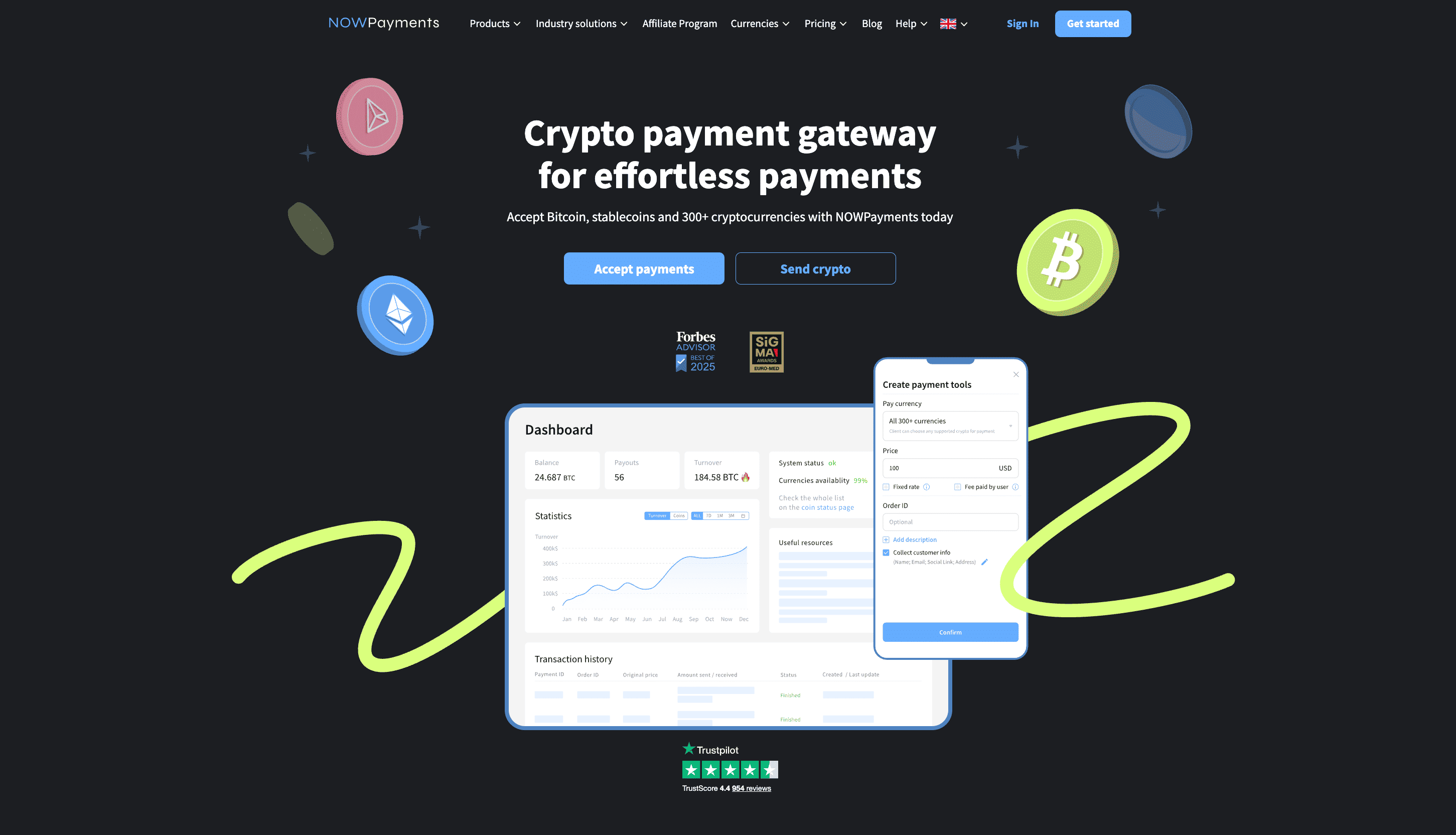
NOWPayments is a crypto business ecosystem that enables companies to accept digital asset payments, send mass payouts, manage conversions, and automate transaction flows.
The platform supports more than 350 cryptocurrencies and provides payment APIs, invoices, custody functionality, customer management, standard crypto payouts, and zero-fee ecosystem payouts to ChangeNOW Pro accounts.
For marketplaces, this infrastructure can connect customer deposits, payment confirmation, settlement, and outgoing seller payouts within one integration.
Businesses interested in adding crypto payments and seller payouts can create a NOWPayments account.


Be the first to comment