


The growing demand for digital accounts has redefined the world economy. As more businesses eliminate cash from their premises, they’re also looking for payment-processing systems that are dependable. These products make it possible for businesses to accept debit- or credit-card-based payments, offer digital wallets, and even process cryptocurrency transactions. With the rise of e-commerce, mobile payments, and the proliferation of digital currencies, demand for such services is growing ever higher, and with it, prospects for would-be entrepreneurs to find their way into this line of business. This guide will give us a course on how to start a company in your field and also guide you through the possibilities and considerations of becoming a service provider in the world of digital transactions that is growing so fast.
What Should You Know Before Starting a Payment Processing Company?
Legal and Regulatory Requirements. You need to know the laws and regulations applicable to this industry to work in it. Information must be handled securely, and this means following standards such as PCI DSS (Payment Card Industry Data Security Standard). Non-compliance has financial and reputational costs. You’ll also need to get up to speed with various regulations, including financial licensing, Know Your Customer (KYC) and Know Your Business (KYB) procedures, and tax requirements depending on your location.
Understanding the Market. This is a large business, with many different solution providers. To stand out, you have to know what your audience wants and what’s trending in digital payments. You need to know what your customers want, whether the need is for a legacy card system or emerging solutions such as blockchain-based services. Find out which transactions are trending and stay ahead of the competition.
Technology and Infrastructure. A payment service provider relies on a robust and secure infrastructure. Ensure your systems can handle high transaction volumes without any security or speed issues. Whether you build the tech yourself or work with a processing platform like NOWPayments, your infrastructure should be robust enough to accommodate the myriad payment methods that your customers expect.

How Does a Payment Processor Work?
When a customer buys something, the process starts when the buyer gives their transaction details. Next, the service provider checks with the card network (e.g., Visa or Mastercard) to see if the buyer’s account has enough funds. Money is debited from the customer’s account and credited to the merchant’s account once approved. All aspects of this process is done so quickly that it makes for a great user experience.
The gateway involves several key players:
- Merchant: The business that accepts the payment.
- Processor: The entity that processes a transaction flow.
- Card Network: Companies like Visa, Mastercard, and others that process card payments.
- Card Issuer: The bank that issued a card to a customer.
- Merchant Bank: The bank where the merchant maintains an account.
Processors accept payments through all popular methods, including credit & debit cards, mobile wallets, and cryptocurrencies. This variety allows merchants to serve more customers with card and digital payment options.
Payment Processing Business Solutions
When you have more than one solution to start up a payment infrastructure you can attract more kinds of users. Here are some things you need to keep in mind:
Payment Solutions. Different businesses operate differently, requiring them to both pay and receive payment through a variety of channels. Here are some top picks to check out:
- Online Payments: The simple way for e-commerce businesses to accept payments for goods or services online on websites and apps.
- Point-of-Sale Systems: These systems are obviously a must for brick-and-mortar businesses.
- Mobile Payments: Although credit and debit cards are still the most popular form of payment, more and more consumers are using mobile payment options such as Apple Pay, Samsung Pay, and Google Wallet to make secure payments in-store and online.
- Recurring Billing: For subscription services, recurring billing is a must-have, allowing merchants to automatically charge customers at regular intervals and ensuring a consistent cash flow.
- International Payments: If your business has a lot of international customers, then you need to be able to process transactions across currencies or countries. Enable international payments and sell to customers globally.
Security Solutions. Security is not just something that is nice to have, but it is rather the basic premise of any business that wants to be reliable.
Develop Your Platform on Safeguards for Merchants and Customers:
- Fraud Detection: Systems that can detect suspicious behavior before money moves in real time.
- Chargeback Controls: Assistance with dispute resolution and profit protection.
- Encryption Standards: Implementation of strong cryptography to safeguard sensitive data in transit.
- Custody Solutions: Not just a pass-through of funds, but also storage and fund-management services.
Merchants will receive crypto funds on a safe balance and then cash out in one transaction (not in many smaller ones), minimizing network fees and operational overhead. Among the options available, such as NOWPayments Custody.
Integrations with Merchant Platforms. The seamless integration with the existing merchant solutions is crucial for the smooth running of the business operations. Payment facilitators can’t but support:
- E-Commerce Platform: Your solution should integrate easily with the leading platforms for online stores, whether you are using Shopify, WooCommerce, or Magento. This tool will make it simple for merchants to accept payments.
- POS Systems: If you are dealing with brick-and-mortar stores, you need to be able to work with multiple POS systems so their businesses can take payments in person. As a retailer, you can gain more reach by providing your customers with a flexible product that’s usable on multiple platforms.
- APIs & SDKs: Developer-friendly interfaces let you customize your system’s interaction with your stack.
With these options, you can cater to a wide range of business types, from small online stores to large international corporations, while still providing the same security and convenience that customers expect.
How To Start A Payment Processing Company From Scratch
Step 1: Carry out Market Analysis and Choose a Niche.
Find somewhere that matches your passions and expertise. If you want your business to go well, focus on the correct stuff. One approach is to aid game sites by offering them offers or allowing consumers to buy with Bitcoin.
Step 2: Develop or Source the Technology
You may either build your own system from scratch or employ a white-label service from a crypto payment gateway like NOWPayments. With white-label services, you may enter the market faster and cheaper than if you were to construct your platform.
Step 3: Partner with Banks or Financial Institutions
You should collaborate with banks to create card networks and make payments safe. These connections are necessary to send and receive money, to assist clients, and to ensure your business complies with financial legislation.
Step 4: Set Up Compliance and Security Protocols
If you want to win your clients’ confidence, you will need to play by the rules. Having safety mechanisms, strategies to recognize scams and always following the regulations when it comes to money should be a commendable objective.
Step 5: Build a Payment Gateway and API
There has to be a secure mechanism for traders and banks to do business together and make transactions. You need a mechanism to swiftly receive payments and keep client data safe for anything you add or produce.
Step 6: Launch and Market Your Services
You should start marketing your services as soon as they’re ready. Talk about all the great things about your service. How safe it is, how easy to use, how great the customer service is, and so on.
How To Become A Payment Processor With White Label Solution
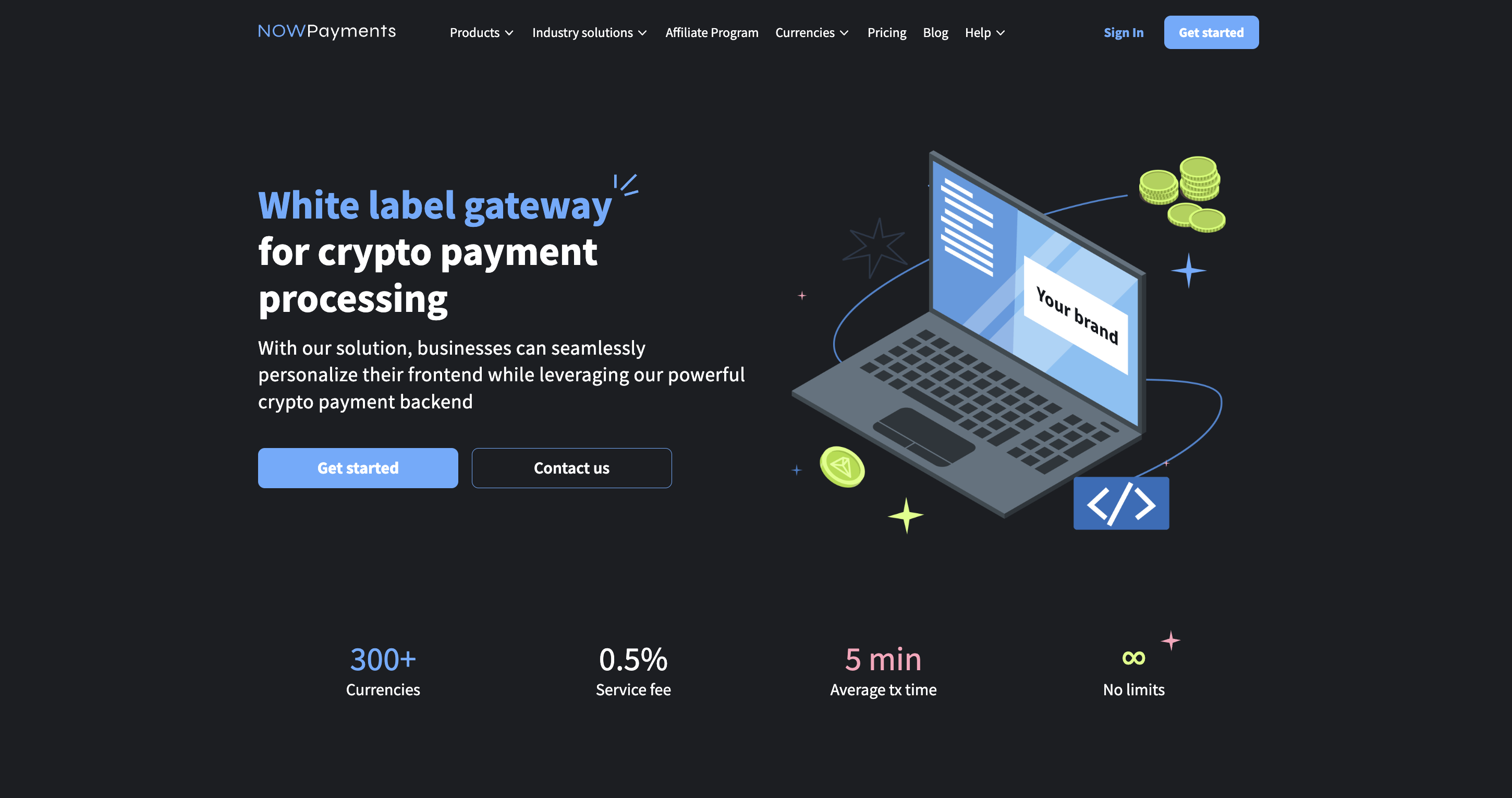
Labeling Your Brand as a Processor. With a white-label solution, you can offer branded services on the infrastructure of a trusted payment processor like NOWPayments This model removes the burden of having to build the technology and systems you need from the very beginning.
Partnerships and White-Label Solutions. Using a white label payment processing service means you can scale quickly by offering a trusted, customizable service without the need to invest in backend development. This is ideal for companies looking to break into the industry without the high upfront costs.
Benefits of Using a White-Label Payment Processing Solution. White-label solutions are a quick, cost-effective path to market. By partnering with a trusted provider, you ensure your services are secure, compliant, and scalable, allowing you to focus on building your brand.
NOWPayments provides a customizable white-label platform enabling businesses to offer branded services with capabilities such as cryptocurrency acceptance and multi-currency payment options, which means that entrepreneurs can get started quickly and scale up without the headaches of having to build their own infrastructure. To learn more about NOWPayments’ white-label solution, click here.
How NOWPayments Can Help You Launch Your Payment Processing Business
When you start your payment processing business, you must choose a reliable, scalable, and secure platform that can support a wide range of payment methods with minimal development time and cost. NOWPayments offers a full range of tools and services to facilitate entrepreneurs’ entry into the payment processing industry. Here’s how NOWPayments can help you to get started and grow your business efficiently:
- Quick Market Entry with White-Label Branding: NOWPayments allows you to release a fully branded gateway with their off-the-shelf backend, reducing your time to market by a huge factor over building your own infrastructure.
- Wide Asset & Method Support: The platform supports 350+ cryptocurrencies and multiple fiat settlement options, providing your clients broad flexibility in how they accept funds.
- Flexible Custody Choices: Choose non-custodial flows (direct wallet settlement) or NOWPayments Custody, which is great for the businesses that want easier operational control.
- Developer-Friendly Integration: Rich APIs, plugins and documentation allow you to easily integrate with e-commerce platforms or custom apps with little engineering overhead.
- Transparent Pricing & Low Fees: Startups can grow transaction volumes without the cost concerns of hidden monthly lock-ins and a competitive base fee (as low as 0.5%).
Final Thoughts
The payment processing industry relies on a model where businesses can facilitate secure financial transactions between customers and merchants. You’d be the processor, taking care of the various forms of money movement, such as credit cards, digital wallets, or even crypto. The sector has huge growth potential, and future revenues will be generated through transaction fees, service subscriptions, and value-added offerings such as fraud detection and recurring billing systems.
Choosing the right tools and infrastructure is critical to be successful in this space. The technology you select will determine your ability to meet market demand, maintain security, and scale, whether you decide to build your own system or partner with a white-label provider such as NOWPayments. If you want to get into the space, now is a good time to start a business. The rising need for digital and frictionless transactions offers a golden opportunity to create and scale a successful payment processing company.
FAQ
How do you become a payment processor?
To become a payment processor, you need to establish the necessary infrastructure, including secure payment gateways, partnerships with financial institutions, and compliance with industry regulations like PCI DSS. Additionally, you’ll need to implement fraud protection and encryption to ensure secure transactions.
What makes NOWPayments’ white-label solution a good fit for payment processors?
NOWPayments offers a powerful white-label solution that simplifies entry into the payment processing market:
- Full brand control with customizable interfaces.
- All processing, settlement, and compliance backend management.
- Ability to scale to handle large volumes of transactions.
- Cost-effective, letting you save up to $250k in development costs and speed up time to market.
What does a payment processor do?
A payment processor manages the transaction process between customers and merchants, ensuring funds are securely transferred and authorized. They protect sensitive data, prevent fraud, and ensure transactions are completed successfully.
How much does it cost to start a payment processing business?
- Building Your Own Infrastructure:
- Costs: $100,000 to $500,000+
- Includes: Development, security protocols, regulatory compliance (PCI DSS), and legal fees.
- Using a White-label Solution (e.g., NOWPayments):
- Costs: $10,000 to $50,000 for setup
- Ongoing Service Fee: 0.5% per transaction
- Ongoing Costs:
- Transaction Fees: Typically 0.5% to 3% per transaction
- Monthly Expenses: $2,000 to $10,000 for support, maintenance, and operations
What do you need to do to become a payment processor?
To enter this industry, you need:
- Secure processing infrastructure: For handling transactions.
- Compliance knowledge: With payment industry regulations.
- Partnerships: With financial institutions or banks for transaction authorization.
- Payment gateway integration: For connecting merchants to your system.
How do payment processors make money?
Payment providers make money primarily through transaction fees, which are a percentage of each payment. They can also charge setup and subscription fees and generate additional revenue from services like fraud prevention and currency conversion.



Be the first to comment