


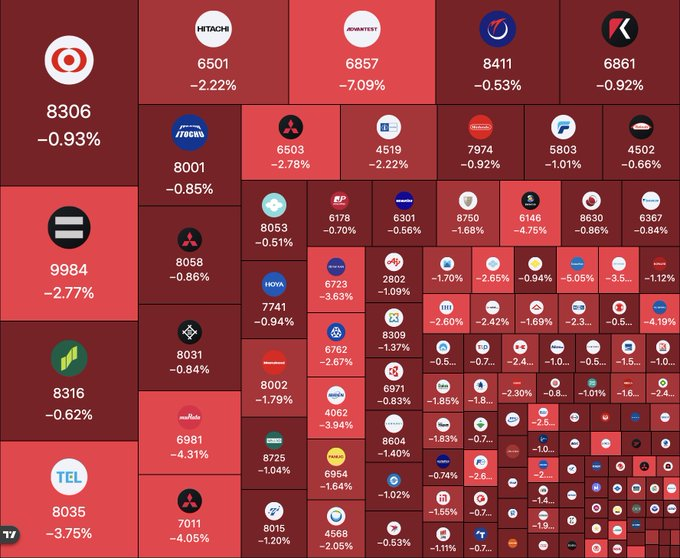
- Roughly $150 billion was wiped from Japanese stocks as the Nikkei fell.
- The yen weakened past 160 per dollar despite record intervention spending.
- Japanese 10-year bond yields hit a fresh 30-year high this week at 2.95 percent.
Japan’s financial markets are under renewed pressure, with the Nikkei 225 falling about 2%, the yen weakening past recent intervention levels, and bond yields climbing to multi-decade highs. The moves come as global tensions and U.S. rate expectations shift, raising a broader question: whether this stress could spill into global liquidity conditions and, in turn, affect crypto markets such as Bitcoin and XRP.
What Just Happened in Japan
The Nikkei 225 dropped roughly 2% following fresh US-Iran military strikes, wiping out about $150 billion in equity value in a single session. That’s not isolated. It’s the latest strain on a currency and bond market already under pressure:
- The yen weakened past 160 per dollar, its worst level since Japan and the US staged a coordinated intervention in late July
- That intervention cost Japan a record $98.7 billion, and it’s already losing its grip
- Japanese 10-year bond yields hit 2.95%, a fresh 30-year high
- Fed Chair Kevin Warsh’s signaling openness to more US rate hikes is widening the gap, dragging the yen down further
Oil Adds Another Layer of Pressure
US forces struck Iranian rocket launchers near the Strait of Hormuz over the weekend, their first military action in a month. Oil prices jumped in response.
Brent crude, the international benchmark, surged 5% to $90.61 a barrel, while US benchmark crude rose 2.7% to $85.66. Higher oil prices feed directly into inflation expectations, adding yet another reason markets are pricing in the possibility of a Fed rate hike, on top of Warsh’s own comments.

Why Traders Are Watching This
The link between Japan’s market stress and Bitcoin lies in the yen carry trade. Investors have long borrowed cheap yen to fund higher-yielding positions elsewhere. As Japanese bond yields rise, that funding becomes more expensive, forcing some trades to unwind and tightening global liquidity. Bitcoin, trading as a high-beta liquidity proxy, tends to feel that squeeze first, especially during thin-volume Asian trading hours when a single large order can move price disproportionately.
According to sources, one former Bank of Japan board member opened up about rising Japanese yields and said it “threatens to spill over into U.S. markets and disrupt U.S. economic and financial stability.”
But Here’s the Catch
A falling Nikkei doesn’t automatically mean a falling Bitcoin. Bitcoin sits at $77,992, and XRP is at $1.36 at press time. The real question isn’t whether Japan is stressed; it’s whether that stress spreads into broader risk-off positioning and forced deleveraging globally. So far, that spillover hasn’t shown up in crypto price action.
What to Watch Next
Japan’s market stress has not yet translated into direct pressure on crypto prices, but the underlying mechanism remains intact. Rising yields and currency weakness can tighten global liquidity, particularly if carry trades begin to unwind more aggressively. For now, the impact on Bitcoin and XRP appears limited, but the broader risk lies in whether these pressures escalate into a wider shift in global positioning.
Related: Japan Is Bringing Wall Street Closer to Bitcoin’s 24/7 World
Disclaimer: The information presented in this article is for informational and educational purposes only. The article does not constitute financial advice or advice of any kind. Coin Edition is not responsible for any losses incurred as a result of the utilization of content, products, or services mentioned. Readers are advised to exercise caution before taking any action related to the company.


Be the first to comment