


What to know:
- HY Energy sued JPMorgan and Citigroup over a frozen payments dispute case
- The disputed transfers totaled more than $40 million to China Oil and Petroleum.
- HY Energy claims the freezes began before US sanctions were imposed.
- The lawsuits highlight rising pressure on banks caught between US and Chinese regulations.
HY Energy sued JPMorgan and Citigroup over frozen payments tied to a Chinese energy firm later sanctioned by the United States. The company claims the transfers were blocked before sanctions took effect, increasing tensions between US compliance rules and Chinese financial regulations.
Frozen Payments Dispute and Banking Actions
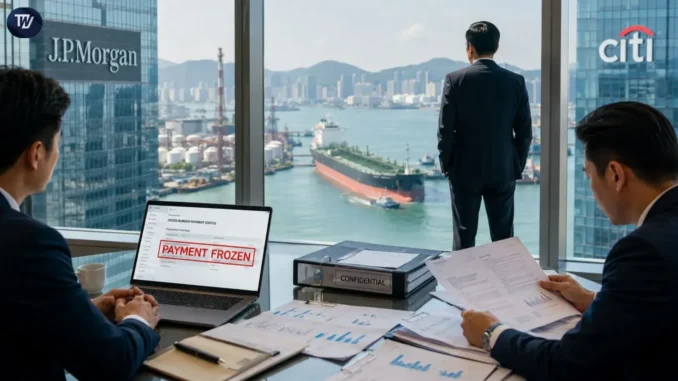
Chinese fuel trader HY Energy Group Co. has launched legal action over Frozen Payments against JPMorgan Chase & Co. and Citigroup Inc. after both banks froze payments linked to a Hong Kong-based energy company later sanctioned by the United States.
The lawsuits expose growing tensions between Washington and Beijing as financial institutions struggle to balance competing legal demands around Frozen Payments.

HY Energy filed a lawsuit against Citibank in a Shanghai court in February. The company argued the bank failed to process a $27 million transfer initiated in July 2023.
The payment was intended for China Oil and Petroleum Co., which later reported that the funds never arrived. According to court filings, Citibank informed HY Energy in May 2024 that the money had been released to the US Treasury Department’s Office of Foreign Assets Control.
In another case filed in Beijing in March, HY Energy launched yet another lawsuit in China’s capital city, claiming that JPMorgan blocked a different $13.5 million transfer to the very same party.
According to a notice received on SWIFT on May 31, 2024, these funds had been frozen based on advice from OFAC. Neither of the banks’ representatives made any statements on the matter.
Also Read: Grayscale Rebalances Q1 2026 Funds, Adds ENA and Removes AERO
Timing of Payment Freeze Raises Dispute
A major part of HY Energy is concerned with the time at which the blocked transfers took place in the Frozen Payment case. China Oil and Petroleum were sanctioned by OFAC in February 2024 for their connections with the Iranian Quds Force group.
According to HY Energy, the problem of Frozen Payments started mid-2023, and not after the introduction of sanctions, because at that time, there was no legal reason to freeze payments by banks, which resulted in monetary losses.
Frozen Payments Escalate US-China Tensions
Lawsuits are arising amid increased government pressure on international banks regarding Frozen Payments. The U.S. has expanded its sanctions on Chinese companies involved in Iranian oil exports, which makes Frozen Payments an important concern for international banks.
In August, the U.S. sanctioned five more Chinese refineries, including the Hengli Petrochemical Refinery Co. China is taking an even stronger stand. It passed the Anti-Foreign Sanctions Law in 2021 to respond to what it sees as discrimination through foreign sanctions.
China’s regulatory bodies have instructed large local banks to halt lending to sanctioned refineries as part of their risk assessments. This legal spat represents the wider geopolitical struggle before an expected meeting between Trump and Xi.
Also Read: BNY Expands Crypto Custody in UAE Through Abu Dhabi Partnership



Be the first to comment