



As Canadian businesses contend with rising costs, overdue invoices and tariff-related uncertainty, access to flexible working capital is becoming increasingly important.
KEO Capital believes the answer starts by bringing financing and payments together in one B2B supply chain financing and payment solution. Its blockchain-powered Workeo platform provides a facility for recurring inventory purchases that allows businesses to extend payments to suppliers while also helping them get paid sooner.
Founded in 2020, the company has expanded across Latin America, facilitating more than $1 billion in financing. Now part of Nasdaq Stockholm-listed KEO Capital, the company has established a Toronto headquarters and launched Workeo across Ontario, British Columbia, Alberta, Manitoba and Atlantic Canada.
The Canadian expansion is backed by a revolving senior loan facility of up to $50 million from a major Canadian bank. KEO Capital serves mid-market and enterprise businesses in sectors including manufacturing, wholesale distribution, logistics, construction, retail, technology and healthcare.
Fintech.ca spoke with KEO Capital CEO Roberto Marchiori about the gap Workeo aims to fill, the role blockchain plays in its infrastructure and the company’s investment, hiring and expansion plans for Canada.
What market gap led KEO Capital to launch Workeo in Canada, and why does the market need another B2B payments platform right now?
RM: Great question. First off, Workeo isn’t just a B2B payments platform. It’s a unique blockchain-powered B2B supply chain financing and payment platform in one, and that combination is the whole point.
The gap is straightforward. B2B payments and B2B financing have historically been offered as two separate products, so businesses end up managing a banking relationship, a factoring arrangement and a separate payments process. Workeo combines both inside one digital ecosystem.
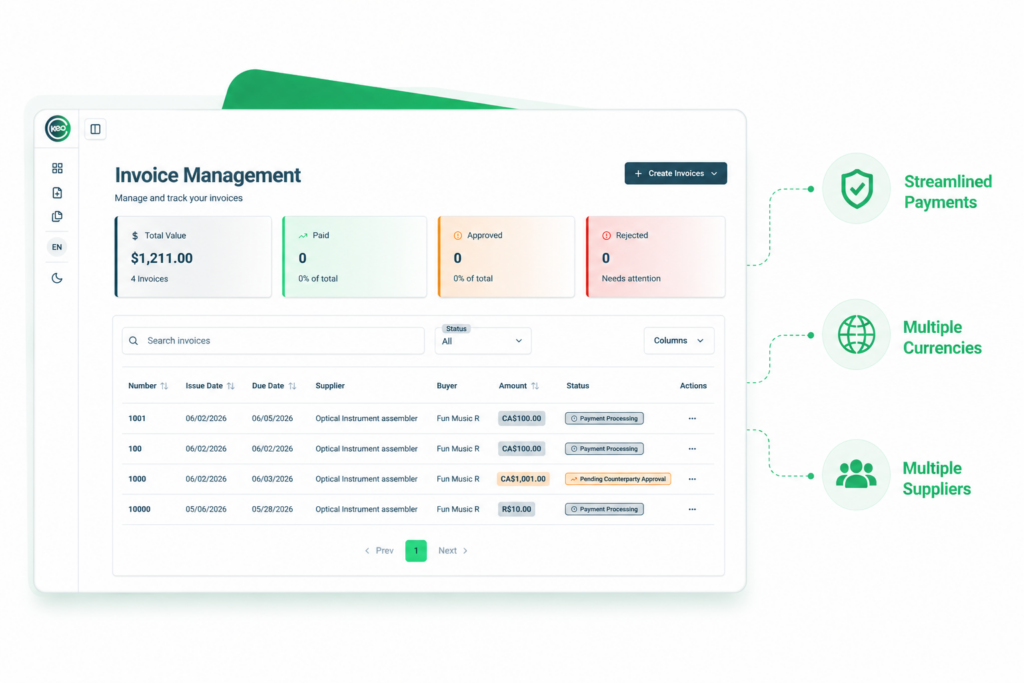
Buyers get flexibility to extend supplier and operating-expense payments through a revolving credit facility, and suppliers on the other side of that same transaction get paid faster, without either party negotiating financing separately.
We’ve been working on launching in Canada for over a year, and our timing lines up with real pressure on working capital. Statistics Canada reports 62.2% of Canadian businesses are facing cost-related obstacles, and separate research puts 44% of Canadian B2B credit sales as overdue.
Add tariff-driven uncertainty pushing some businesses to buy inventory defensively, and you have a market where existing tools, a line of credit here, a factoring arrangement there, aren’t as flexible as many businesses need them to be right now.
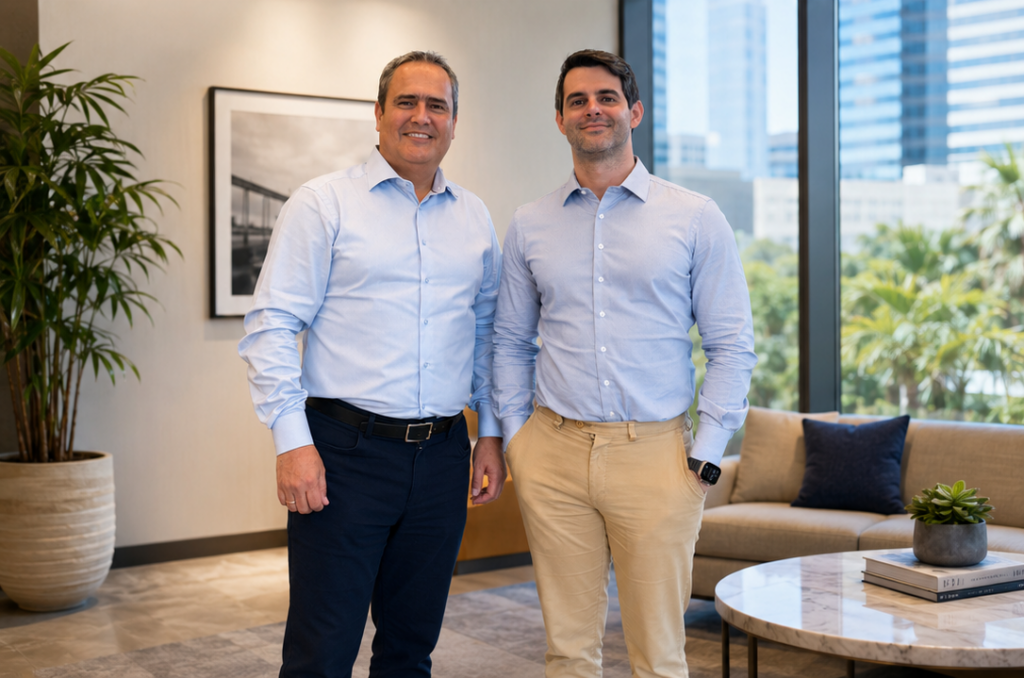
Why is the Canadian strategy focused on mid-market and enterprise businesses, and how does Workeo complement banks and other financial institutions?
RM: Workeo isn’t here to replace how businesses already bank, it’s another option that works alongside their existing relationships.
We’re focused on closing the cash-flow gap in supplier payments so businesses spend less time managing payments and more time on growth, and we see ourselves complementing the institutions they already work with, not competing with them.
In Latin America, we built our track record with clients ranging from medium to large enterprises, doing $1 million-plus transactions. Companies use inventory financing to increase purchasing power and secure better pricing on products. Manufacturers embed financing into their customer purchases to support dealers buying inventory. Resellers use flexible inventory financing to close the gap between what their suppliers demand and what their customers pay.
That same gap runs across Canada’s broader mid-market and enterprise base too, spanning manufacturing, wholesale distribution, logistics, construction, professional services, retail and healthcare. That’s where we saw the clearest fit to start, and it’s also why a structured lending facility from a Canadian Big Six bank made sense to anchor the launch.
How does Workeo actually work under the hood, and what role does blockchain technology play in the platform’s competitive edge?
RM: Workeo is the platform businesses interact with. They apply through a four-step digital process, get approved, and access a revolving credit facility to extend payment terms on supplier invoices and operating expenses, all inside one digital ecosystem. That underwriting process typically takes about a month to establish financing eligibility.
Underneath that sits our embedded payments and lending infrastructure, which automates the clearing of B2B transactions.
Our blockchain technology supports secure, transparent settlement across that infrastructure, so both sides of a transaction get 24/7 visibility into where a payment stands, instead of the multi-day reconciliation that’s typical of traditional B2B payment rails. That combination, financing and payments in one ecosystem, backed by infrastructure built for speed and transparency, is what gives Workeo its edge.
So who is KEO Capital, and how did it all start?
RM: KEO Capital got its start in 2020 as KEO World, founded to solve one specific problem: businesses were stuck negotiating financing and payments separately, through different providers, and neither buyers nor suppliers were getting what they needed.
We built Workeo to combine both into one platform, and grew from six employees to more than 60 in just over five years, expanding across Mexico, Colombia, Peru, Brazil and the US, and facilitating more than a billion dollars in financing across sectors like fuel and energy, automotive, manufacturing, technology and foodservice.
Canada is that next phase. We’re bringing a model we’ve already proven at scale, backed now by the financial discipline that comes with being a public company, and applying it to a market that needs it just as much.
What are KEO Capital’s investment, growth and hiring plans for Canada over the next 12 to 24 months?
RM: KEO Capital is here for the long run in Canada. We’ve opened a Toronto headquarters and built a dedicated Canadian leadership team, and that team is growing. Our Canadian growth is backed by real capital: a revolving senior loan facility of up to $50 million from a leading Canadian bank, and more than US$130 million in cash, investments and receivables on our balance sheet as of Q1 2026, with Deloitte-audited financials behind it.
Our current footprint covers Ontario, British Columbia, Alberta, Manitoba and the Atlantic provinces. Expanding responsibly into the provinces we’re not yet in, alongside growing our local team, is exactly the work ahead for the next 12 to 24 months.


Be the first to comment