



A section of DeFi players across the Ethereum [ETH] ecosystem has opposed the recent inflation proposal. The new proposal aims to remove staking rewards if staked ETH surpasses half of its overall circulating supply.
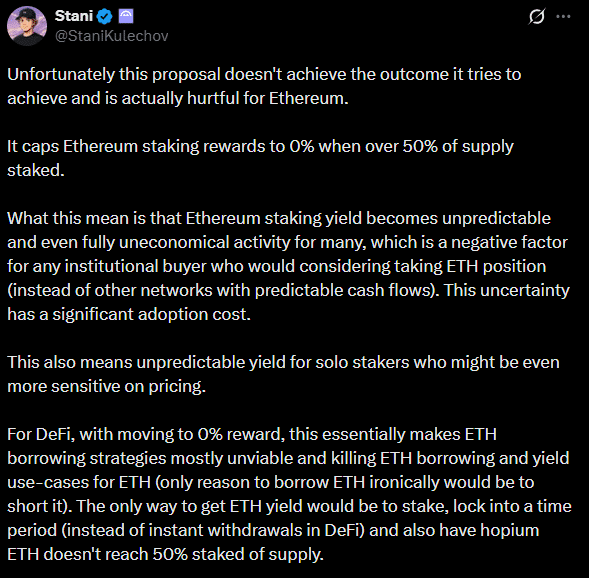
According to researcher Justin Drake and the team, the proposal (EIP-8361) would help solo stakers and make ETH a store of value by making it deflationary. However, Stani Kulechov, CEO of Aave, a top lending protocol, rejected the inflation plan.
DeFi leaders oppose ETH’s staking rewards cap
For Kulechov, the proposal would derail institutional adoption and affect the solo stakers with “unpredictable yield.” Additionally, it would hurt DeFi borrowing strategies.
Could be good for DeFi but not for ETH in DeFi. This just makes ETH less viable as an asset and restricts its potential. I hope this proposal doesn’t move forward; otherwise, we see lot of people moving their interest in other networks
Similarly, Mike Sligadze, CEO of EtherFi, echoed the same concerns and wondered how the negligible inflation cut will boost ETH value at the expense of the DeFi ecosystem.

Seven of the top 10 DeFi protocols will face a capital exodus. Why? Is the idea that a 0.8% reduction in issuance is somehow going to help ETH price? People who stake ETH don’t sell it.
For Fidelity’s Director of Research, Lorenzo Valente, Aave, Morpho, Pendle, Ethena and more that depend on ETH credit markets would be affected.
Besides, Sligadze disputed the claims about liquid staking tokens (LST) eating ETH value. According to him, LSTs act as intermediates to about a quarter of staked ETH and can’t displace the altcoin as money. He concluded,
This is bad for decentralization, this is bad for Ethereum adoption, and this is bad for the credibility of the network to roll things out this way.
The problem with ETH inflation
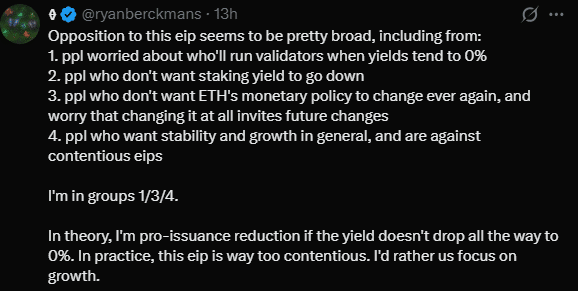
For some moderate conservatives such as Ryan Berckmans, the issuance reduction is crucial and much needed, but cutting it down to zero does not make sense.
In May, Grayscale supported capping staking rewards to boost ETH value in May. But it did not propose any preferred mechanism to go about it.
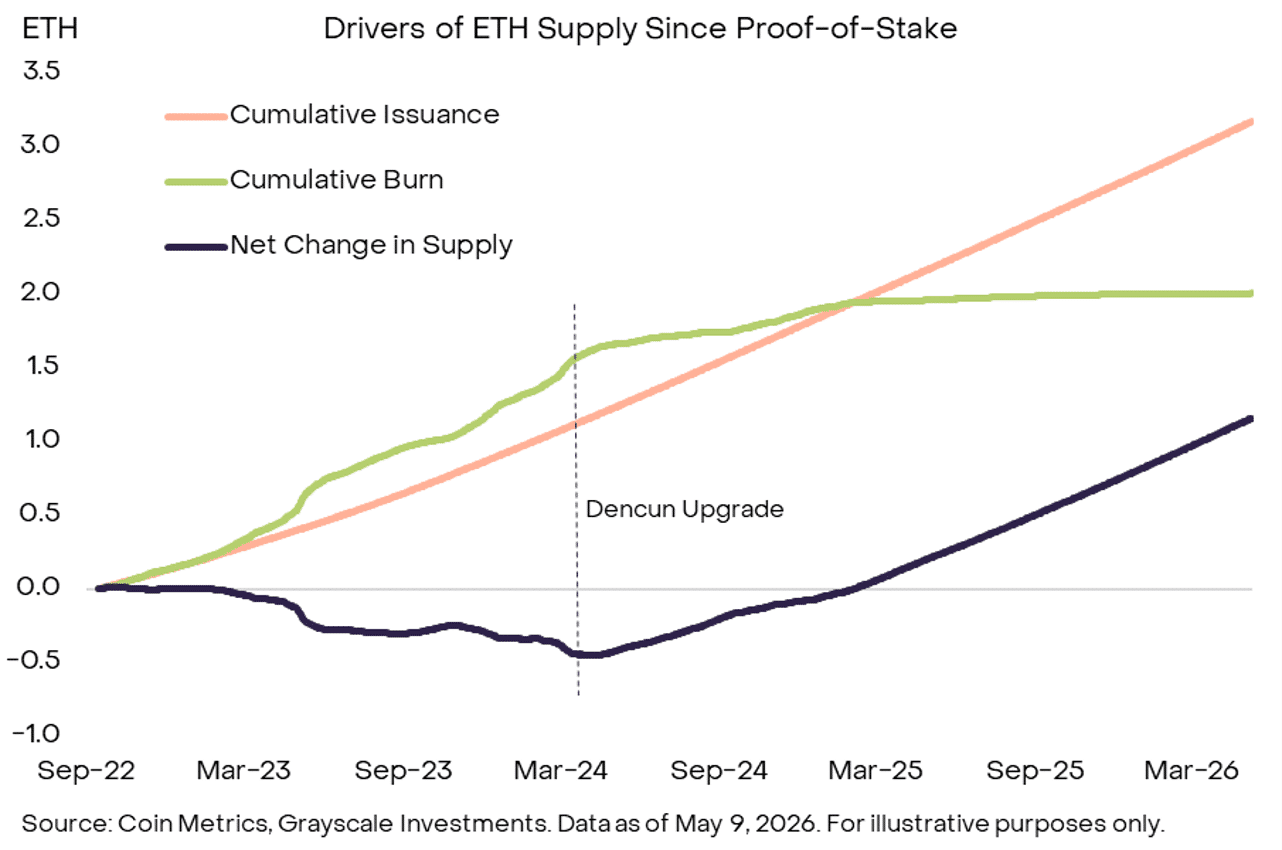
Currently, ETH issuance stands at 0.8% per year, and stakers earn 2.62% for their staked ETH. Amid a muted market, staking demand has hit record levels of 41.4 million ETH, or 34.4% of total supply (120M).
But since the Decun upgrade in early 2024, ETH’s burn rate has slowed, and the issuance rate has climbed higher (black line, net supply change), making ETH less attractive as a store of value (SoV).
However, with major players like Bitmine putting over $10 billion on the line for ETH staking, at least building consensus on key inflation is important before making them public. There is a high chance the proposal will stall with the broader DeFi opposition against it.
Final Summary
- Aave CEO and other DeFi leaders opposed the ETH inflation proposal to remove staking rewards
- Critics claimed that it would kill ETH credit markets and drive stakers to other chains





Be the first to comment