



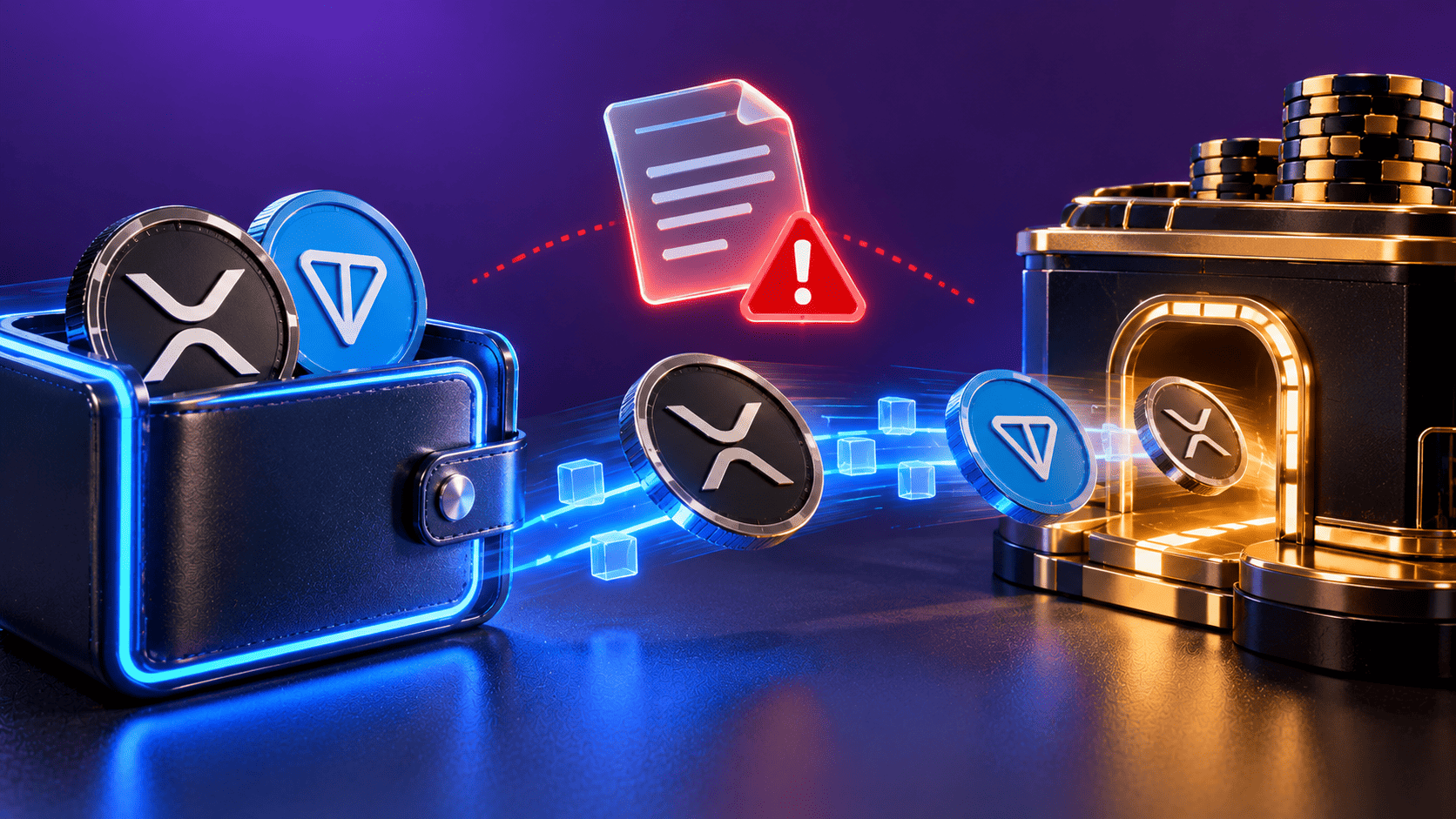
Bitcoin deposits need one piece of information: an address. XRP and TON transfers to a casino or exchange often need two: the address and a short memo that tells the receiver whose payment it is.
Leave the memo out, and the coins still reach the right wallet. The platform cannot match them to your account, though, so the balance stays frozen until support traces it by hand.
Each network names and formats the field differently, and wallet apps rename it again. Learn the label in each place and a deposit moves without a hitch.

Why One Address Can Serve Thousands of Players
Bitcoin and Ethereum cashiers usually generate a fresh address for every user. XRP Ledger and TON platforms often work the other way: one shared receiving address collects deposits from everyone.
XRP Ledger accounts hold a reserve, currently 1 XRP for a basic account, so thousands of separate deposit accounts would lock up real money. TON wallets are smart contracts that need deployment and storage fees. One pooled address avoids both costs.
Shared addresses work only with a second identifier. The memo plays that role, much like a reference number on a bank transfer to a large company.
Two Chains, Two Kinds of Field
XRP and TON handle the identifier in different ways, and the difference shapes what can go wrong.
XRP: the Destination Tag
XRP uses a numeric destination tag, a whole number that can run up to ten digits. Letters and spaces fail, and a single wrong digit credits a different user or leaves the payment unassigned.
Each account can also switch on a “require destination tag” setting, which makes the ledger reject untagged payments outright. Exchanges usually enable it, while some casino addresses leave it off, so a missed tag may slip through. Our look at Ripple sportsbooks covers how XRP behaves once a deposit clears.
TON: the Comment
TON uses a free-text comment attached to the transfer. Platforms usually assign a string of numbers or letters, and the comment must match it character for character, with case and spacing intact.
TON addresses also come in two forms. Bounceable addresses, which usually begin with EQ, return funds when the destination contract has yet to deploy, while non-bounceable ones, which often begin with UQ, keep them there. Platforms that show a specific format expect you to paste that exact string.
Other Networks That Use a Memo
XRP and TON draw the most support tickets at casinos, yet several other chains rely on the same idea.
|
Network
|
Field name
|
Format
|
Common use
|
|
XRP Ledger
|
Destination tag
|
Whole number
|
Exchanges, casinos, payment services
|
|
TON
|
Comment
|
Free text
|
Exchanges, Telegram-based platforms
|
|
Stellar (XLM)
|
Memo
|
Text, ID or hash
|
Exchanges and anchors
|
|
Cosmos (ATOM)
|
Memo
|
Free text
|
Exchange deposits
|
|
Hedera (HBAR)
|
Memo
|
Free text
|
Exchange deposits
|
|
EOS
|
Memo
|
Free text
|
Exchange deposits
|
Last verified: October 2026
Field names on this list apply to the network itself. Wallets and exchanges often relabel them, which explains much of the confusion.
Same Field, Different Labels
Withdrawal screens on exchanges use their own wording, and the label rarely matches the casino’s deposit page. Watch for these variations:
-
Tag, Destination Tag or DT: XRP on most exchanges and wallets
-
Memo, Comment or Message: TON in Tonkeeper, Telegram Wallet and exchange screens
-
MEMO/Tag: a combined field on several exchanges, used for every memo-based network
-
Payment ID or Note: older or less common wallet interfaces
Optional-looking fields cause the most mistakes. Some wallets mark the memo as optional because many recipients skip it, yet a casino with a shared address needs it every time.
Where Missing Memos Leave Your Funds
Untagged coins rarely vanish. They stay in the platform’s shared wallet, visible on a block explorer but unlinked to any account.
Recovery depends on the platform. Support usually asks for the transaction hash, the amount, the sending address, and the time, then matches the payment manually. Some platforms charge a handling fee or set a minimum before they process a claim, and response times vary from hours to weeks.
Exchanges sometimes require a signed message from the sending wallet to prove ownership. Keep the transaction hash from every memo-based deposit until the balance shows up. Our comparison of casinos with wide network support shows how many chains a single cashier can list.
XRP and TON on the Dexsport Cashier
Dexsport lists XRP on the Ripple network and three assets on TON, among them USDT and Notcoin, within a cashier of 26 networks. Each route shows its own deposit details and a minimum anchored to a dollar value.
Players who fund Dexsport from an exchange should copy every field the deposit screen displays, any tag or comment too, into the corresponding exchange field. Wallet connection offers another route for supported networks, with the transfer signed in the player’s own wallet.
Before a payout, Dexsport expects the deposited sum to see play once on sports selections priced at 1.3 and above, or twice over in casino games. Dexapp LTD operates Dexsport under an Anjouan licence. Our guide to TON casinos explains how Telegram-linked play works on that network.
Conclusion
Memo fields exist because XRP and TON platforms often share one receiving address across many users. XRP relies on a numeric destination tag, TON on a text comment, and Stellar, Cosmos, Hedera, and EOS follow the same idea under their own labels.
Missing or mistyped memos rarely destroy funds, yet they leave coins unassigned until support matches them by hand. Copy every field the deposit page shows, match labels across apps, and keep the transaction hash until the balance appears.
Gambling rules vary by country, so check yours before any deposit. Play only at legal age, expect that KYC or AML checks may apply, and fix a budget in dollars, since XRP and TON prices move sharply.
Disclaimer: The information here is provided for general purposes only and is not legal, tax, investment, or financial advice. Network rules, reserve amounts, supported assets and recovery processes change over time, and the coins named here are not a recommendation to buy. Casino games and betting involve risk, and rules vary by country, so check the law where you live. Please play responsibly, within your means, and only if you are of legal age.



Be the first to comment