


Meta Petal is Meta Platforms’ newly revealed transatlantic subsea cable, and despite being years away from going live, it contributed to a 7% rise in META shares as investors priced in long-term benefits for AI, cloud applications, and global data movement.
Despite not being crypto-native, Meta Petal bodes well for blockchain infrastructure that sorely needs durable intercontinental links for trading, validation, and settlement. In the race for exabit transatlantic capacity, Meta Petal will join US East Coast facilities to France, building a proprietary high-capacity corridor into continental Europe.
Ownership Over Leasing
Meta has already co-owned cables including 2Africa, Marea, and Anjana, and this is all part of an ownership rather than leasing bandwidth plan.
The main players behind Meta Petal include Meta’s infrastructure team, submarine manufacturing partners, and French landing hubs in Marseille, a major interconnection hub for Europe linking up via submarine cable to the Iberian Peninsula and Portugal.

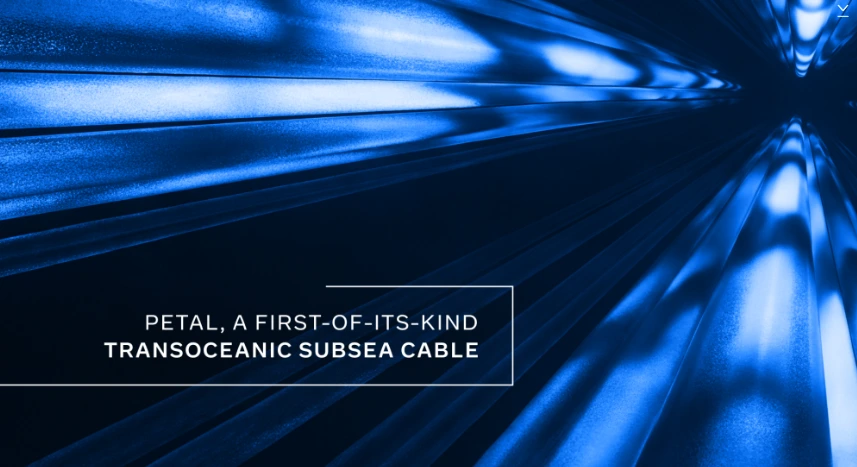
Global capacity has grown at more than 30% annually since 2018, according to TeleGeography, but even transatlantic cable systems have typically operated in the 200- to 400-terabit range; a petabit-class cable represents a generational step up in fiber pair count and power feeding.
France is a natural strategic access point to financial centers in London, Frankfurt and Amsterdam. Petal’s goal of 1 petabit per second would represent a new pinnacle.
Also Read: Meta Stock Plunges 9% as Massive AI Spending Shakes Investors
Why Physical Layer Upgrades Matter for Crypto Markets
Blockchain networks run at the application layer, but throughput is ultimately limited by the physical layer, which is where Meta Petal matters. Institutional trading desks, stablecoin issuers, custodians, and layer-2 sequencers operate through globally dispersed data centers that must stay in sync, and a petabit-class link like Meta Petal strengthens that foundation.
An increase in transatlantic capacity alleviates congestion and latency variance across US and European nodes where a significant proportion of Ethereum validators, Bitcoin mining pool servers, and centralized exchange order matching engines are located.
Onboarded to Binance, Coinbase, Kraken, and CME Group, active traders gain improved price discovery and reduced slippage due to tightened latency. The upgrade also impacts split-up storage and data availability. Large repositories of information on Filecoin, Arweave, Celestia, and EigenDA are costly to duplicate across jurisdictions.
Transporting data per bit at lower costs with Meta Petal unlocks opportunities for real-time replication. The trend follows moves by Google with Equiano and Dunant, and Microsoft with MAREA, but Meta Petal pushes it to a petabit scale. Cable ownership by hyperscalers like Meta reduces dependency on legacy carriers, offering a more predictable pricing outlook for node operators and staking providers like Figment and Coinbase Cloud.
Also Read: SlowMist Flags Crypto Wallet Security Risks From FomoPeek and DarkSword
Regulatory Environment, Risks, and the Future
Petal emerges amid an AI-led capex supercycle. Meta assumed $60-65b in infrastructure spend for 2026; the pipeline was dominated by subsea fiber growth. The market response in META was predicated on proprietary petabit routes providing durable benefits in AI inference and replication. Regulatory pressures are mounting.
Source: Figma
EU is taking forward digital sovereignty reviews of subsea infrastructure, while the USA’s FCC and France’s ANSSI began stepping up security reviews of landing stations. As use concentrates among hyperscalers, concern about resilience. Potential threats include subsea systems risk geopolitical disruption, anchor damage, and delays in permitting.
Also Read: Meta & BlackRock 2026 Texas Deal Supercharges Crypto Compute
Redundancy Still Essential
Industry reports indicate that average transatlantic repair times come to 18 days in 2024. For blockchain applications with persistent liveness requirements, redundancy on multiple cables remains necessary. Petal will likely come online in 2028-2029 depending upon permits.

Source: Bombay Chamber
For crypto participants, the effects will be felt cumulatively: more resilient bandwidth would enable increased institutional participation, distribution of validators, and beefier backup requirements for exchanges/custodians. As AI and blockchain demands merge, petabit infrastructure like Petal will become core to on-chain finance in the next few years.
Also Read: Meta Shares Jump 7% as AI Cloud Expansion Plans Emerge


Be the first to comment