


What to know:
- Oman targets Bitcoin mining to monetize flared gas, excess grid power, and solar, like UAE/Saudi models.
- State-backed mining with KYC/AML standards aims to attract vendors and create local tech jobs.
- Success hinges on managing volatility, e-waste, water use, creating clear licensing and sustainability rules.

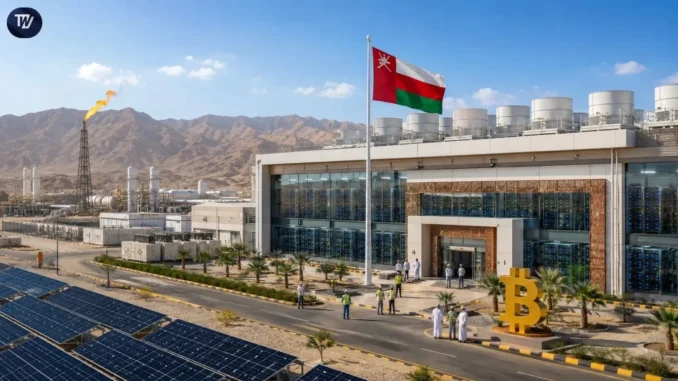
Oman has indicated that it is becoming more inclined towards Bitcoin mining, thereby sharing the Middle East trend where several governments are not only exploring digital asset infrastructure but also providing state backing to the same. Besides, it is also consistent with the major economic diversification, technology investment attraction, and energy surplus monetization efforts in the region.
So, Bitcoin mining in Oman could be the catalyst for the effective utilization of the natural gas that is flared, the grid capacity that is in excess, and new renewable energy projects, as well as the involvement of the Sultanate in the global hash rate market.
Policy and Energy Drivers
Fundamentally, the attraction remains in energy arbitrage. Given that Bitcoin mining calls for a lot of power, countries that have access to either cheap or stranded power can turn it into an economic output. The latest reports about Oman are that their plans are connected with pilot projects that utilize not only flare gas but also solar.



Source: Xverse Wallet
This way, their approach is a reflection of those of the UAE and SA. And regulated mining is a source of policy advantage for Oman, as it enables it to set compliance standards for KYC, AML, and grid participation, thereby differentiating it from unregulated offshore operations.
Also Read: Tether-Backed Adecoagro Bitcoin Mining Hub Powered by Sugarcane
Market and Geopolitical Implications
Oman’s expansion of its mining activities may slightly reshape the regional hash rate distribution and lead to the arrival of mining hardware vendors, data center operators, and blockchain companies. This could bring the creation of local jobs in infrastructure, cooling, and grid management.
On a geopolitical level, government participation in mining leads to concerns about the decentralization of the network; Yet, it also confers a new status upon Bitcoin, seeing it as infrastructure rather than mere speculation.
Also Read: Bold Bitcoin Mining Goes Orbital Late 2026
Risks and Next Steps
The problems will not disappear, and Bitcoin’s price fluctuations, the production of e-waste from ASIC miners, water consumption for cooling, and the demand for a more transparent regulatory structure are very real issues. For Oman’s plan to be effective, formally granting licenses, allowing the electricity grid to accommodate, and the establishment of sustainability criteria are the main areas that need to be addressed.
Also Read: Bitcoin Mining Crisis Deepens as Canaan Posts $88.7 Million Loss in Q1 2026



Be the first to comment