



China delivered a two-part signal to the crypto market this week: Tencent began testing Xiaowei, a native AI agent embedded in WeChat’s 1.4 billion-user platform, while the PBOC (People’s Bank of China) published a sweeping review of its anti-money-laundering enforcement.
It reported more than 2,000 money-laundering convictions in 2025 alone and named virtual-currency laundering a top enforcement priority heading into the next five-year policy cycle.
The two developments are not coincidental. Together, they sketch a clear picture of where China wants its digital economy to go – and where it emphatically does not.
Tencent and Ant Group are both making fresh consumer AI platform moves, even as OpenAI’s margins worsen. 未尽研究 · Weijin Research maps the distinct logic: Tencent is wiring agents into its social graph and mini-program layer, while Ant is embedding skills into its financial… pic.twitter.com/WqSeRjs5aW
— Tech Buzz China (@TechBuzzChina) June 23, 2026
China’s Anti-Money Laundering Crackdown Goes Deeper on Crypto
The PBOC’s policy document highlights that criminals are increasingly using virtual currencies and new technologies to hide and transfer illicit funds.

In 2025, Chinese courts issued over 2,000 judgments for money laundering, with illicit crypto laundering estimated at $82Bn globally; Chinese networks accounted for $16.1Bn.
In response, China enhanced enforcement through a revised Anti-Money Laundering (AML) Law and established a beneficial ownership reporting system in 2024 to combat shell companies.
In February 2026, the PBOC and other agencies extended regulations to include offshore stablecoins and tokenized assets, designating various crypto activities as illegal. This approach reflects a broader crackdown on crypto-related financial crime beyond China’s borders.
DISCOVER: Best Meme Coin ICOs to Invest in 2026
We got early access to WeChat’s new AI assistant “Xiaowei” and ran an initial test. Xiaowei says it’s built by the WeChat team, runs on their in-house Chinese LLM WeLM, with DeepSeek handling some responses.
Users activate it manually. From there, Xiaowei can set calendar events,… pic.twitter.com/vHhqwJABeJ— X.PIN (@thexpin) June 23, 2026
Tencent’s Xiaowei WeChat AI agent, currently in small-scale testing, supports text and voice interaction and can open WeChat mini-programs, the built-in apps that power payments, merchant transactions, bookings, and dozens of daily services.
Tencent has not disclosed the underlying model, but the strategic logic is straightforward: embed an AI agent into the world’s most data-rich super-app and let it operate exclusively on state-approved payment rails, including WeChat Pay and the PBOC’s own e-CNY (China’s central bank digital currency, also known as the digital yuan).
That architecture is the opposite of pseudonymous crypto. Every Xiaowei interaction takes place in a fully KYC’d (Know Your Customer, identity-verified) environment where behavioral data flows to Tencent and, by extension, to regulators. For the PBOC, an AI agent that nudges 1.4 billion users toward e-CNY and away from unregulated virtual currency is a compliance asset, not a competitor.
The contrast with Russia’s simultaneous move to embrace crypto for state purposes, detailed in Russia’s July 2026 crypto law, illustrates how sharply major powers are diverging on digital asset strategy even as they share concerns about financial crime.
EXCLUSIVE: Join 99Bitcoin’s $1000 USDT Airdrop on ByBit
China Crypto: One Nuanced Signal From the PBOC
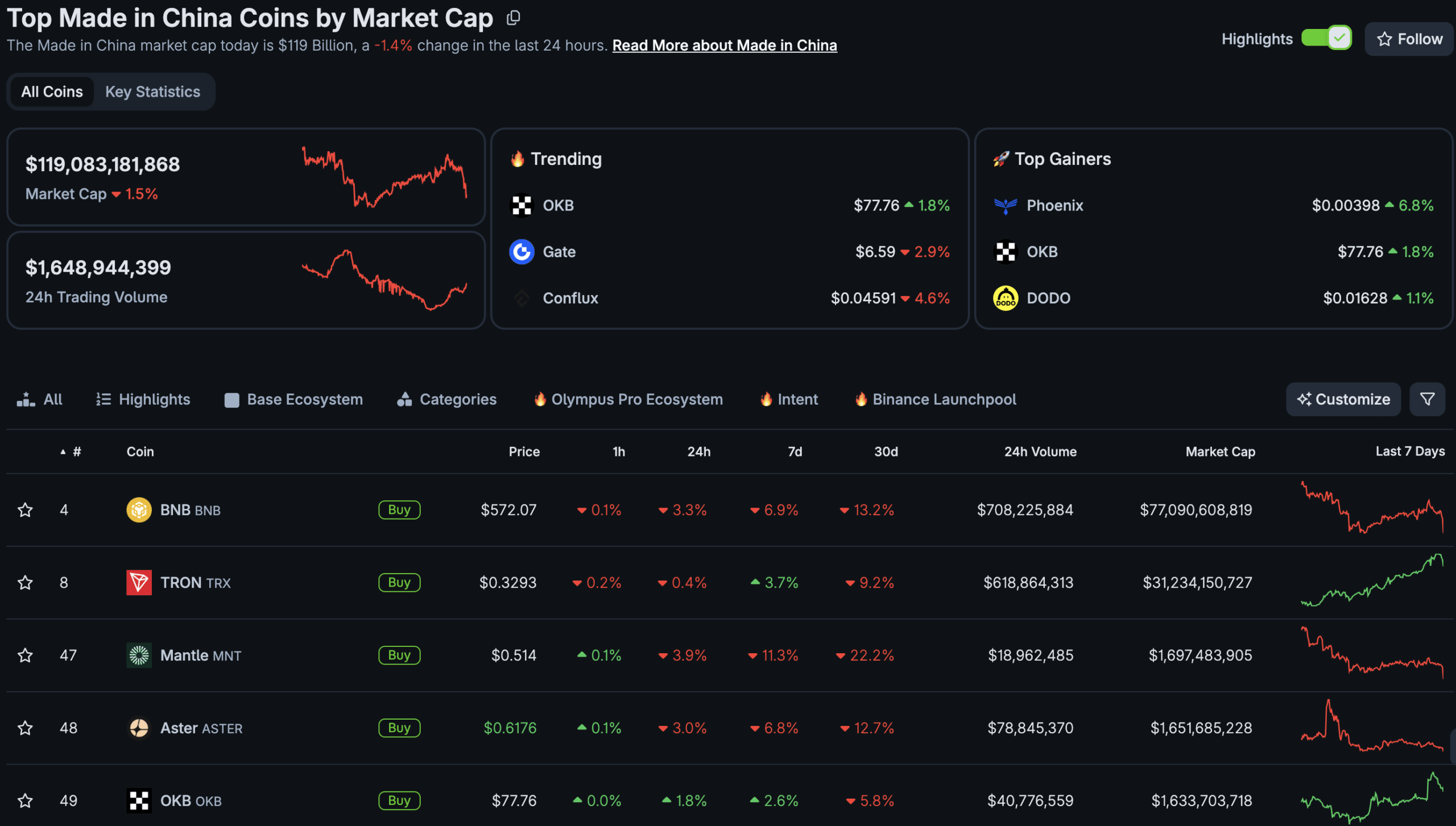
Not every signal from Beijing is restrictive. Wang Xin, director-general of the Research Bureau at the PBOC, said at the Lujiazui Forum on June 17 that stablecoins “could assume a larger role in international payments in the future” and called for regulatory coordination and international cooperation. That is a notable concession from a central bank that has otherwise spent five years tightening the perimeter of Chinese crypto regulation.
Liu Guixiang, a member of the judicial committee of China’s Supreme People’s Court, added in May that courts would conduct further research into adjudication standards for virtual currency disputes, a sign that the legal framework around crypto is still being written, not permanently closed.
For retail investors, the read is straightforward: China is not softening on open crypto flows, but it has not ruled out a state-controlled digital asset layer built around e-CNY and tightly supervised stablecoins. Xiaowei is the delivery mechanism for that future. Unregulated virtual currency is not invited.
EXPLORE: Best Crypto Presales With Asymmetric Upside in the Current Market

Why you can trust 99Bitcoins
Established in 2013, 99Bitcoin’s team members have been crypto experts since Bitcoin’s Early days.
90hr+
Weekly Research
100k+
Monthly readers
50+
Expert contributors
2000+
Crypto Projects Reviewed


Follow 99Bitcoins on your Google News Feed
Get the latest updates, trends, and insights delivered straight to your fingertips. Subscribe now!







Be the first to comment