


Polkadot has launched dotUSD, a native stablecoin governed by the DOT DAO through OpenGov, giving the network a stablecoin designed without a single issuing company or central controller. The development comes as DOT faces renewed selling pressure after a sharp decline from the $1.20 area. DOT is trading near $1.11, while market participants are watching whether the token can stabilize around the lower liquidity zone highlighted by analyst Abdul-Hadee Isah Ibraheem.
Polkadot Introduces a Decentralized Native Stablecoin
Polkadot has officially launched dotUSD, positioning the stablecoin as a network-native alternative to stablecoins controlled by centralized issuing companies. According to Polkadot, dotUSD has no issuing company or single point of control. Instead, the DOT DAO governs the asset through OpenGov.
The development gives Polkadot a stablecoin that is directly connected to its decentralized governance framework. Stablecoins have become an important part of blockchain ecosystems because they provide liquidity for DeFi applications, trading, and on-chain financial activity.
Source: Polkadot’s X Post

DotUSD could therefore become an important piece of Polkadot’s broader ecosystem as adoption develops. Its launch also gives applications building on the network another native asset for decentralized financial activity.
Also Read: DOT Price Prediction: DOT Eyes $0.91 Recovery Amid Network Growth
DOT Price Eyes Breakout as Stablecoin Launch Arrives
The dotUSD launch comes while DOT is dealing with a weaker short-term market structure. The token has declined from the $1.20 region and is currently trading around $1.11, keeping traders focused on whether the recent selling pressure will continue.
The contrast between the fundamental development and DOT’s price action is significant. Polkadot is expanding its financial infrastructure through dotUSD, but the market has yet to reflect that development through a sustained recovery in DOT.
Trading activity remains an important factor to monitor as the token approaches the liquidity zone highlighted by the analyst. A shift in buying activity around support could provide an early indication of whether sellers are losing momentum.
DOT Technical Structure Points to a Critical Liquidity Zone
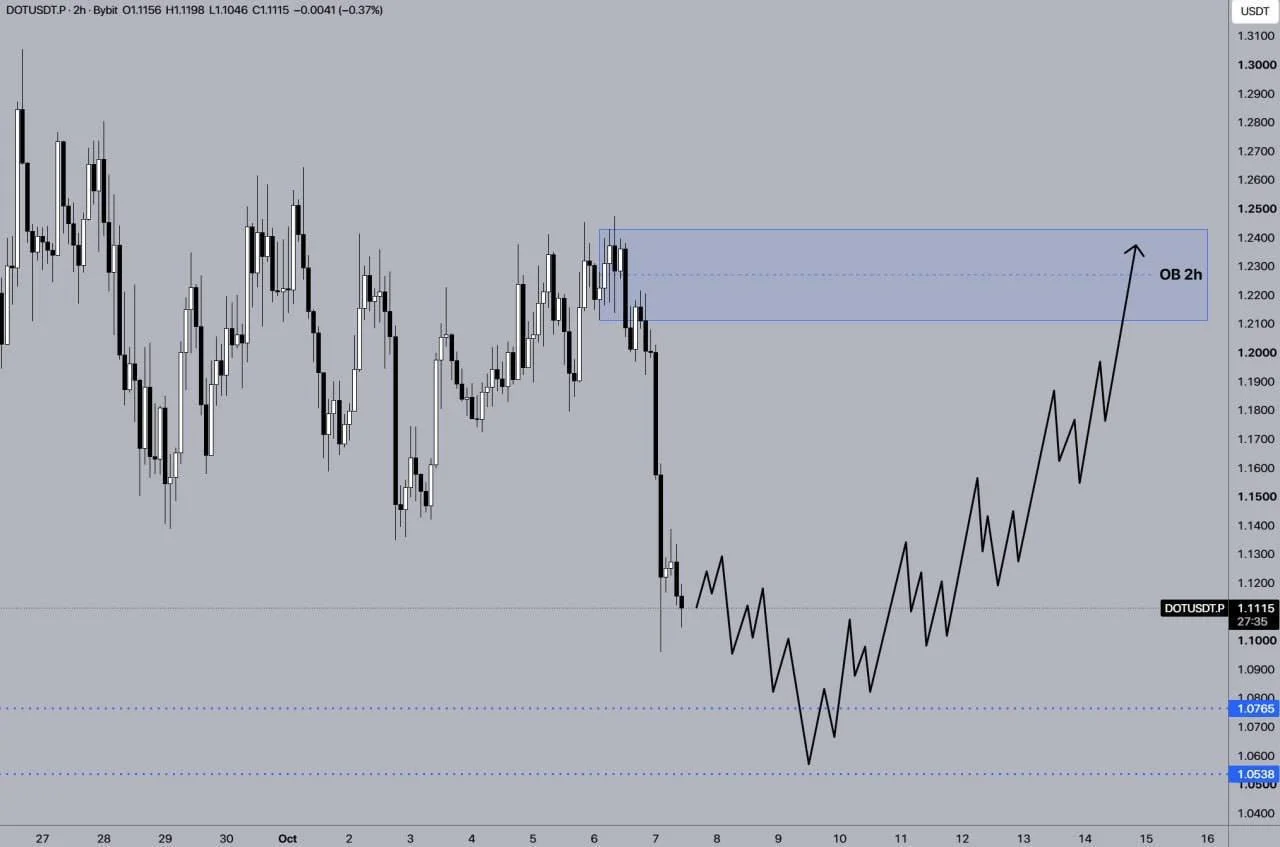
DOT is currently trading near $1.11 after its recent decline. The immediate area highlighted by Abdul-Hadee Isah Ibraheem sits between $1.0540 and $1.0765, which the analyst identifies as a lower liquidity zone.
A successful defense of this area could support a recovery attempt toward the $1.21 region, where the analyst has identified a 2-hour order-block zone. This level also sits close to the area from which DOT recently faced selling pressure.
Source: Abdul-Hadee Isah Ibraheem’s X Post
The setup remains conditional, however. A breakdown below the highlighted liquidity zone would weaken the potential recovery structure and could indicate that sellers remain in control.
Crypto analyst Abdul-Hadee Isah Ibraheem has pointed to the ongoing decline in DOT and expects the token could reach the $1.0540–$1.0765 liquidity zone.
According to the analysis, if DOT successfully holds this area, the token could begin another upward move toward the $1.21 2-hour order-block zone. However, the scenario depends on buyers defending the identified liquidity range and does not guarantee a reversal.
What Comes Next for DOT?
The next major development to watch is the adoption of dotUSD across the Polkadot ecosystem. Its impact will depend on whether the stablecoin attracts meaningful liquidity and begins supporting additional DeFi and onchain financial activity.
For DOT, the immediate catalyst remains its reaction around the $1.0540–$1.0765 area. A strong defense could keep the recovery scenario highlighted by the analyst in play, while a breakdown would signal continued weakness.
As dotUSD develops, investors may also monitor changes in Polkadot’s stablecoin liquidity, DeFi activity, and broader network usage to determine whether the launch is translating into measurable ecosystem growth.
Also Read: DOT Price Tests $1.18 Resistance as Rising Wedge Raises Breakdown Risk
This article contains market analysis and price predictions. These are not guarantees. Crypto markets are volatile. Always DYOR. Not financial advice.


Be the first to comment