


Polygon has reached $3 trillion in cumulative transfer volume, marking a new milestone in its shift toward stablecoin settlement and payments infrastructure. The achievement follows the network’s reported $2.4 trillion in stablecoin transfers earlier in 2026, as Polygon expands its role in institutional payments, cross-border transfers and digital dollar transactions.
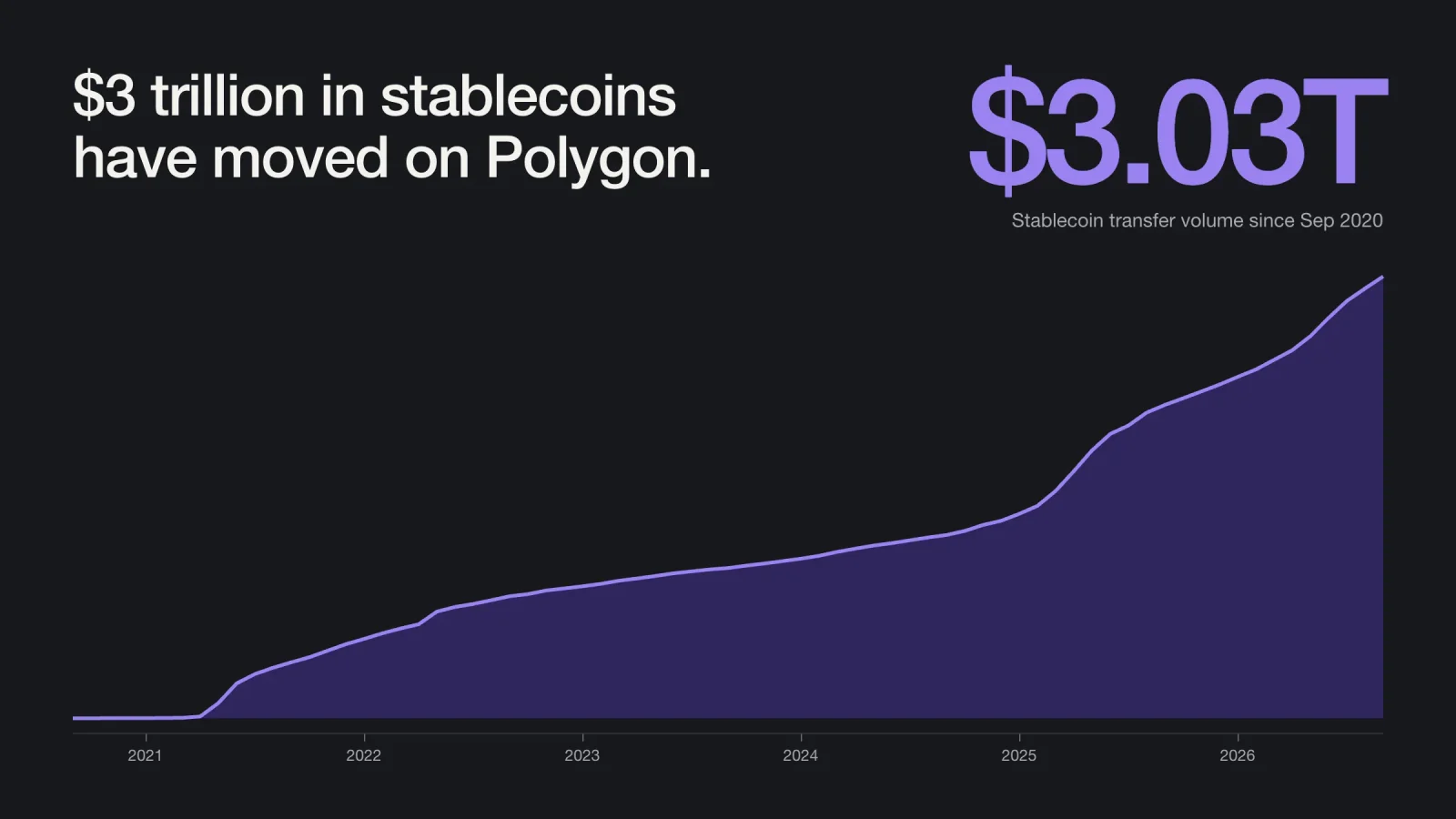
Polygon’s Stablecoin Activity Rises From $2.4 Trillion
Polygon’s March 2026 report recorded $2.4 trillion in cumulative stablecoin transfer volume, with monthly stablecoin transactions reaching $298 billion in February. The latest $3 trillion milestone indicates that substantial payment activity has continued across the network. However, cumulative transfer volume measures the value of transactions processed over time, not the amount of stablecoins currently held on POL.
The distinction matters because repeated transfers can contribute to cumulative volume without representing new capital entering the ecosystem. POL’s official network page also reports approximately $4 billion in stablecoin supply and around eight billion total transactions. Together, these figures provide additional context for evaluating the network’s payment activity beyond the headline transfer milestone.
Also Read: POL Price Eyes Upside as Polygon Development Boosts Market Outlook

Visa Integration Expands Polygon’s Institutional Payment Reach
POL’s growth coincides with its April 2026 inclusion in Visa’s global stablecoin settlement program. According to Polygon’s announcement , Visa partners can use the network to settle stablecoin transactions, connecting POL with an established payments infrastructure.
The same announcement reported that Visa’s stablecoin settlement program had reached a $7 billion annualized run rate, up 50% in three months. That figure refers to Visa’s overall program, not POL’s individual transaction volume. Nevertheless, the integration gives eligible Visa partners another blockchain rail for settlement, potentially supporting institutional stablecoin usage beyond crypto trading.
Stablecoin Payments Shift POL Beyond Crypto Trading
POL’s payments strategy centers on providing faster settlement and lower transaction costs for businesses moving money across borders. Its Open Money Stack combines blockchain settlement with wallets, fiat on-ramps, off-ramps and compliance services. The approach targets payment processors, marketplaces, payroll providers and financial institutions that need to move funds across currencies and jurisdictions.
The cost difference is relevant to this strategy. POL’s payments materials list an average transaction cost of approximately $0.002, although actual costs vary with network conditions and transaction requirements.
For payment operators handling large numbers of transfers, lower settlement costs and around-the-clock availability can reduce operational friction compared with traditional banking processes. However, blockchain settlement does not eliminate foreign exchange costs, compliance obligations or local banking fees.
POL Token Impact Depends on Network Usage and Fees
The $3 trillion milestone does not directly establish an increase in demand for POL. Stablecoin transfers can involve dollar-pegged assets, while network fees and staking provide separate mechanisms through which blockchain activity may affect POL’s ecosystem.
POL’s April 2026 PIP-87 proposal outlined a fixed-cost payments revenue program intended to make transaction pricing more predictable for payment companies and direct revenue toward validators and tokenholders. The proposal also described potential POL buybacks and token burns. Its status and implementation matter when assessing whether higher payments activity translates into measurable token-related value.
The next indicators to watch include stablecoin supply, transaction activity, institutional integrations and the implementation of payment-related revenue mechanisms. The cumulative transfer milestone establishes the scale of activity POL reports processing, while sustained usage and measurable network economics will help determine its longer-term significance.
Also Read: Polygon Revenue Tops $1.3 Million as Low Fees Drive Network Activity
This article contains market analysis and price predictions. These are not guarantees. Crypto markets are volatile. Always DYOR. Not financial advice.



Be the first to comment