



Polygon is increasing the estimated gross staking reward rate for POL holders to 7.7% from October 1 through December 1. The higher rate is being funded by 27.3 million POL in accumulated network priority fees under PIP-92, linking staking rewards more directly to network activity.
Polygon Redirects 27.3M POL in Fees to Stakers
Under PIP-92, roughly 27.3 million POL in accumulated priority fees will be distributed to delegators during the two-month window. Polygon’s community governance forum says the mechanism uses the existing staking reward system, meaning eligible stakers do not need to make a separate claim.
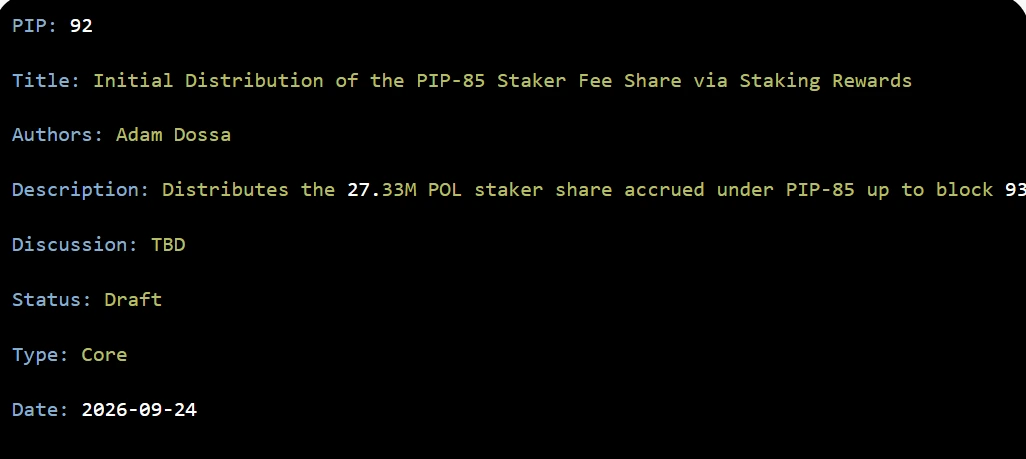
The change raises the checkpoint reward from about 25,213 POL to 64,500 POL during the period. Polygon estimates this will lift the annualized gross staking reward rate from roughly 3.0% to 7.7%. The quoted APY is an estimate rather than a guaranteed individual return, with actual rewards varying by stake and validator conditions.
Also Read: Polygon Hits $3 Trillion in Cumulative Transfer Volume

PIP-92 Links Staking Returns to Polygon Network Fees
The development is significant because it changes how a portion of network-generated value reaches POL stakers. Rather than relying only on protocol-issued rewards, the temporary distribution also channels accumulated priority fees back through the staking mechanism. This creates a clearer connection between network usage and rewards received by delegators.
Polygon has been working to expand POL’s role beyond basic network security. Polygon Labs said in April that POL staking is intended to capture value from both Polygon PoS and the broader Agglayer ecosystem, with fees from network activity potentially flowing to stakers.
Polygon Expands POL Utility Through Liquid Staking
The higher reward comes several months after Polygon launched sPOL, its native liquid staking token. POL said more than 3.6 billion POL was staked at the time, while only around 4% to 5% of that stake was liquid. The sPOL initiative was designed to give staked POL additional utility in decentralized finance while allowing holders to continue receiving staking-related benefits.
The latest fee distribution therefore fits into a broader effort to make staking more economically connected to POL’s activity. However, the 7.7% figure applies specifically to the October 1 to December 1 window. It should not be treated as a permanent staking yield because the additional fee-funded reward is tied to the PIP-92 distribution.
POL Price Falls 3.5% as Staking Rewards Increase
Market data shows that the higher reward rate has not coincided with an immediate price increase in POL. CoinGecko data shows POL closed September 30 at $0.1140, down from $0.1220 on September 27. On October 1, the token was trading around $0.1078 in the latest available data, putting it roughly 3.5% lower on the day.
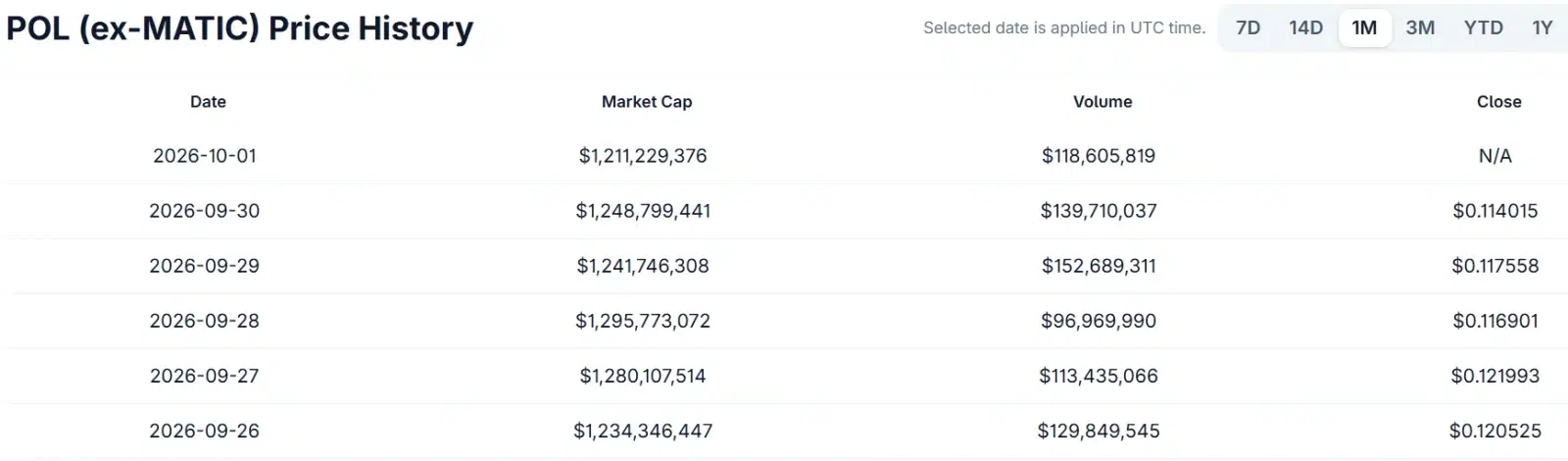
The token’s market capitalization was about $1.21 billion on October 1, while 24-hour trading volume stood near $118.6 million. POL had reached a seven-day high around $0.1220 on September 27 before retreating, showing that the staking announcement has not yet translated into a sustained price response. Price action alone, however, cannot establish whether traders are reacting specifically to the reward change.
PIP-92 is also described as an interim solution while PIP-93 is developed as a longer-term mechanism for distributing staker fee revenue. That means the next stage for POL staking will depend partly on whether POL can move from temporary fee distributions toward a more permanent structure.
Also Read: POL Price Eyes Upside as Polygon Development Boosts Market Outlook


Be the first to comment