



Polygon processed 4.06 million wallet-to-wallet stablecoin transactions over the past seven days, moving ahead of Ethereum, Base and Arbitrum on the measure. The data highlights Polygon’s growing role in stablecoin payments, even as its native POL token has remained under pressure in recent trading.
Polygon Leads Ethereum in Weekly Stablecoin Transfers
According to growthepie data, Polygon recorded about 4.06 million stablecoin transactions during the latest seven-day period. Ethereum followed with 3.45 million, while Base and Arbitrum recorded approximately 2.47 million and 1.52 million, respectively. The metric focuses on wallet-to-wallet stablecoin transfers and excludes transactions involving contracts such as DeFi, making it more relevant to direct payments and transfers.
The distinction is important because raw blockchain transaction counts can include a wide range of automated activity. Wallet-to-wallet stablecoin transfers more directly capture the movement of digital dollars between users and businesses. POL’s lead on this measure therefore points toward sustained demand for the network as a settlement rail rather than simply high activity from decentralized applications.
Also Read: Polygon Tokenization Growth Puts POL Price in Focus as Bearish Setup Develops

$3B Stablecoin Supply Supports Polygon Payment Activity
Polygon’s wider stablecoin ecosystem provides additional context for the transaction figures. Growthepie currently shows about $3 billion in stablecoin supply on Polygon PoS, placing the network among the largest tracked chains by stablecoin holdings. Daily network activity also reached about 4.9 million transactions, although that figure includes transactions beyond stablecoin transfers.
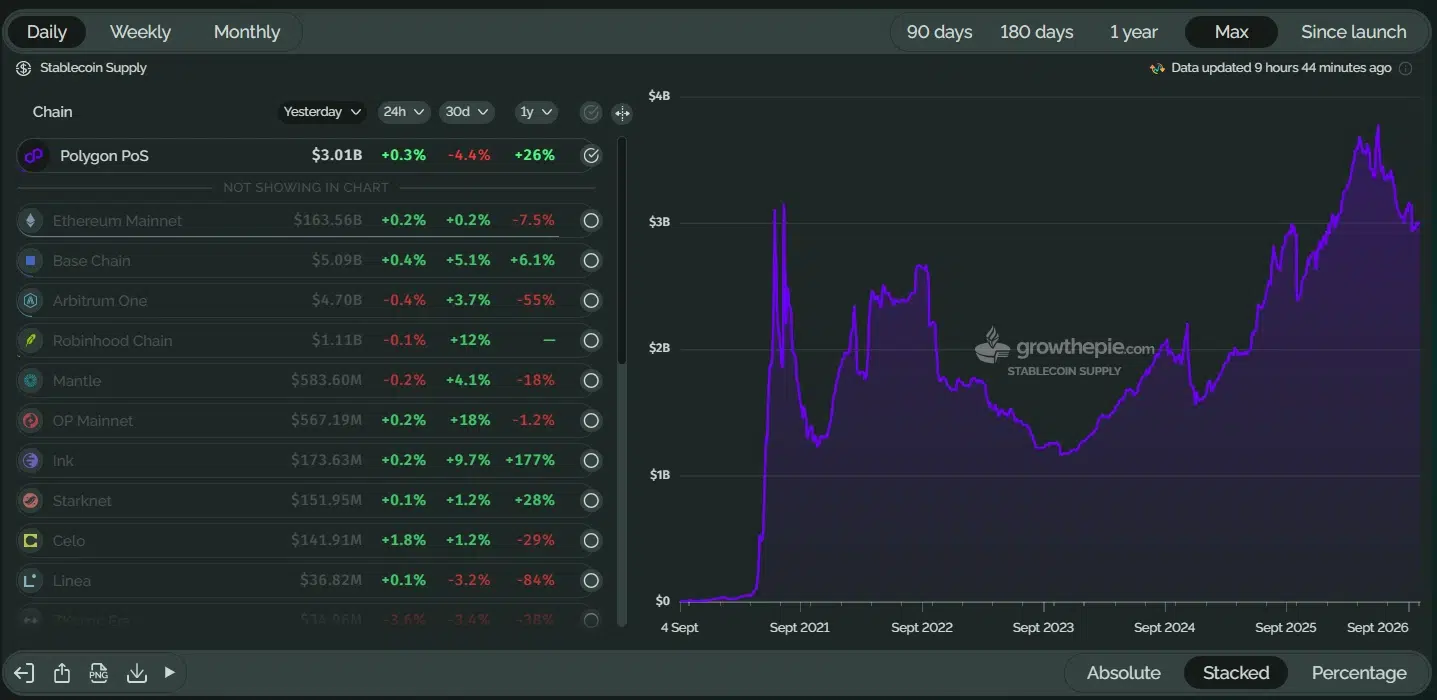
Polygon Labs reported on September 29 that more than $3 trillion in cumulative stablecoin value had moved across POL since September 2020. The network has also been used by companies including Revolut, Paxos, Polymarket, Cash App, Deel and Tazapay. This combination of transaction activity, stablecoin liquidity and payment integrations suggests the network’s stablecoin usage is increasingly connected to real payment infrastructure.
Payment Integrations Expand Polygon’s Stablecoin Utility
Recent integrations have strengthened Polygon’s position in the payments market. PayPal USD became natively available on POL in July through Paxos, while POL Labs said the network was settling more than $2.5 billion in stablecoin volume daily at the time. Modern Treasury also added support for USDC on POL, allowing businesses to connect stablecoin transfers with traditional payment rails.
POL has additionally expanded its institutional payment infrastructure through the Open Money Stack. In September, the network introduced additional payment and checkout capabilities, while Visa has used POL as one of its settlement networks for stablecoin payments. These developments give the transaction data a broader significance because they show multiple pathways for stablecoins to move beyond trading and DeFi.
POL Price Falls Despite Strong Stablecoin Activity
The increase in stablecoin activity has not translated into an immediate positive price response for POL. CoinGecko data shows POL trading around $0.103, with a market capitalization of roughly $1.08 billion and 24-hour volume near $83.32 million. The token has also remained below its October 1 close of about $0.108, indicating that the network activity has not produced a clear short-term repricing.
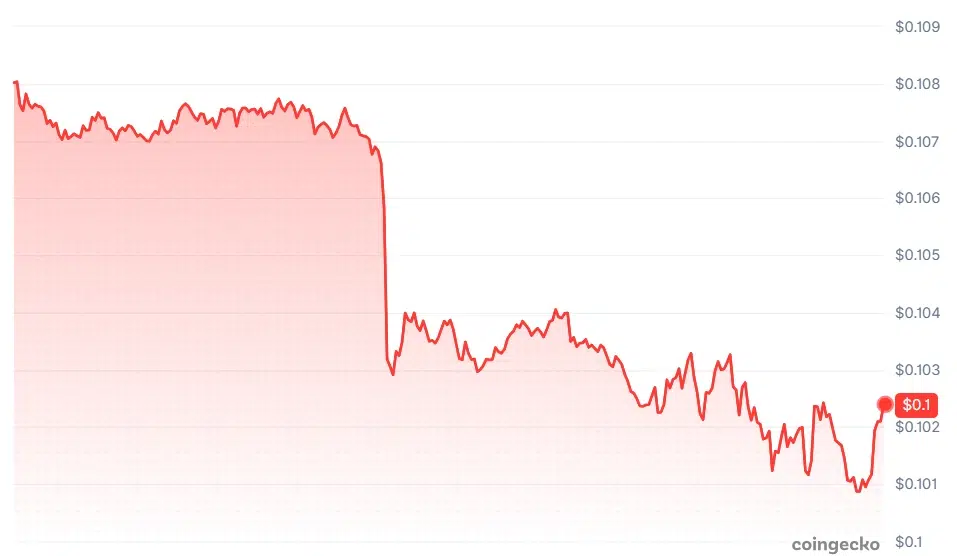
That divergence is important for investors because POL’s payment growth and POL market performance are not necessarily directly linked.
Stablecoin transactions can increase demand for network infrastructure without creating equivalent demand for POL as an investment asset. The next test will be whether sustained payment adoption eventually strengthens broader economic activity around the ecosystem and changes how the market values POL.
Also Read: Polygon Raises POL Staking Rate to 7.7% With Fee Rewards



Be the first to comment