


What to know:
- Indonesia blocked Polymarket under gambling laws, joining Brazil and Argentina in restricting the platform.
- Borderless Web3 protocols clash with national laws on access points, forcing platforms to choose compliance or censorship resistance.
- Clear regulations guide developers, while bans push users to VPNs.
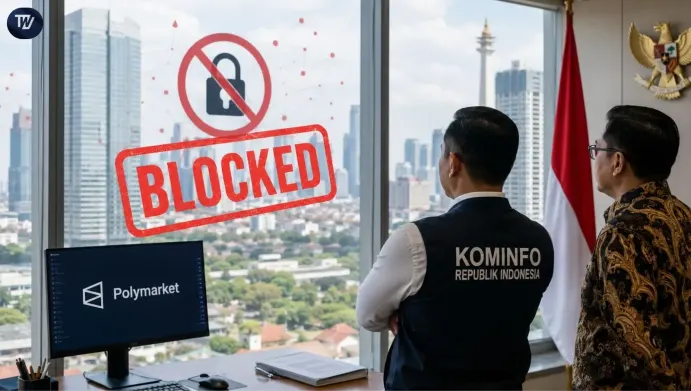
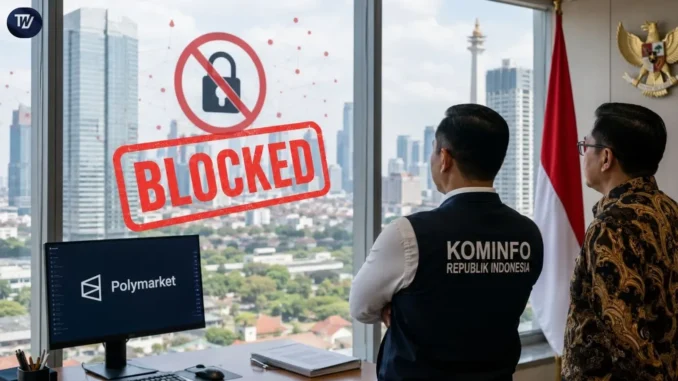
Polymarket Indonesia has been banned after authorities blocked the platform, referring to online gambling laws as a justification. By doing so, the country joins Brazil and Argentina on the list of places where national authorities have also imposed restrictions on the decentralized prediction market platform. These developments serve to draw the attention of regulators worldwide as blockchain-based applications change the traditional boundaries of information markets, gaming, and financial services, and different environments to challenge are laid bare.
Regulatory Scrutiny Over Prediction Markets
Polymarket Indonesia restrictions come as Polymarket, a decentralized prediction market platform that lets users speculate on the outcome of real-world events using cryptocurrency, such as elections and economic indicators, faces global scrutiny. Supporters of the platform argue that it is an information market that visualizes the collective wisdom of participants, yet many jurisdictions consider these event contracts as forms of gambling or unlicensed derivatives. Indonesia’s limitations are based on online gambling laws, and regulators in Brazil and Argentina have raised similar concerns.


Also Read: Indonesia Issues Polymarket Ban as Political Bet Sparks Gambling Concerns
Decentralization Versus Jurisdictional Control
The Polymarket Indonesia ban highlights a very fundamental issue with Web3: tokenized protocols are anonymous and do not take into account borders, but access points and users are bound by such limitations. Domain names, user interfaces, and legal tender on-ramps all still depend on national legislations. From a compliance standpoint, prediction markets such as these face quite a tricky situation.
While some decide to simply follow the rules by implementing geofencing or KYC to comply with the regional requirements, others value their freedom from censorship so much that they make defensiveness against it their first priority. Ultimately, it is the result of this decision which will determine how DeFi, DAOs, and crypto infrastructure will be going about their ways of interacting with traditional regulatory structures in line with different emerging markets, including cases like Polymarket Indonesia.
Also Read: Polymarket Exploit Reported as Above $600K Losses Traced to Private Key Issue
Implications for Blockchain Adoption
Beyond that, the matter of what the relationship between a platform where one could trade a contract based on some real-world event might have with regulators has also been brought up, as seen with Polymarket Indonesia. Communications between regulators and developers will definitely come in handy in times when adoption is further accelerated, to get the right mix of innovation and oversight.
For the crypto industry, the given constraints denote that while there is some risk involved, there is also clarity. When there are clear regulations, developers can figure out which applications they are allowed to work on, whereas complete bans may drive the work to highly unregulated places or may use VPNs.
Also Read: Prediction Market Polymarket Targets Japan Entry by 2030



Be the first to comment