



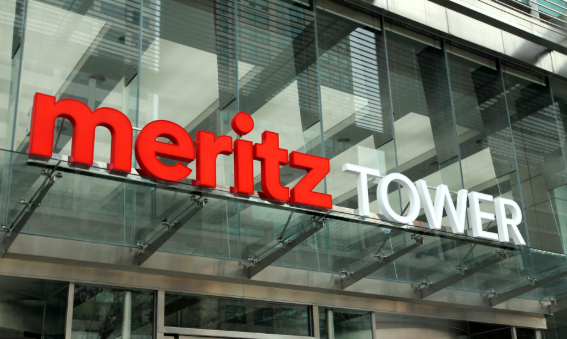
Ripple Meritz Securities partnership has entered Korea’s capital markets, announced on October 14, to provide institutional custody and tokenization infrastructure. This Ripple Meritz Securities agreement, Ripple’s first with a Korean securities company, will integrate Ripple Custody into Meritz’s current securities operations and prepare for tokenized asset issuance as Korea’s digital asset regulations develop.
It marks the Ripple Meritz Securities deal as Ripple’s fourth significant institutional partnership in Korea in 2026, following deals with Kbank, Jeonbuk Bank, and Kyobo Life Insurance. These partnerships cover banking, insurance, and now brokerage, establishing Ripple Meritz Securities collaboration as part of a comprehensive infrastructure push in one of Asia’s most active digital asset markets.
Completing Korea’s Four-Pillar Strategy
Ripple Meritz Securities partnership brings together Meritz Securities, part of Meritz Financial Group active in brokerage, investment banking, and asset management. For Ripple, this Ripple Meritz Securities collaboration offers access to securities issuance and distribution channels that retail banks do not provide.

Source: Ripple
The Meritz agreement completes a targeted vertical strategy. Ripple has worked with Kbank to implement wallet infrastructure through Ripple Custody, with Jeonbuk Bank to update cross-border payments, and with Kyobo Life Insurance to enable Korea’s first tokenized government bond settlement on blockchain.

Source: X
Each Ripple Meritz Securities-related partnership addresses a separate area: Kbank for neobank custody, Jeonbuk for payments, Kyobo for insurance settlement, and Meritz for capital markets. This is significant because Korean financial groups operate in all four areas, and the Ripple Meritz Securities infrastructure that functions across these sectors is more likely to become an industry standard.
Also Read: Ripple Prime Expands Brevan Howard Access Across 2 Markets
Why Custody and Tokenization Are Critical
This timing coincides with a major regulatory push by the Financial Services Commission in Korea. In 2026, the FSC has advanced rules for spot crypto ETFs, security token offerings, and KRW-pegged stablecoins and has tightened investor protections under the Act on Protection of Virtual Asset Users.
Custody underpins all three. Absent qualified custody that brings segregated accounts, controls, and auditability, securities firms cannot hold or service tokenized assets. Ripple Custody meets these requirements and is integrated with the tokenization process for issuance, settlement, and lifecycle management.
Meritz said looking at STOs, infrastructure for spot ETFs, and stablecoins as future opportunities and that is consistent with Korea’s token securities guidelines moving from a sandbox to actual legislation. Securities firms are battling to develop rails for tokenized bonds, treasuries, and fund units competing directly with global custodians moving into the Asia-Pacific region.
Also Read: Ripple Backs Absa Digital Asset Custody Launch in South Africa
Implications and Next Steps
For the crypto industry, the Ripple Meritz Securities impact is all infrastructural but strategically important. Institutional custody reduces run risk for Korean institutions, expanding access for asset managers, brokers, and insurers. For developers and ecosystems like XRP Ledger, the Ripple Meritz Securities deal signals durable institutional demand for on and off chain tokenization layers connected to Korea Exchange infrastructure.
For investors, tokenization could catalyze T+0 settlement for tokenized treasuries, fractional corporate bonds, and blockchain native fund shares. For regulators, engaging with established players like Meritz offers a managed pathway to pilot issuance of securities tokens using current securities law.

Challenges persist. Secondary trading rules for STOs are not yet finalized in Korea and disclosure regimes are still being defined. Participants like Samsung Securities, NH Investment, and other domestic players are developing dedicated STO platforms, testing Ripple’s local ecosystem and interoperability.
Final steps include pilot issuance of securities on Meritz’s stack, eventual FSC rulings on KRW stablecoins and spot ETF issuances in late 2026, and integration with the national settlement system. Achieving this vision now could firmly establish the Ripple Meritz Securities infrastructure across blockchain, banking, insurance, and brokerage customers as a cornerstone of Korea’s institutional digital asset market.
Also Read: Ripple XRP Stripe Integration 2026: Powerful XRPL Payment


Be the first to comment