


New York has sued prediction market operator Polymarket over alleged illegal gambling in the state. The September 24 complaint seeks to halt its operations and recover penalties, extending a dispute over federal and state oversight.
The case was filed by Attorney General Letitia James and Governor Kathy Hochul against the company QCX LLC that runs Polymarket US. The claim is that the company provides gambling facilities without permission from the New York State Gaming Commission.
The charges seek an injunction to prevent the said violations. Prosecutors are also seeking restitution and forfeiture of any illicit profits gained, along with penalties amounting to thrice the amount of said profits.
Why Is New York Suing Prediction Market Polymarket?
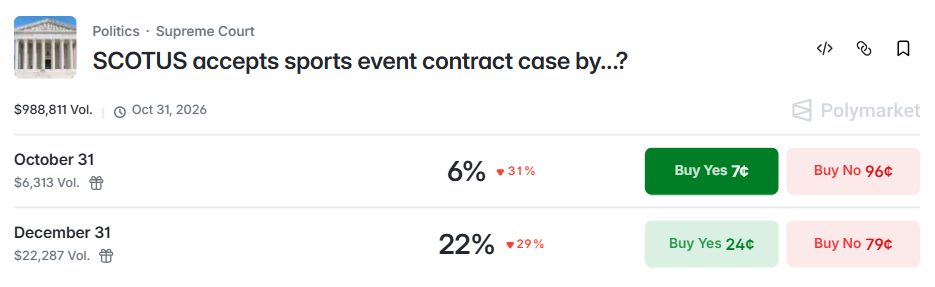
According to Polymarket, the odds that the Supreme Court will hear an appeal on the sports contracts case before December are only 22%. This estimate is based on market predictions and not legal projections because the contracts continue to be at the heart of the debate about state and federal jurisdiction.

In New York’s view, the prediction market is a gambling activity. Participants place bets on uncertain events, such as games. New York claims that this activity is subject to its gambling legislation.
Polymarket introduced its service in the US in December 2025 with sports contracts. In addition, the company has users who are 18 to 20 years old according to the attorney general’s office. In New York, mobile sports betting participants should be 21 or older.
Also Read: US Stablecoin Policy Proposal Targets Global Dollar Adoption
Taxation in gambling activities is another issue mentioned in the complaint. Licensed mobile sports betting providers pay 51% tax on gross gaming revenue. New York claims that the company evades these taxes by not obtaining a license from the state.
In the fiscal year 2026, according to the New York State Comptroller, the state obtained $1.3 billion from mobile sports betting in terms of tax revenue. The state collects taxes for gambling services to fund public services.
Prediction Market Crackdown Extends Beyond Polymarket
The latest step taken by New York comes after the lawsuit filed against Kalshi on July 31. The prosecutors claimed that the firm was running an illegal gambling operation.
New York had previously sued Coinbase Financial Markets and Gemini Titan on April 21. Both lawsuits claimed that their event contracts were in violation of New York’s gambling laws.
These lawsuits are part of a larger controversy regarding event contracts. Some states claim that any sports event contract needs gambling licenses from the respective state. This is in opposition to the trading platforms’ claims about federal derivatives law.
CFTC Challenges State Regulatory Authority
The Commodity Futures Trading Commission has disputed actions by state officials regarding such regulation. The CFTC claims that it has exclusive jurisdiction over event contracts listed at registered derivatives exchanges as provided by Congress.
On April 24, the CFTC brought suit against the state of New York. The commission sought a determination that there was federal preemption of such regulations and sought an injunction from those laws. The CFTC also took action against other states.
This dispute is based on the classification of sports contracts. These are viewed by states as gambling contracts, but the CFTC claims that covered contracts are federal commodity contracts. Courts have made contradictory decisions.
Supreme Court Petitions Seek Legal Clarity
The prediction market case has gone to federal appeal courts. Recently, the Ninth Circuit supported the judgment of Nevada’s enforcement action against Kalshi’s sports contracts. It dismissed the federal preemption claim put forward by the company at the stage.
In contrast to this, the Third Circuit came up with another conclusion about the case of New Jersey. Federal law may bar New Jersey from enforcing its gambling regulations on Kalshi’s sports contract.
The New Jersey filed a petition before the Supreme Court on September 2. While Robinhood filed its petition on September 9.
Polymarket Faces Legal Pressure Amid Growth
Prediction market lawsuit follows increased trading on platforms. According to Reuters, the Polymarket company has hit over $1 billion in yearly revenue by June. The mentioned number is a projected revenue run rate and not actual income earned for a year.
As things stand, the prediction market industry has been grappling with contradictory court decisions and enforcement actions from states. The New York lawsuit filed against Polymarket is still pending, while the Supreme Court has not sorted the jurisdiction question.
Also Read: PYTH Price Eyes Breakout as Pyth Network Development Boosts Momentum


Be the first to comment