

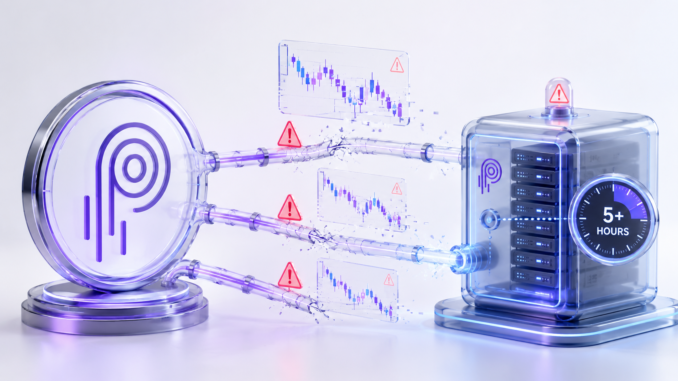

Pyth Network restored service after a multi-hour outage disrupted Pythnet, Hermes endpoints, Pyth Core price feeds and sponsored feeds used by DeFi applications.
The incident began around 06:58 on May 22, when Pythnet validators stopped creating blocks and new prices stopped being produced. The root cause was later identified, validators coordinated a restart, and Pyth Core Feeds were restored before Hermes endpoints and Sponsored Feeds returned. By 13:04, Hermes endpoints and Sponsored Feeds were resolved, and all systems were operating normally.

The outage affected three Price Feeds components and 14 Sponsored Feeds components. Pyth Pro and Lazer continued operating during the incident, while the affected Pyth Core and Hermes path remained the main disruption for teams using the older feed infrastructure.
Hermes is the service that delivers recent Pyth price updates through REST, streaming and SDK connections, while Pythnet aggregates data-provider prices into price feeds that can be delivered across chains. When that path stops producing or exposing prices, DeFi protocols that depend on fresh oracle data can lose the information they need for trading, lending, collateral checks and liquidations.
The outage forced several protocols to take defensive action. WaterX Beta paused trading, while BrownFi paused contract interactions to protect users during the disruption. Those responses show how oracle downtime can move quickly from infrastructure issue to user-facing risk, especially in markets where stale prices can affect swaps, borrowing positions and liquidation logic.
Oracle Downtime Hits DeFi Risk Controls
Oracle networks sit behind some of DeFi’s most sensitive functions. A lending protocol needs accurate collateral prices before it can decide whether a position is healthy. A perpetuals exchange needs current prices before it can manage margin and liquidation levels. A structured product or automated market can break if stale data keeps contracts operating after the market has moved.
That is why the Pyth outage drew attention beyond PYTH token holders. Pyth supplies real-time price data across crypto, equities, foreign exchange, ETFs and commodities, and its feeds are integrated across many onchain applications. A multi-hour gap does not automatically mean user losses occurred, but it can force protocols to pause functions, block interactions, widen risk checks or rely on fallback controls until price freshness returns.
PYTH traded near $0.042 after the incident, up about 2% over 24 hours, with a market cap near $333 million and daily volume above $13 million. The token did not show a severe immediate selloff, but the bigger issue is operational trust. Oracle networks compete on uptime, speed, coverage and reliability, and DeFi teams treat downtime as a risk-management event even when service resumes quickly.
A postmortem is still pending. The key items now are the exact root cause, why validators stopped producing blocks, how Hermes exposure failed, which protocols were materially affected, whether any users faced stale-price losses, and what redundancy changes will follow before the next high-volatility period.
Pyth’s services are back online, but the incident leaves a clear lesson for DeFi builders: oracle dependency is not background infrastructure. When price feeds stop, trading, lending and liquidation systems can become unsafe fast, and the safest protocols are the ones that already know when to pause before stale data turns into bad execution.



Be the first to comment