



The phishing attack on Revolut, which happened two days ago, has taken another unexpected turn.
According to International Cyber Digest’s recent findings, the attacker has now revealed sensitive information of high-profile clients, including tennis player Shevchenko and Gamdom CEO Felix Romer.

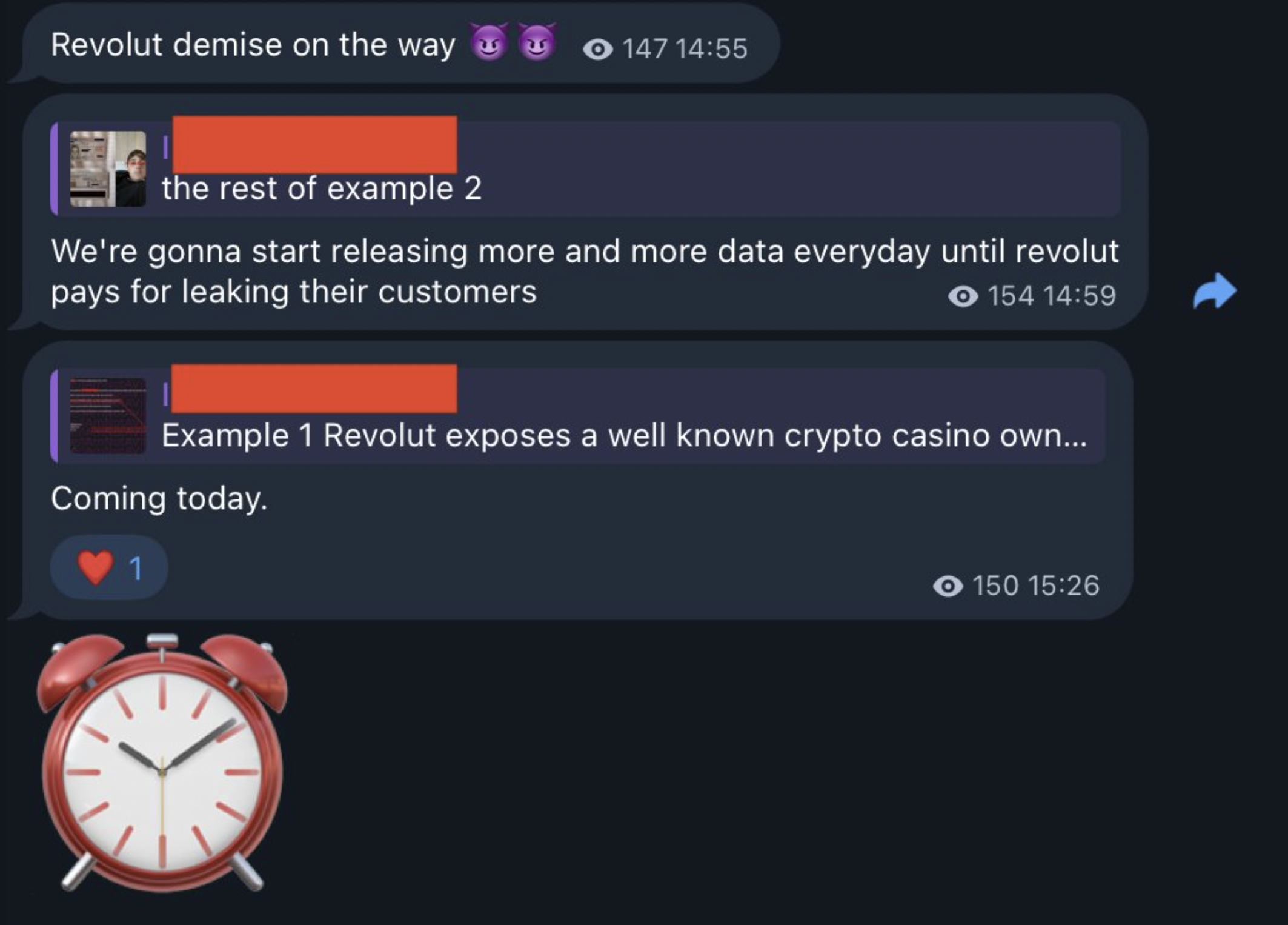
Moreover, the attacker is now trying to use the information obtained through that process as leverage to force Revolut to pay money.
We’re gonna start releasing more and more data everyday until Revolut pays for leaking their customers.
How is the attack getting serious day by day?
Needless to say, the incident has escalated from a data breach into an extortion campaign. The attackers are reportedly publishing customer passports and selfies while threatening to release more information unless they are paid.

However, naming specific individuals does not prove they were affected. Threat actors often mix genuine data with fabricated claims, outdated information, or details taken from other sources.
In fact, even Revolut itself has not yet confirmed the identity of the attacker, the new ransom demand, the claimed high-profile victims, or the authenticity of the newly leaked material.
The way out
With Revolut serving around 80 million customers across 30 countries, the potential impact is significant. However, as an immediate safety step,
Revolut immediately blocked the address across all internal systems, initiated notifications to relevant regulators, and applied precautionary protection measures for affected customers.
All in all, the for customers, the biggest concern is that exposed KYC and transaction information can enable highly targeted social engineering.
And that’s where technologies such as zero-knowledge proofs are more helpful. They help reduce future exposure by allowing institutions to verify information without collecting or sharing unnecessary personal data.
Final Summary
- The incident has gone far beyond a data breach and has now turned into an extortion campaign.
- Revolut serves around 80 million customers across 30 countries; hence, the impact can be multifold.



Be the first to comment