



AI Summary
- Ripple Prime is expanding its relationship with Brevan Howard to cover multi-asset prime brokerage, clearing and financing services.
- The arrangement indicates institutional demand for consolidated access across traditional and digital asset markets.
- The announcement does not establish that Brevan Howard’s activity will settle on the XRP Ledger or generate demand for XRP.
- For Ripple, the strategic value lies in becoming infrastructure for institutional workflows rather than relying on a single crypto product.
The common XRP narrative treats every expansion by Ripple as evidence that more financial activity is about to reach the XRP Ledger. The concrete development here is narrower: Ripple Prime is expanding its relationship with Brevan Howard to provide the investment manager’s funds with multi-asset prime brokerage, clearing and financing services.
That is a meaningful institutional mandate. It places Ripple Prime inside workflows serving an alternative investment management firm active across global macro and digital assets. It does not, however, confirm that Brevan Howard will use XRP, settle transactions on the XRP Ledger or direct any particular volume onto public blockchain infrastructure.
Our analysis is that the announcement strengthens Ripple’s position as a cross-asset service provider, but the implications for XRP remain conditional. The distinction matters because commercial growth at Ripple and measurable demand for the token are related only when an identified product or transaction flow actually uses it.

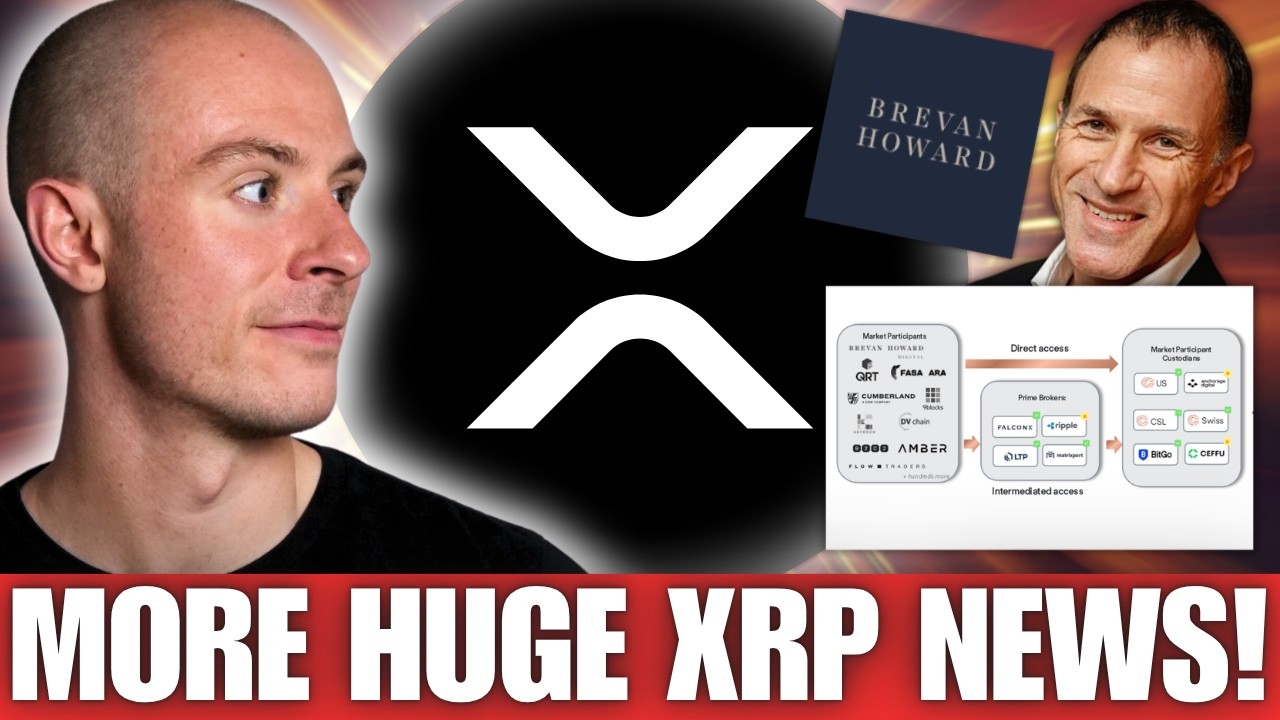
Ripple XRP Continue To Gain Moments With This New Announcement…..
An expanded institutional mandate
The supplied announcement describes an expanded agreement under which Ripple Prime will serve Brevan Howard funds through one platform spanning multiple asset classes and products. The stated purpose is to improve capital efficiency and operational simplicity for a sophisticated investment manager working across traditional and digital markets.
“Our expanded relationship reflects a long-term commitment to shared success.”
The mandate covers three connected functions:
- Prime brokerage: consolidated services supporting access to markets and counterparties.
- Clearing: the processing layer between trades and their final settlement obligations.
- Financing: capital support associated with an investment manager’s positions and trading activity.
Those functions are foundational rather than promotional. They concern the machinery used to manage positions, collateral and counterparties. Ripple Prime is therefore competing for a place in institutional market infrastructure, where reliability and operational integration matter more than a public-facing crypto narrative.
What the agreement establishes
Brevan Howard is described in the supplied material as a global alternative investment management platform specializing in global macro and digital assets. Its clients include institutional investors such as sovereign wealth funds, corporate and public pension plans, foundations and endowments. The firm also operates BH Digital, reflecting an established commitment to the digital asset sector.
This context helps explain why the expanded relationship is strategically relevant. A manager participating in both conventional and crypto markets has a practical reason to prefer services that reduce fragmentation across asset classes. Ripple Prime’s pitch is a unified framework capable of handling those overlapping requirements.
“There’s a few firms equipped to provide the next generation of prime services that sophisticated investors expect, and Brevan Howard’s trust in Ripple Prime is recognition of our strong competitive position and cross-asset capabilities”
That statement, attributed in the supplied source to Ripple Prime president Noel Kimmel, is a competitive claim rather than independent proof of market leadership. What the agreement does support is that Brevan Howard has selected Ripple Prime for a broader set of services than the relationship previously covered.
Where the XRP Ledger does and does not fit
The announcement concerns a Ripple business but does not identify the XRP Ledger as the settlement network for Brevan Howard’s activity. It also provides no transaction volume, implementation schedule, token allocation or mechanism through which the mandate would create direct XRP demand.
- Confirmed: Ripple Prime will provide multi-asset brokerage, clearing and financing services to Brevan Howard funds.
- Not confirmed: those services will execute or settle on the XRP Ledger.
- Not confirmed: XRP will be held, transferred or used as a bridge asset within the arrangement.
- Still relevant: a broader institutional client base could create opportunities for Ripple to connect more products to blockchain rails later.
This is consistent with our earlier assessment that the Ripple and XRP utility thesis depends on tracing specific products and flows rather than treating corporate activity as automatic ledger adoption. A similar evidentiary test applies to the XRP infrastructure thesis around tokenization.
We therefore see the XRP Ledger as a strategic possibility, not an established component of this mandate. Any stronger conclusion would go beyond the supplied facts.
Why cross-asset architecture matters
Institutional adoption of digital assets is not only a question of buying tokens. It also requires custody relationships, credit arrangements, collateral controls, risk management, clearing and financing. A provider that can connect some of these functions across traditional markets and crypto can address an operational problem that individual trading venues cannot solve alone.
Brevan Howard’s stated philosophy reinforces that infrastructure focus. An earlier comment attributed to Alan Howard in the supplied material emphasized the need to participate directly in the sector to understand what must be built:
“you have to be in and have exposure to the crypto world to understand what is going on there, to identify the challenges and opportunities you’ll face and to know what infrastructure you will have to build to meet those challenges and opportunities head-on”
For Ripple, this makes prime brokerage a bridge between institutional participation and its wider digital finance strategy. For Brevan Howard, the attraction is potentially simpler access and greater capital efficiency across markets. Neither objective requires every transaction to use a public chain, but both can make blockchain integration more practical where it provides a demonstrable operational benefit.
The supplied material also refers to an institutional network for moving crypto collateral in derivatives markets, naming both Ripple and Brevan Howard among its participants or intermediaries. Without the underlying document or a supplied primary-source URL, we do not treat that reference as proof that the expanded mandate uses the same network. It does illustrate why crypto collateral mobility is becoming part of the broader market infrastructure conversation.
Risks and unanswered questions
The announcement supplies the scope of the relationship but leaves its economic and technical details undisclosed. Readers should separate the institutional validation of Ripple Prime from claims about revenue, ledger volume or token value.
- Implementation: no timetable or migration plan is supplied.
- Economics: no fees, financing capacity or expected revenue are disclosed.
- Asset mix: the announcement does not specify which traditional instruments or digital assets will be handled.
- Settlement: no public blockchain or private settlement system is named for the services.
- Token linkage: no direct role for XRP is established.
These gaps do not diminish the mandate itself, but they limit what investors can infer. Prime brokerage relationships can be commercially important while remaining largely invisible at the public-ledger level. Conversely, future product integration could create ledger activity, but that scenario requires separate evidence.
What this means
- Ripple is broadening its institutional role. The company is positioning Ripple Prime as infrastructure for investment managers operating across conventional and crypto markets, not merely as a gateway to one token or network.
- Brevan Howard provides a demanding use case. A global macro and digital asset manager needs integrated services across counterparties, collateral and asset classes. An expanded mandate indicates that Ripple Prime has met at least this client’s requirements for a wider relationship.
- The XRP conclusion remains conditional. The corporate relationship may expand Ripple’s opportunity set, but investors still need evidence that particular workflows use the XRP Ledger or XRP before assigning direct token significance.
In our view, the most defensible reading is that Ripple has gained institutional distribution and operational relevance. That is strategically positive for the company. It becomes an XRP development only when the ledger or token is explicitly connected to the resulting activity.
Bigger picture
The agreement sits within a broader shift toward financial infrastructure that can accommodate tokenized and conventional assets. Our analysis of how financial market rails are evolving reached a related conclusion: institutional adoption depends on connecting new technology to established operational and regulatory requirements.
Recent XRP Ledger developments provide concrete examples of what explicit chain involvement looks like. The CSD BR and BTG Pactual fund-record project directly identified the ledger, while the euro stablecoin initiative targeting the XRP Ledger tied a named product category to the network. Those cases differ from the Brevan Howard announcement because the chain connection is stated rather than inferred.
Ripple Prime’s expansion may still be consequential. If institutional clients increasingly seek one provider for brokerage, clearing, financing and digital asset access, Ripple could gain influence over how those markets connect. Our measured view is that this strengthens Ripple’s infrastructure position while leaving the ultimate distribution of activity between private systems, conventional rails and the XRP Ledger unresolved.
Sources
This article is for informational purposes only and does not constitute financial advice.


Be the first to comment