


The U.S. Securities and Exchange Commission (SEC) recently announced its examination priorities for fiscal year 2027. In a press release, the SEC outlined the areas it plans to scrutinize more closely to protect investors and maintain the integrity of financial markets.
However, the announcement in no way has introduced new regulations or declared these sectors to be in violation of existing laws.
Instead, it signals where the SEC’s examination teams intend to focus their attention, identify potential risks, and assess whether regulated firms are complying with existing securities laws.
Why is SEC flagging tokenization as a risky area?
Notably, the SEC has specially flagged tokenization as a risk area because moving traditional financial assets onto blockchains introduces new challenges around ownership, custody, cybersecurity, and regulatory compliance.
Hence, the SEC wants to ensure that firms offering these products comply with applicable securities laws, including requirements related to custody, recordkeeping, and clearing. However, the SEC is not declaring tokenization inherently unsafe or seeking to prohibit it.
Instead, by including tokenization in its FY 2027 examination priorities, the regulator is signaling that it intends to scrutinize how blockchain-based financial products and market infrastructure manage risks. This is all because these things have become increasingly integrated with traditional financial markets.
Other areas of focus
Along with tokenization, the SEC also intends to scrutinize investment advisers, high-risk financial products, and private funds to strengthen investor protection and ensure transparency.
It will also plan to examine cybersecurity, data protection, and emerging technologies, including superintelligence, to address risks of fraud, data breaches, and operational disruptions.
Well, this isn’t the first time the SEC has taken such a step. According to a recent report by AMBCrypto, the organization introduced a temporary exemption allowing approved platforms to trade tokenized versions of U.S.-listed shares on public blockchains without registering as conventional exchanges.
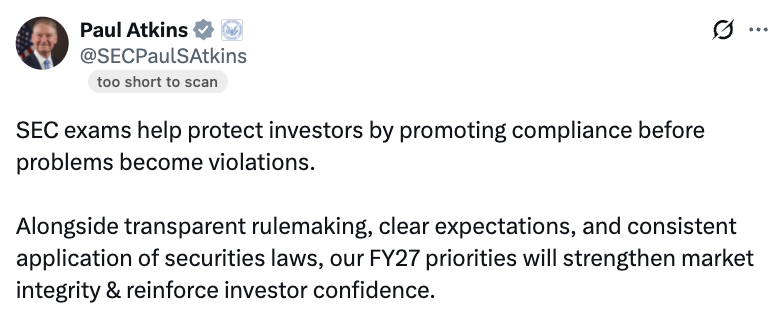
Remarking on the same, SEC Chairman Paul Atkins noted,
RWA market dynamics paint a different picture
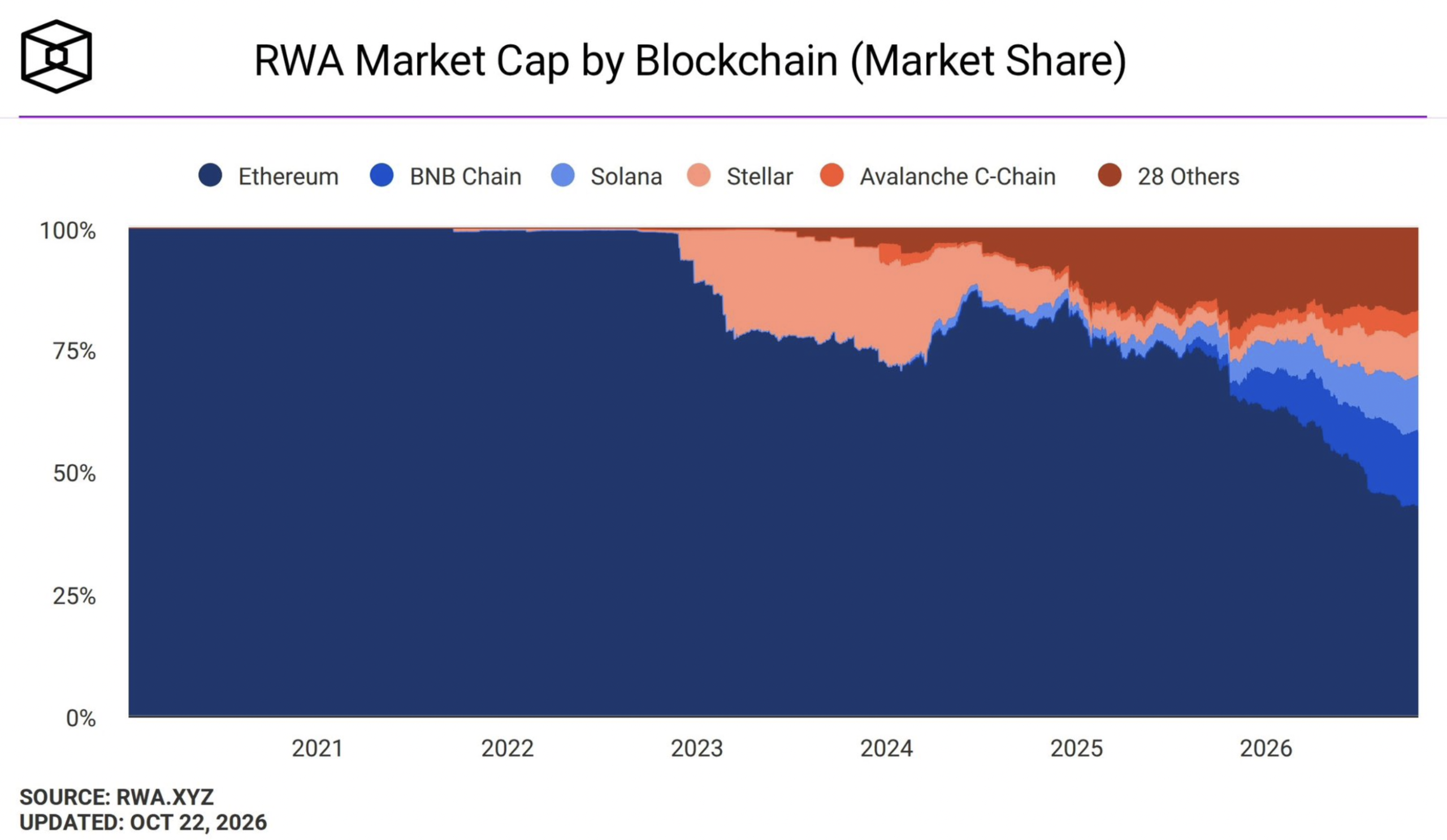
All this came on the heels of the real-world asset (RWA) market seeing growth in competition between decentralized and centralized trading platforms. Although Ethereum [ETH] remains a leading blockchain for tokenized assets, other networks, including Solana [SOL] and BNB Chain, are gaining ground.
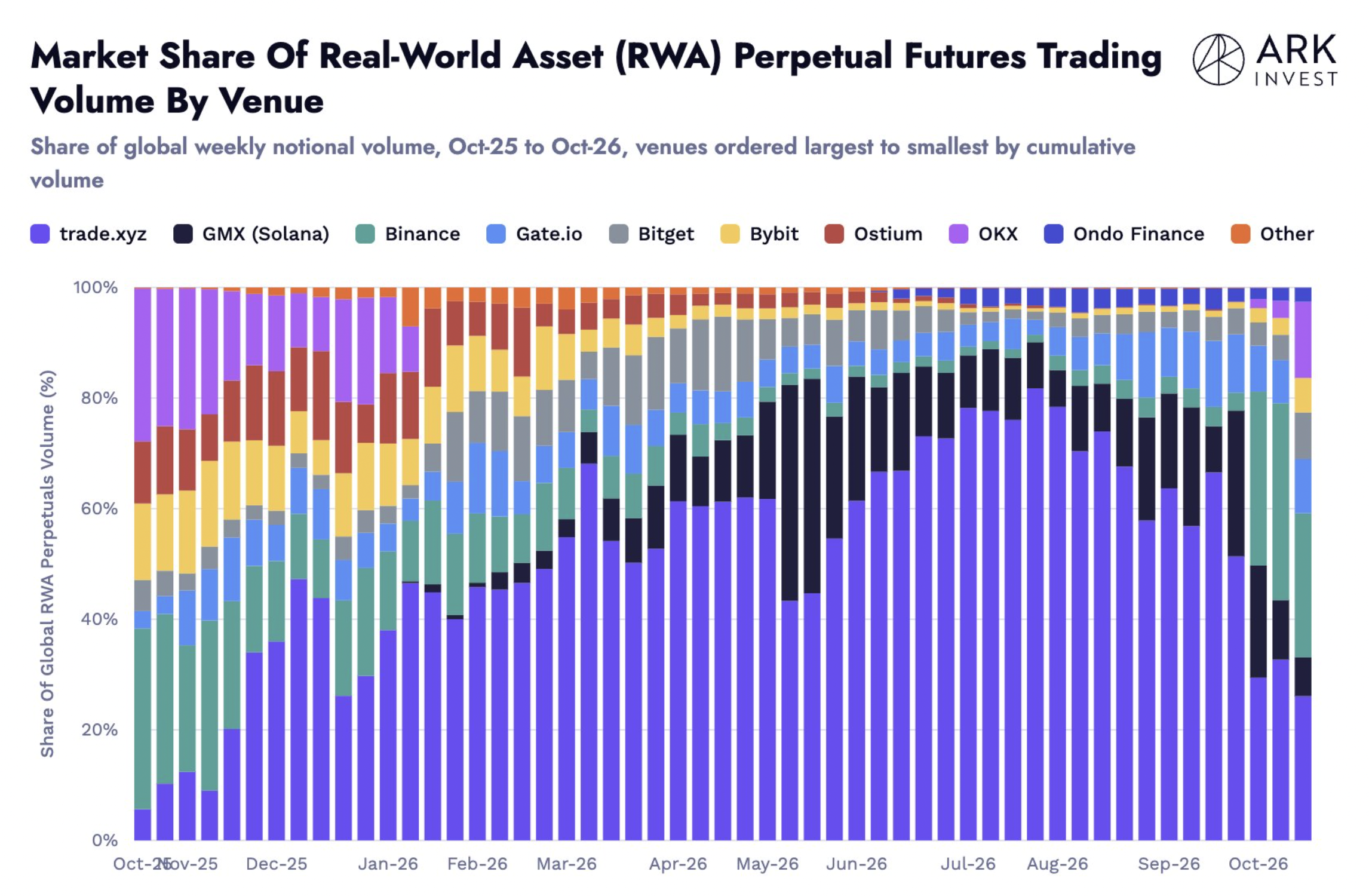
Meanwhile, centralized exchanges such as Binance and OKX are capturing a growing share of RWA perpetual futures trading. This suggests that traditional crypto exchanges are competing aggressively with on-chain platforms for liquidity and trading activity.
Final Summary
- The U.S. SEC examination priorities for fiscal year 2027 intend to focus on whether regulated firms are complying with existing securities laws.
- RWA market sees growing competition, where centralized exchanges are capturing a growing share of RWA perpetual futures trading.



Be the first to comment