


South Carolina Governor Henry McMaster signed Senate Bill 163 into law on Tuesday, advancing one of the most crypto-friendly state-level frameworks in the country.
The bill, which previously passed the Senate 38-1 and the House 110-1, bans state agencies from accepting central bank digital currencies (CBDCs), protects the rights of crypto users and miners, and clears regulatory hurdles for businesses operating in the space.
On CBDCs, the law bars any state agency or political subdivision from accepting, requiring payment in, or participating in Federal Reserve-led digital currency trials, including any pilot programs run by federal agencies.
It also protects crypto self-custody rights, preventing governments from restricting the use of hardware and self-hosted wallets while barring higher taxes on crypto transactions than comparable payments made in US dollars.

Related: Senate Crypto Bill Might Pass as Late as August: NYDIG
South Carolina protects Bitcoin miners
The bill gives Bitcoin miners operating in industrial zones specific protections. Local governments cannot impose restrictions on mining businesses that do not apply to other industrial operations in the same area, and cannot set mining-specific noise limits beyond what general pollution rules already require.
“A political subdivision shall not change the zoning of a digital asset mining business without going through the proper notice and comment. A digital asset mining business may appeal a change in zoning to the proper court of jurisdiction,” the bill reads.
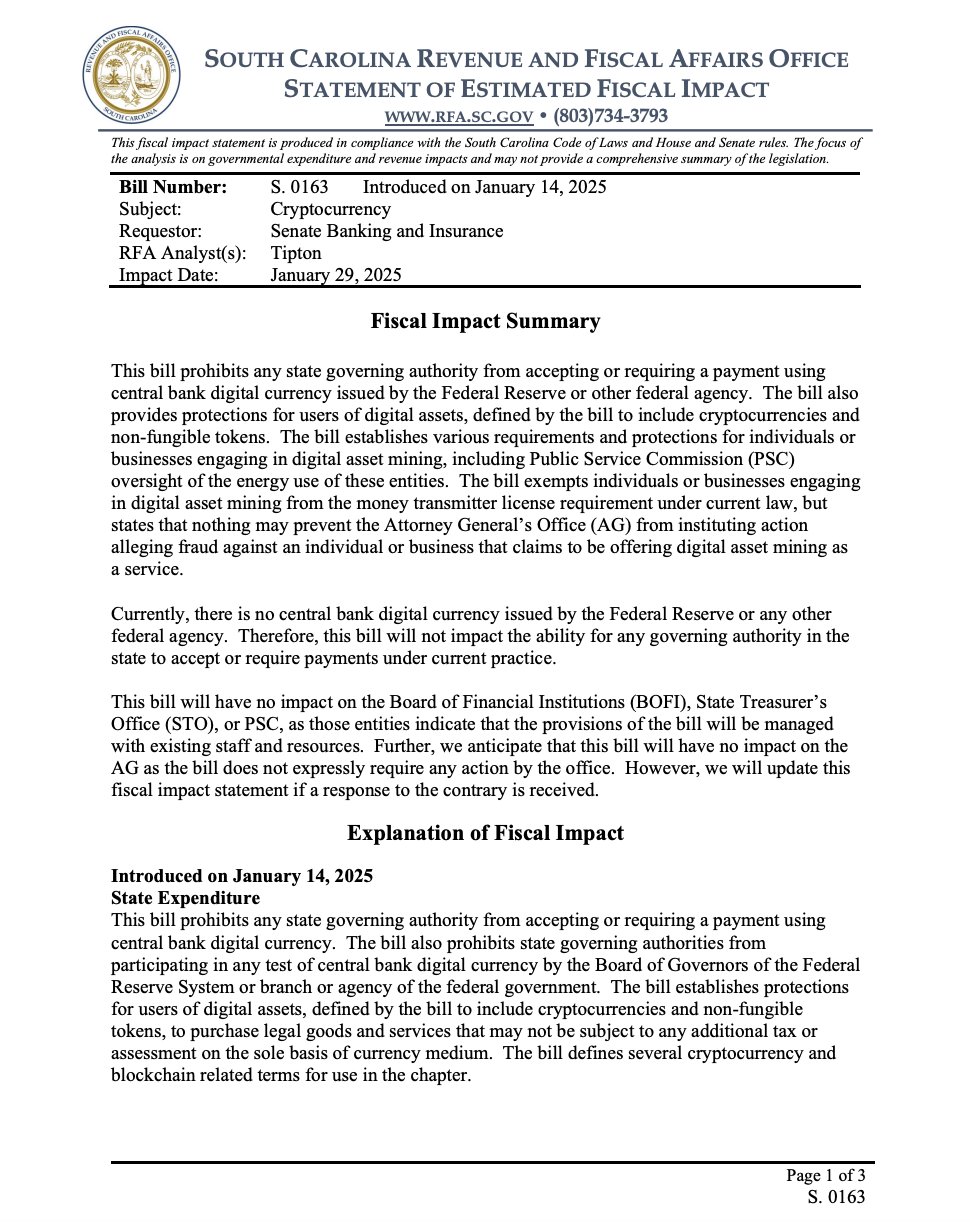
Source: South Carolina State House
The law also exempts several activities from money transmitter licensing requirements, including mining, node operation, blockchain software development and crypto-to-crypto trading. Mining-as-a-service and staking-as-a-service providers are excluded from securities classification.
Related: Polish lawmakers back revised crypto bill after repeated vetoes
More states pass crypto-friendly bills
South Carolina joins a growing list of states staking out pro-crypto positions. Kentucky passed the Bitcoin Rights bill in March last year, guaranteeing self-custody rights and shielding mining operations from discriminatory local rules.
Oklahoma, Arkansas, Florida, Mississippi, Montana, North Dakota, Louisiana and Arizona are among the states that have passed similar pieces of crypto legislation in recent years.



Be the first to comment