


South Korea is racing to unify and finalize its crypto regulatory framework. The second phase (Phase 2) of its broader regulatory overhaul aims to fast-track rules for stablecoins and crypto ETFs.
Last month, the market watchdog, the Financial Supervisory Service (FSC), reiterated its commitment to finalize stablecoin rules this year. Yoo Young-jun, the Director General of Digital Finance Policy at FSC, noted that,
We are currently consulting with relevant agencies with the goal of completing legislation on virtual assets as soon as possible. We will promptly finalize legislation on stablecoins as soon as possible.
The urgency comes amid reported record $346M stablecoin outflow from the country to overseas exchanges in June. The capital outflows sought access to high-risk derivatives, RWA (real-world asset tokenization) products, and DeFi services that aren’t available in South Korea.
This was equivalent to 78% of South Korean investors’ net purchases of overseas stocks in June. For Rep. Lee Jong-wook of the main opposition People Power Party, this was a wake-up call for the government to fast-track and update rules for the sector.
The government must comprehensively examine its investor protection and supervisory frameworks again and move swiftly to improve regulations.
Unpacking South Korea’s crypto bill timeline
The country’s first crypto framework, the Virtual Asset User Protection Act (VAUPA), was enacted in July 2024. It sought to drive user protection by ensuring exchanges segregate user funds. Additionally, it outlawed wash and insider trading. This was the first phase of the framework.
Phase 2, or the Digital Asset Basic Act (VABA), is currently under review. It focuses on stablecoins, tokenization, crypto ETFs (exchange-traded funds) and corporate access to the sector. Notably, domestic firms have been under a 9-year ban from the market, but this will be lifted.
Additionally, the FSC is mulling excluding U.S dollar stablecoins (USDT and USDC) to boost Korean Won (KRW) alternatives.
Also, the country is actively deepening its Central Bank Deposit Currency (CBDC) in Phase 2 with nine major banks for a wholesale payments layer.
There are about 10 crypto and stablecoin coins under consideration in the National Assembly and are aimed at building the VABA legislation.
Notably, one of the proposals pushing for a 22% crypto capital gain tax for profits exceeding $1,700 (2.5M KRW) continues to elicit opposition. The new tax will go into effect from January 2027, and it’s unclear whether it will be repealed.
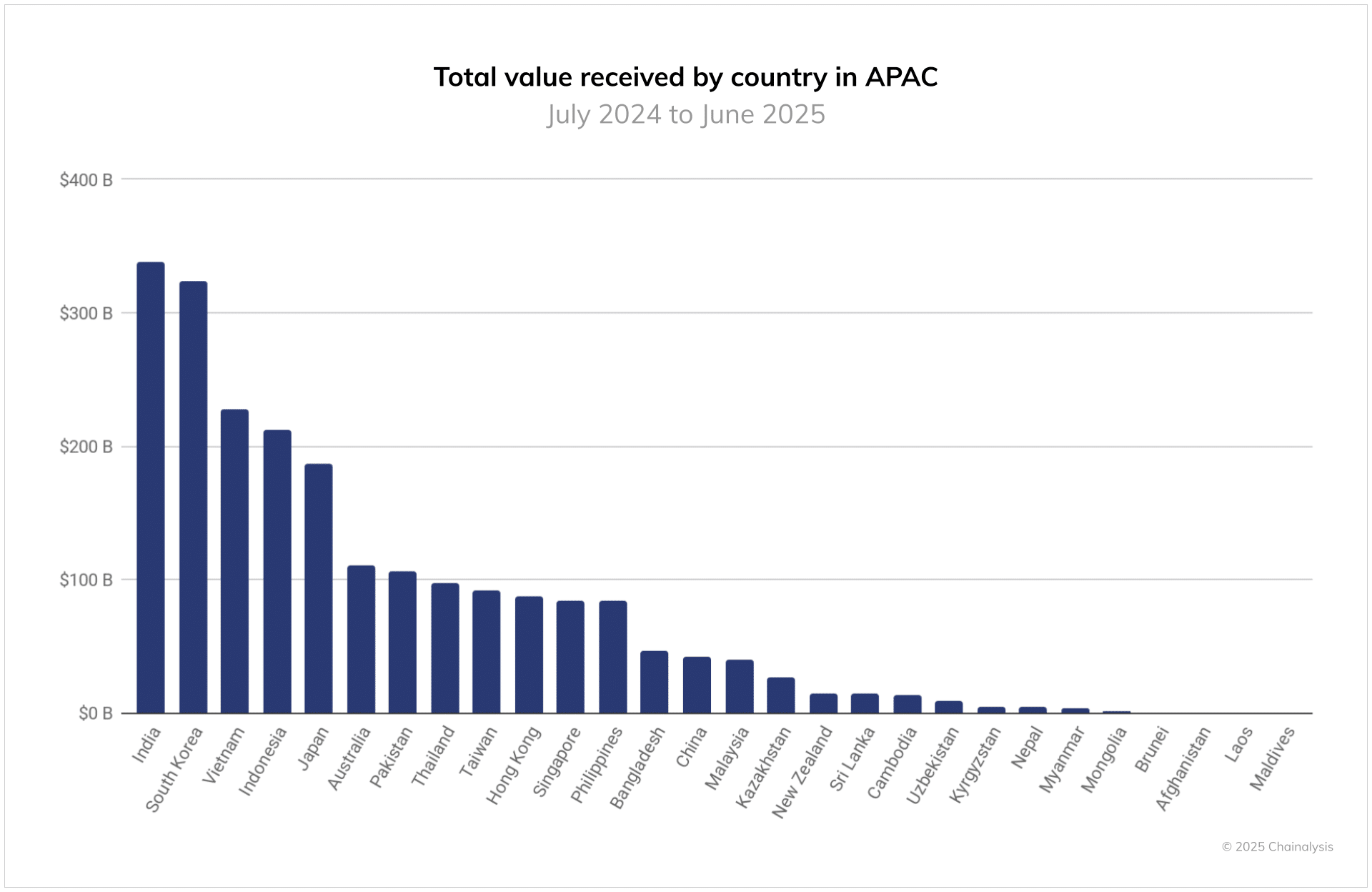
That said, South Korea dominates 65% of global stablecoin volume, and its overall crypto adoption ranked second in the APAC region after India.
Final Summary
- South Korea is actively pushing to finalize its second phase of crypto regulatory framework
- The 22% crypto capital gains tax set to go live in early 2027 remains under strong opposition





Be the first to comment