



What to know:
- Stablecoin volume hits $1.79 trillion as USDC leads digital payments’ growth.
- USDC surpasses USDT in transaction volume amid regulatory shifts
- Stablecoins gain real-world adoption through retail payments and transfers

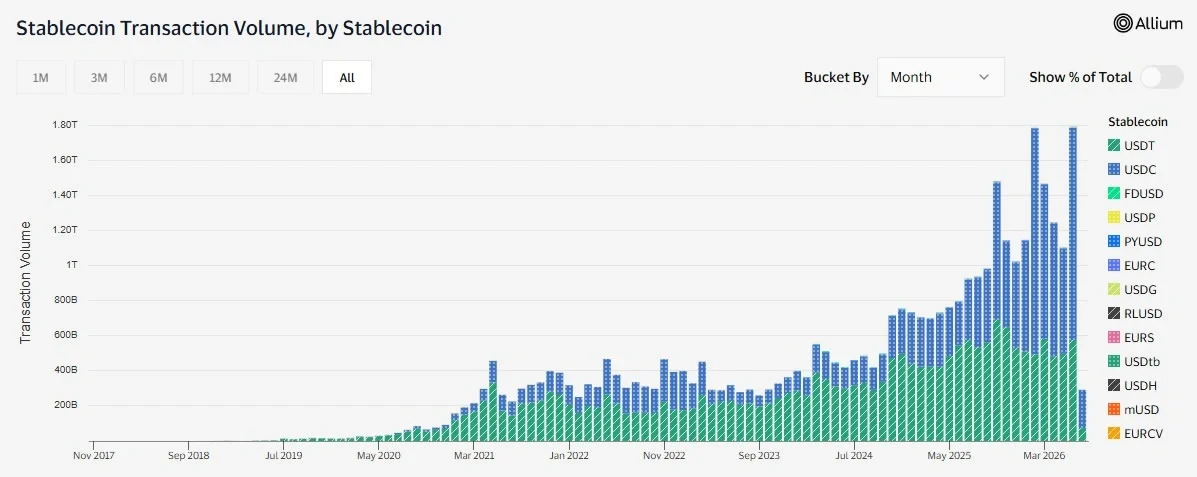
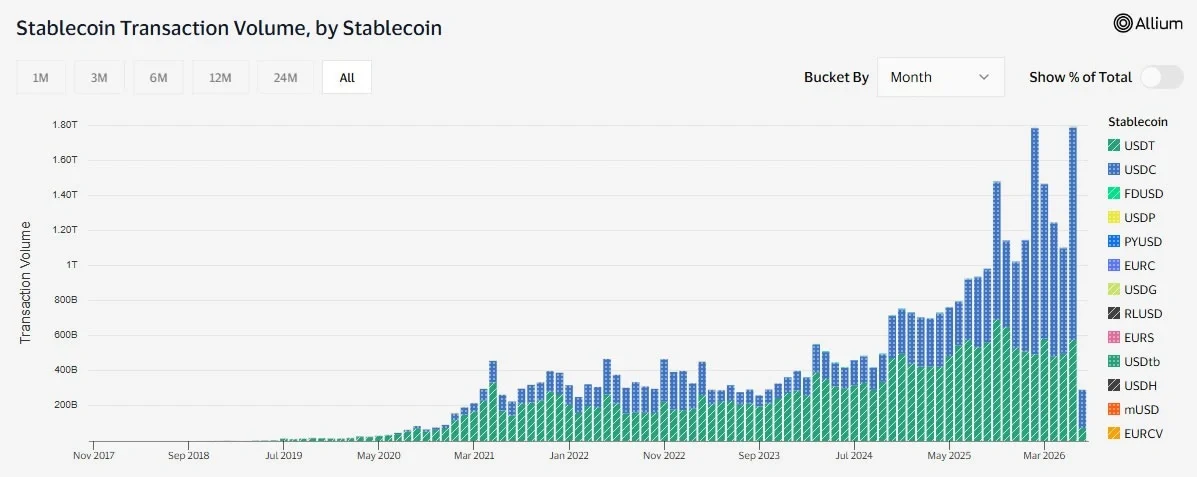
Stablecoin activity reached a historic milestone in June 2026, with adjusted transaction volume hitting 1.79 trillion dollars according to Visa’s Allium-powered analytics dashboard.
The figure represented a 63% increase from May’s 1.1 trillion dollars and surpassed February’s previous record of 1.78 trillion dollars as blockchain-based payments continued expanding despite broader cryptocurrency market weakness and uncertainty.
Source: Cointelegraph

Visa’s methodology filtered out artificial activity, including bots, exchange treasury movements, and repeated smart contract transactions, to estimate genuine usage.
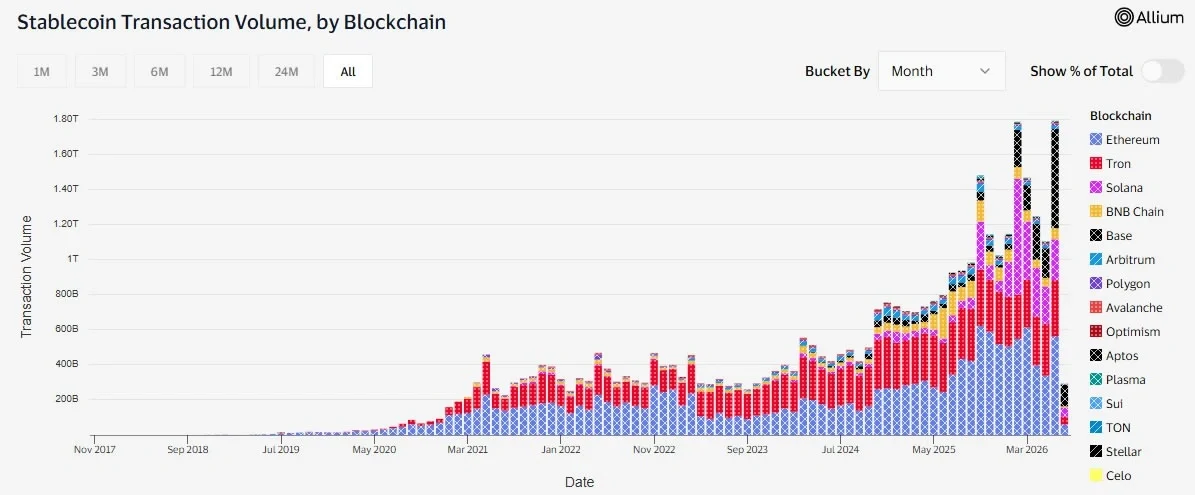
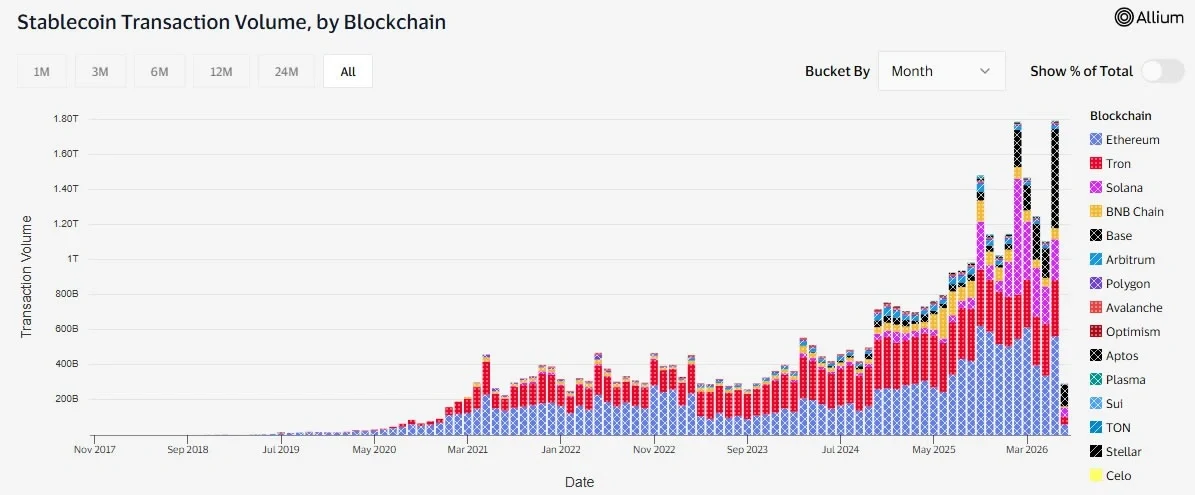
The data showed USDC leading adjusted volume with about 67% share, while USDT accounted for roughly 32%. Base processed 565 billion dollars in volume, followed closely by Ethereum and Tron as settlement networks evolved.
Also Read: Solana Posts 1 Green Month After 9-Month Downtrend Ends
Stablecoins Are Becoming Financial Infrastructure
The high amount of coins is significant because stablecoins are starting to move away from cryptocurrency trading and become functional financial instruments.
The growing number of the coins reflects the increased use of them in payments, cross-border transactions, DeFi projects, and company settlements. Contrary to other speculative financial products, these offer a predictable financial transfer system.
According to Nick Ruck of LVRG Research, the spike shows the stability of stablecoins in tough economic times and underscores their increasing role in value transfer systems.
Regulation is important because institutions are now seeking out compliant cryptoassets. The US dollar coin has been favored by its regulatory stance in both Europe and the United States.
Stablecoin Growth Signals a New Era
The effect is felt by investors, firms, money transfer systems, and end users globally. Stablecoins can be used by firms to expedite the process of international payments and decrease transaction fees relative to other methods.
End users can derive benefits from increased accessibility of digital dollars and financial products, particularly where there are constraints in terms of bank accounts or unstable currencies.
Source: Cointelegraph
According to recent statistics, there have been payments of about $6.8 billion through transactions of 136 million in thirty days.
The relevance of Ethereum, BASE, and Solana is increasing due to the availability of fast and low-cost settlements when compared with the earlier available blockchain technologies.
Regulation and Adoption Will Shape Growth
The future of stablecoins is going to be determined by regulatory measures, adoption by institutions, and integration within traditional financial systems.
There will be stiff competition among issuers of the stablecoins and the underlying blockchain network, competing to establish itself as a preferred medium of settlement. More regulation would mean that more financial institutions adopt them.
However, regulation determines the competition amongst the issuers of stable coins and the future continuation of adoption in the market for consumers and institutions alike.
The most recent data from Visa shows that stablecoins are developing into a new layer of payments and not just a tool in the cryptocurrency world.
This article contains market analysis and price predictions. These are not guarantees. Crypto markets are volatile. Always DYOR. Not financial advice.
Also Read: Polygon Hits Explosive $9.12 Billion Stablecoin Milestone as POL Eyes 80% Recovery



Be the first to comment