



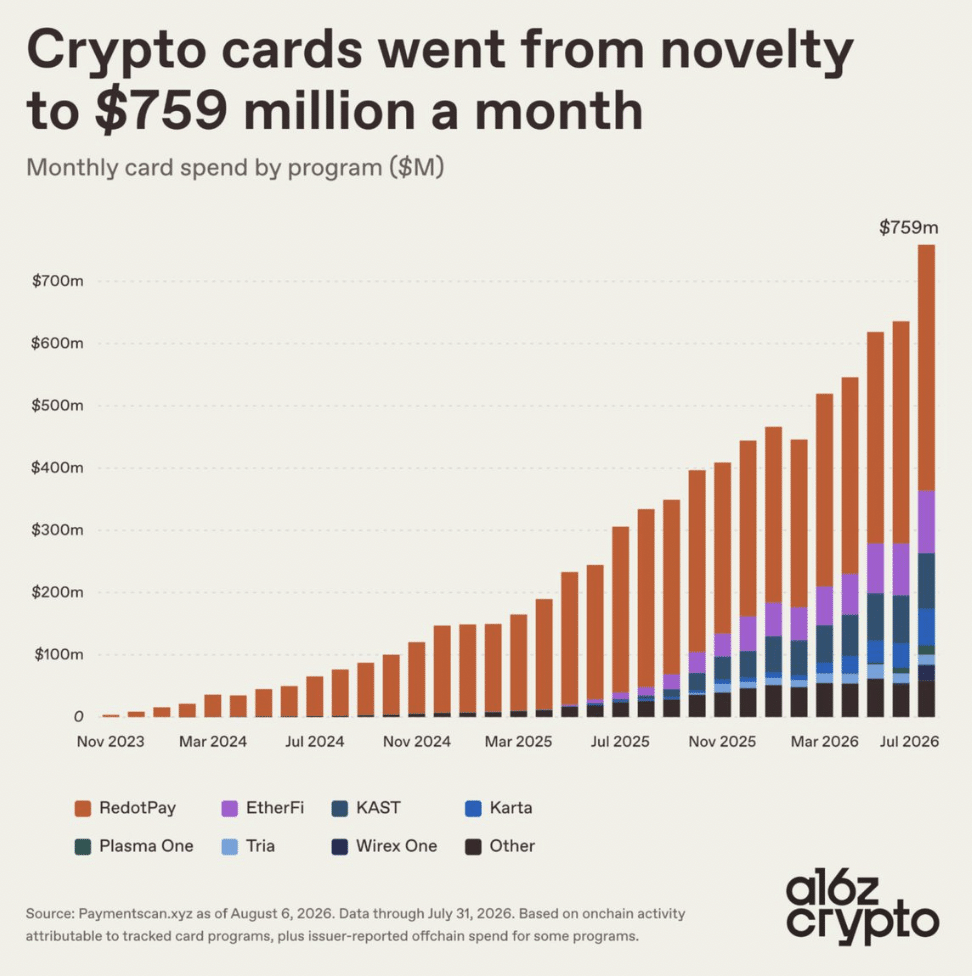
Stablecoin is becoming more and more like regular money and is no longer just a market for trading cryptocurrency. An analysis by a16z indicates that cryptocurrency payment cards have reached monthly purchases totaling over $750 million.
For its part, in the past, users would first sell their stablecoins on an exchange before taking out cash to deposit into a bank account.
However, now through a crypto card, a user can spend stablecoins, and the payment system will automatically convert them into the local currency of the merchant. Businesses can now accept standard fiat payments without having to accept cryptocurrency directly.

What does this mean for the stablecoin market?
Remarking on the same, a16z noted,

Crypto cardholders don’t require a traditional bank account. Depending on the program, users either deposit stablecoins with a card issuer, or hold them directly onchain through self-custody.
Additionally,
Crypto cards expand people’s access to U.S. dollar accounts globally, and they offer a convenient way for stablecoin holders to transact.
Compared to assets like Bitcoin, stablecoins are more useful for daily spending because they are made to maintain a comparatively steady value.
Simply put, the rising monthly expenditure indicates that stablecoins are becoming more and more valuable as a practical tool for in-person payments as well as digital assets.
Stablecoin market dynamics
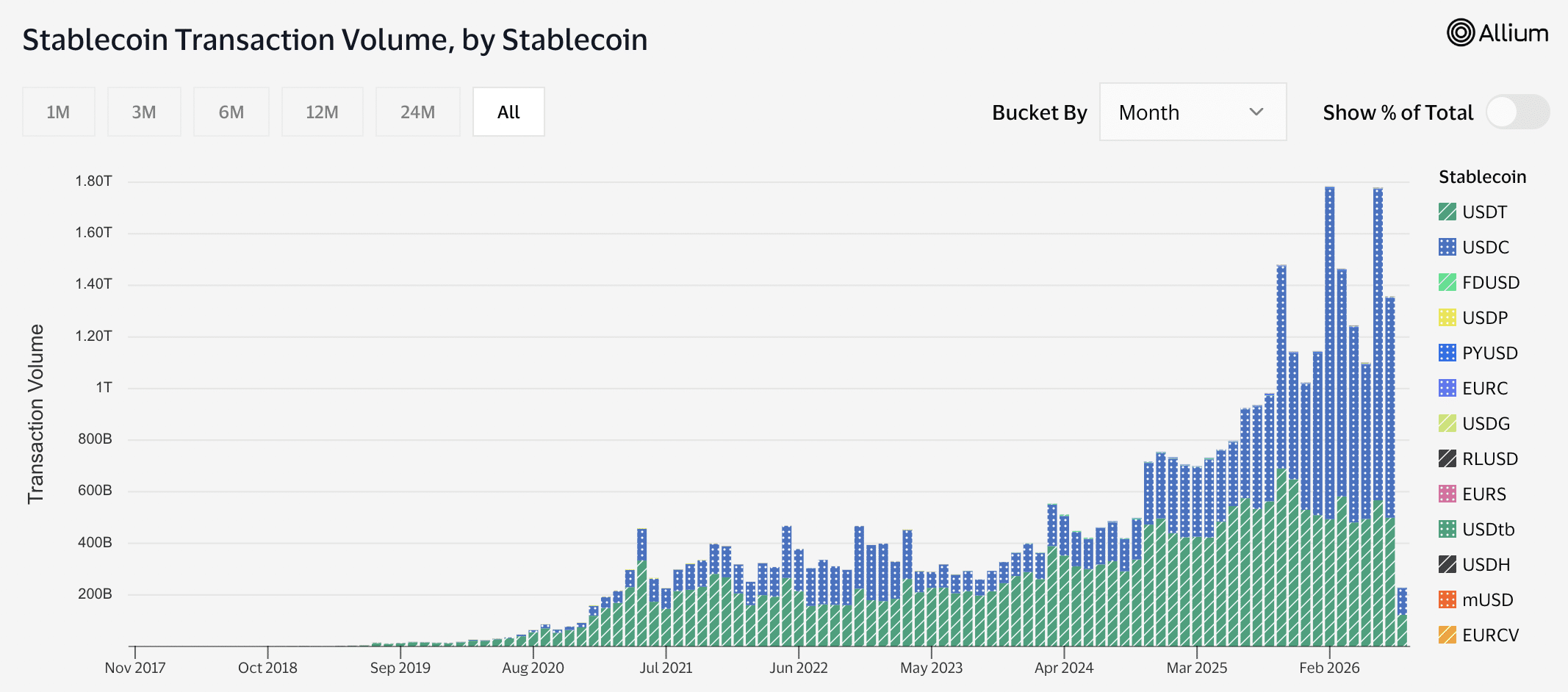
This comes as Circle’s USDC has dethroned Tether’s USDT in 2026, and stablecoin transaction volume has reached $4.8 trillion in the last month.
Meanwhile, the Stablecoin Supply Ratio (SSR) RSI, which gauges the market value of Bitcoin in relation to stablecoin liquidity, has bounced back from its 2026 lows but hasn’t reached the high levels linked to earlier sell signals.
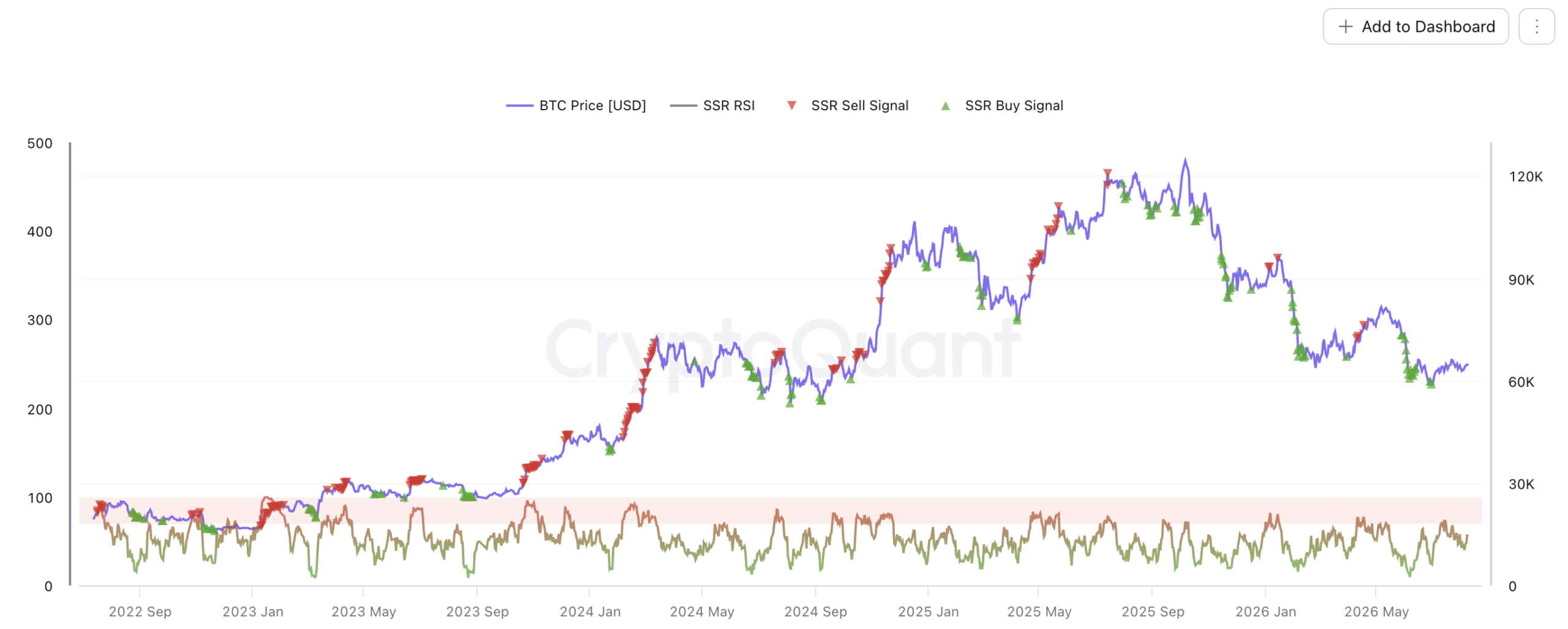

At the beginning of the year and again during the May–June rally, significant BTC corrections followed red sell signals that were accompanied by elevated SSR RSI levels.
However, with time, SSR RSI dropped and generated a series of green buy signals as Bitcoin dropped toward the $60,000–$70,000 range. This indicated that stablecoin liquidity had grown comparatively stronger in relation to Bitcoin’s market value in H2 2026.
Final Summary
- A crypto card allows a user to spend stablecoins, and the payment system will automatically convert them into the local currency of the merchant.
- The stablecoin market transaction volume has reached $4.8 trillion in the past 30 days.



Be the first to comment