



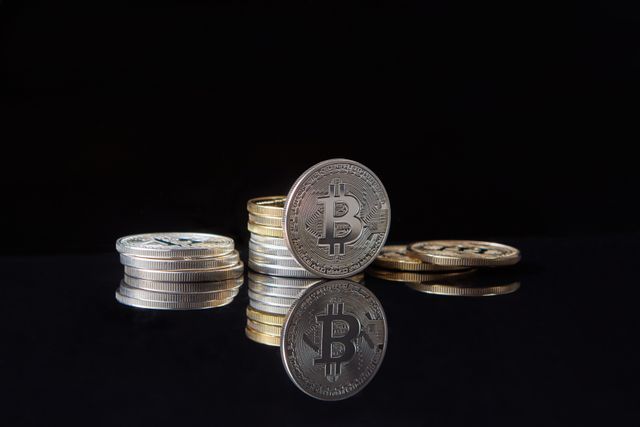
On Wednesday, October 7, 2026, federal prosecutors in the Eastern District of Washington filed a superseding indictment against a Pasco pastor and two co-defendants, accusing them of running a cryptocurrency investment fraud that prosecutors say took roughly $8.4 million from hundreds of victims.
The 28-count document, filed in U.S. District Court in Spokane, names Francier Obando Pinillo, a Colombian citizen who lived in Pasco and led the church Ministerio Apostolico Profetico Tiempos De Poder; Yey Brandon Llanos Moreno, a Colombian citizen and resident; and Chad Devin Neuburger, a U.S. citizen who spent periods living in Colombia. Llanos and Neuburger are also identified by aliases in the filing.
According to the indictment, the scheme ran from no later than August 2021 through at least October 2023. Prosecutors allege Llanos created a Colombian company called Solano Fi in August 2021 and that he and Neuburger used social media leads to draw in U.S. investors. Pinillo joined in September 2021, the indictment says, first as an investor and then as a promoter who sought the title of chief executive and a commission on deposits.
Prosecutors allege the defendants told investors that Solano Fi would hold their funds in trust and use cryptocurrency “staking” to guarantee compounding monthly returns of 34.9 percent, and that it was registered in the United Kingdom and the United States. The indictment says the company did not actually exist and that victims’ money was diverted to the defendants and their associates. It also alleges that an online application showed fabricated balances but did not allow withdrawals.

The indictment says Pinillo leveraged his role as pastor to recruit congregants, telling them the investment was safe and had come to him in a dream. It alleges he promoted the scheme through a Facebook page, seminars, live-streamed church services, a Telegram group with more than 1,500 members, and a network of recruiters, who were offered 5 percent of the money invested by people they brought in.
When investors tried to withdraw funds, prosecutors allege, the defendants cited cryptocurrency market conditions, website outages, or the legal troubles of the exchange FTX Trading Ltd. Some investors were allegedly told to recruit a new investor to “buy out” their accounts or to send additional money to “repair” the system.
The filing describes six victims, identified by initials. One, S.R., transferred about $10,762 in four cryptocurrencies in January 2022 and later won a $10,000 small-claims judgment against Pinillo that remains unpaid. A.B. sent about $30,000 in December 2021 after allegedly being promised a 40 percent monthly return. R.C., who also prevailed in state court without being paid, sent roughly $4,150 in Bitcoin. P.J.V. sent more than $34,000. S.R.O., a Colorado resident, invested about $36,000 and paid $5,000 in fees. J.P. made a series of smaller transfers, including payments the indictment says were requested to fix technical problems.
The indictment alleges P.J.V. was told by Pinillo that he would never be arrested because investors had transferred funds to accounts rather than handing him cash.
Count 1 charges all three defendants with conspiracy to commit an offense against the United States, citing wire fraud and operating an unlicensed money transmitting business. Count 2 charges conspiracy to commit wire fraud. Counts 3 through 27 charge Pinillo alone with wire fraud, each tied to a specific cryptocurrency transfer between November 2021 and October 2023. Count 28 charges all three with operating an unlicensed money transmitting business.
The document states that none of the defendants or Solano Fi held a Washington money transmitter license or was registered federally as a money transmitting business.
Prosecutors also seek forfeiture of property tied to the offenses, including money judgments.
Please contact BlockTribune for access to a copy of this filing.



Be the first to comment