



TL;DR: Day 2 of DigiCon 2026 moved from interoperability to collaboration. Speakers said the best technology fades into everyday life, whether in EV mobility (“phygital”), digital payments, or creative work. Finance panelists said seamless, secure payments need purposeful friction and customer trust. Edelman’s Judy John argued that human-machine collaboration, built on human difference, is the real advantage in the age of artificial intelligence (AI).
Key Takeaways:
- DigiCon 2026 Day 2 shifted focus from interoperability and AI access to collaboration, digital finance, and the blending of physical and digital worlds.
- “Phygital” is the blending of physical and digital experiences to remove friction, applied to mobility by AC Mobility’s Carla Buencamino.
- Philippine EV sales rose 163% to 54,372 units in the first nine months of 2026, yet misconceptions still slow adoption.
- Digital finance panelists said the best payment experience is the one customer never notice, built on a secure, reliable, and trusted infrastructure.
- Panelists separated meaningless friction, caused by poor system integration, from purposeful friction, which deliberately protects customers.
- Edelman’s Judy John said collaboration must start at the idea stage, and that human difference is a competitive advantage in the AI era.
If Day 1 of the DigiCon 2026 stays true to interoperability in creative economies and businesses despite the rise of artificial intelligence, Day 2 sets the tone for finance markets, collaboration, and the trajectory of combining physical and digital worlds.
In the morning, the Marriott Hotel Grand Ballroom was again divided into three tracks: Impact, Immersive, and Interactive. At the Immersive stage, Glenn Ong kicked off Day 2 with a keynote on making immersive experiences invisible. Meanwhile, Carlos Castano moderated a panel discussion on Interoperable Tourism with panelists Stanley K Ng, Roshan Nandwani, and Junji Arias. Before break, we heard from Carla Buencamino on the world of phygital, and another set of panel discussions happened about finance.
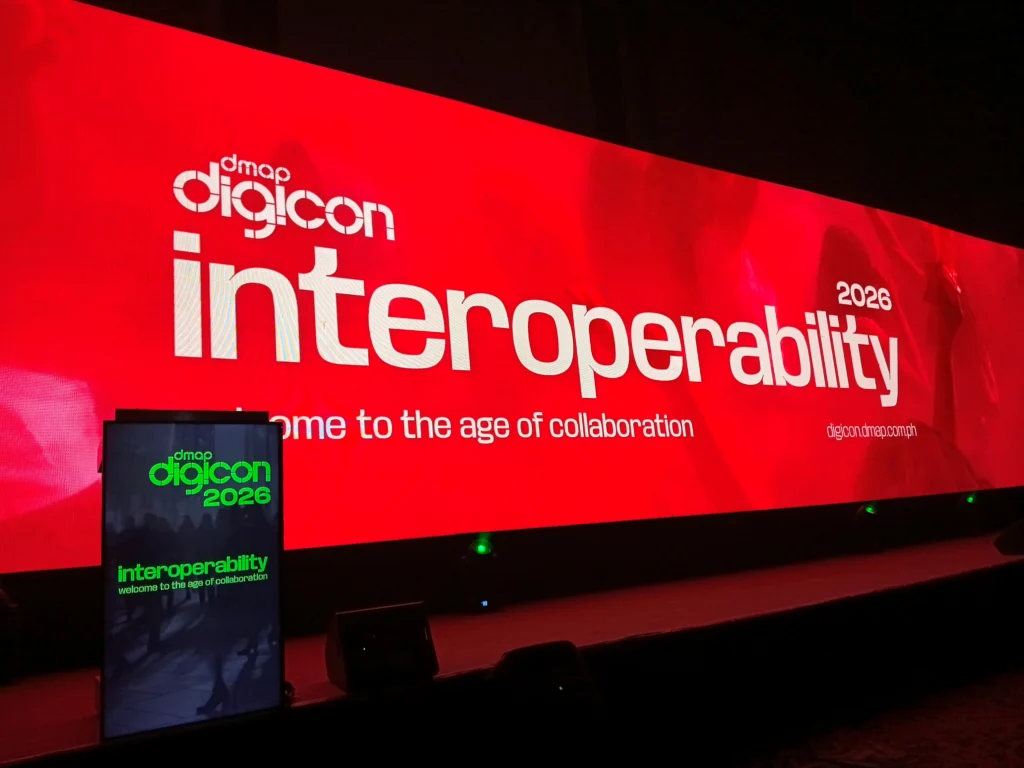
Day 1 was much more about interoperability and access to AI, but Day 2 moved toward the collaboration side. Here, discussions became more critical, particularly about how finance can navigate the ever-changing digital landscape.

So, let’s put on our serious hats as we work through the Day 2 recap and the next steps to take as tech continues to rule.
Turning everyday machines to ‘phygital’
“Phygital” is a very clever term, and that’s what Buencamino has expounded on during the morning of DigiCon 2026 Day 2.
Phygital, or the blending of real-world (physical) and online experience (digital) to remove friction, particularly in mobility, was the focal point of what Buencamino works on as the Head of AC Mobility.
She started the day by emphasizing the growing number of electric vehicles in the Philippines, which, according to reports, are experiencing rapid growth, with EV sales surging 163% to 54,372 units in the first nine months of 2026.
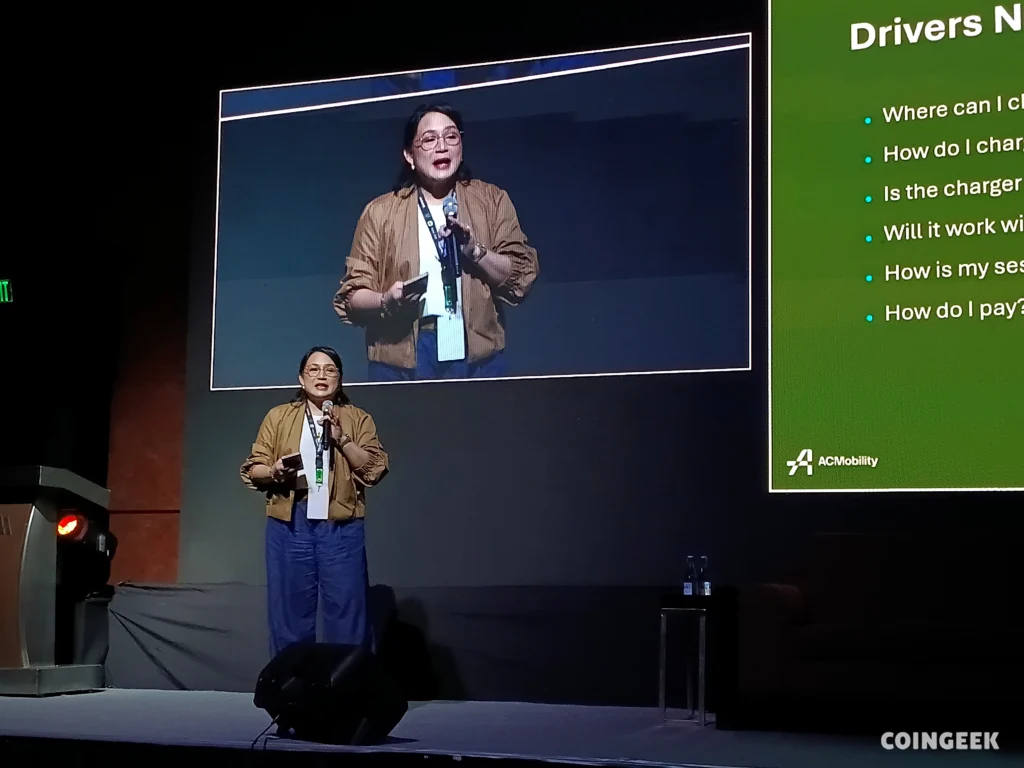
However, as Buencamino said, many people are still hesitant to switch to electric cars due to misconceptions.
“To us, the challenge is how do we turn awareness into confidence? How do we train confidence into action?” She asked. “This is how we explore digital harmony, and this is where the physical side needs to meet the digital space.”
Her main takeaways? Tech is evolving, and even the vehicles we use daily are evolving fast. As a result, the design must be seamless for people.
Finance as an environment and experience
Touching on how tech is evolving and quickly becoming part of our daily lives, a panel on “Finance as an Environment and Experience” moderated by Jonathan Ravelas discussed the challenges in digital finance and how we can avoid them.
The discussion started with Ravelas framing the history of finance from what he called Digital 1.0, the phase of ATMs and express tellers in the 1980s, to Digital 2.0, the pandemic-driven shift to digital. According to him, with the onset of COVID-19, we were all forced to accept digital finance.
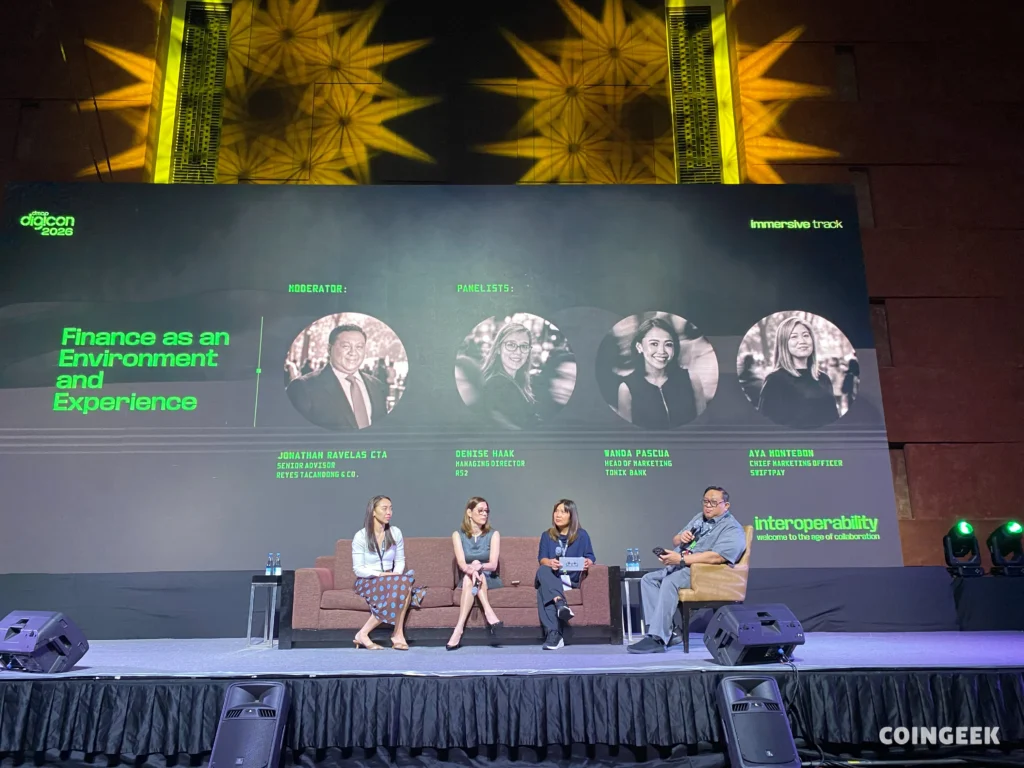
“The challenge today, unlike before, is that there is a redundancy when we do digital payments,” Ravelos said and asked each of the panelists—Wanda Pascua, Denise Haak, and Aya Montebon—about how they can mitigate these redundancies.
For Pascua, to avoid issues with redundancies, banking experience must be seamless and integrated into customers’ lives. Montebon shifted to another idea in creating more routine payments for repetitive or reversible transactions. Creating a seamless experience was agreed upon by Haak, but she added another important layer to discuss regarding payments—security.
Montebon believes that speed and security are the bare minimum for payments, but Haak says that the future of payments must be “absolutely secure.”
“Payments is a make-or-break experience. Anything from buying toothbrushes and toothpaste at your grocery store to planning your vacation with your family hinges on the payment ecosystem working seamlessly for its customers. And the future of payments needs to be not just seamless, but absolutely secure,” she said.

In terms of security, Haak said that fraud monitoring and authentication must be built into every digital payment to improve customer trust.
“How can [customers] trust if [they] don’t see [their] money?” asked Pascua. She said that trust can be built in this digital space by educating customers and simplifying the process.
That’s one thing about digital finance transactions: there is a lot of friction in completing a single transaction, due to multiple sign-ons, fragmented databases, and a variety of security processes. These are the issues that the next financial panel has discussed.
Coming back on stage as a moderator, Haak explains how friction can be balanced with digital convenience, strong cybersecurity, and data privacy compliance. Joining her was her former boss and IPV Network President, Miguel Ramos; Senior Vice President and Digital Channels Head of Customer Experience Group at UnionBank, Aaron Jon ‘AJ’ Atienza; and Chief Financial Officer of Abe-Abe, Manny Nepomuceno.
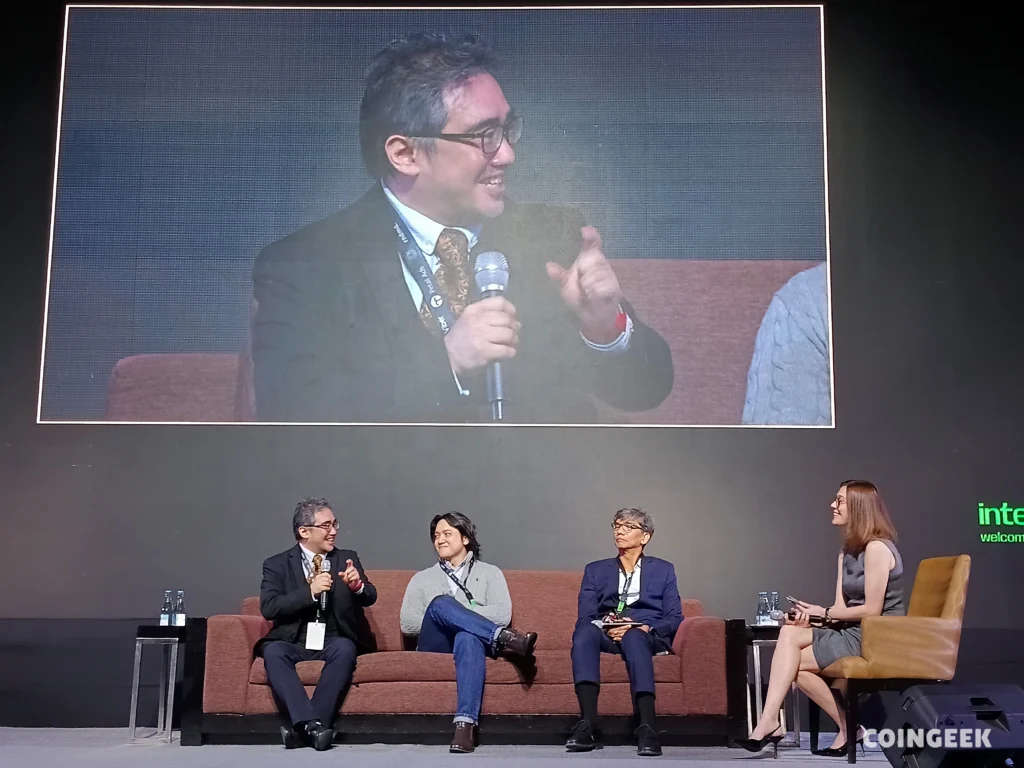
The discussion began by distinguishing two kinds of friction in the finance sector: meaningless friction— the obvious suspect—and purposeful friction.
The panelists said that a lot of friction is really just an integration problem; for example, being asked to verify identities five times means the systems behind might not recognize the users.
As Atienza said, meaningless friction is usually a manifestation of how the organization designed itself. In comparison, purposeful friction is the opposite, since it’s more inclined toward deliberate checks to protect customers.
“Good security is like a seatbelt. It is there always, but the moment that you need it, you have to feel that it is going to protect you from danger.” – Miguel Ramos, IPV Network President
Rounding out the discussion in finance, the core idea is that the best form of digital payments is when customers never have to notice it, supported by a reliable, secure, and trusted infrastructure. As digital finance becomes increasingly invisible and embedded in our routines, the question of who or what is acting on our behalf becomes equally important.
Our future will be built by ideas, but we can’t make it alone
By afternoon, one of the highlights of DigiCon 2026 Day 2, aside from interoperability, is collaboration.
Judy John, the Global Chief Creative Officer at Edelman, put it plainly on stage: collaboration has usually come at the end of the idea.
Someone has an idea, and someone else executes it. But she argued that “the model is changing.” Ideas now have to come from different ways of seeing the world.
Her version of interoperability goes beyond tools like AI talking to each other. It means different kinds of intelligence—human or machine—making each other more powerful rather than just coexisting.

“Interoperability, which is a really hard word to say, is when different kinds of intelligence don’t simply coexist. They make each other more powerful,” she said.
She put on an example of a Vaseline Verified campaign. Instead of fighting thousands of odd “hacks” people were posting about the product, the brand treated them as a creative resource, tested them in their own labs, and told the public which ones didn’t work. John highlighted that honesty earned trust in this campaign, and when community-born ideas become products, people behind them share in the profits.
“Don’t create ideas people consume. Create ideas that people can become a part of.” – Judy John, Global Chief Creative Officer at Edelman
In closing, John pointed out that in this day and age of AI, human difference becomes a competitive advantage.
“In the age of AI, human collaboration is our advantage,” she said.
Now, as we close the chapter on DigiCon 2026, we have seen how technology has become much more accessible.
On Day 2, the answers pointed in the same direction. Across finance, mobility, and creativity, Day 2 showed that the best technology disappears in real life, but the trust we build in it and the people behind it are what will keep it lasting.
The future may be powered by technology, but as DigiCon 2026 reminded us, it will still be shaped by human differences, ideas, and collaboration.
FAQs:
What is DigiCon 2026?
DMAP’s flagship digital marketing conference, held October 15–16 at the Manila Marriott Hotel under the theme “Interoperability: Welcome to the Age of Collaboration.”
What happened on Day 2 of Digicon 2026?
Day 2 shifted from Day 1’s interoperability and AI access toward collaboration and finance. Sessions covered phygital mobility, digital payments, friction in finance, and Edelman’s Judy John on human and machine collaboration, held across the Impact, Immersive, and Interactive tracks.
What is phygital?
Phygital is the blending of physical and digital experiences to remove friction.
How fast are EV sales growing in the Philippines?
Philippine EV sales surged 163% to 54,372 units in the first nine months of 2026. Buencamino noted that misconceptions still make many drivers hesitant to switch to electric cars.
What is the difference between meaningless and purposeful friction in digital finance?
Meaningless friction comes from poor system integration, such as having to verify your identity five times. Purposeful friction is deliberate checking that protects customers.
What makes digital payments trustworthy?
Panelists said trust comes from seamless, secure payments.
What does interoperability mean according to Judy John?
John defined interoperability as different kinds of intelligence, human or machine, making each other more powerful instead of merely coexisting.
What was the main message of DigiCon 2026 Day 2?
The best technology disappears into daily life, but trust and the people behind it make it last.
In order for artificial intelligence (AI) to work right within the law and thrive in the face of growing challenges, it needs to integrate an enterprise blockchain system that ensures data input quality and ownership—allowing it to keep data safe while also guaranteeing the immutability of data. Check out CoinGeek’s coverage on this emerging tech to learn more why Enterprise blockchain will be the backbone of AI.
Watch: Digital Marketing Trends 2025 at DIGICON




Be the first to comment