


Disclosure: This article does not represent investment advice. The content and materials featured on this page are for educational purposes only.
Crypto token discovery is becoming more fragmented as projects adopt multi-platform visibility strategies across DEX screeners, wallets, explorers, and trading terminals.

Summary
- Token teams are turning to PandaBoost as crypto discovery becomes more fragmented across DEX screeners, wallets, and trading terminals.
- As web3 token discovery spreads across multiple platforms, PandaBoost offers coordinated visibility campaigns for crypto projects.
- Crypto projects are exploring new visibility strategies as PandaBoost helps connect tokens with traders across major discovery platforms.
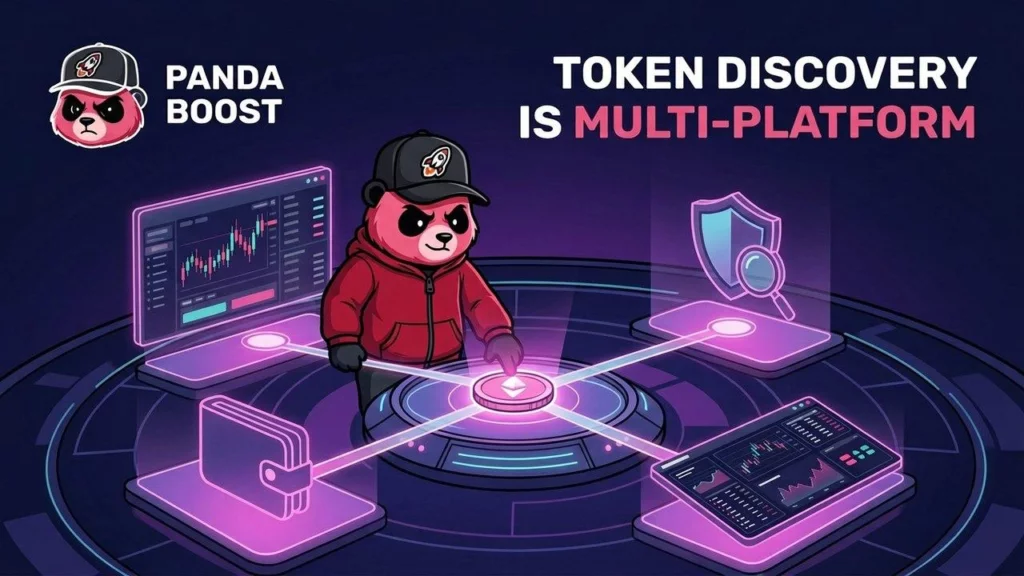
Crypto token discovery no longer happens on a single chart. As traders move between DEX screeners, wallets, explorers and execution terminals, token teams need a coordinated visibility strategy built around real market activity and platform-specific requirements.
A token launch can be technically successful and still remain almost invisible. Creating a pool and enabling trading puts an asset on-chain, but it does not guarantee that traders will encounter it while browsing the tools they already use.
That discovery layer is becoming increasingly fragmented. A trader might notice a pair on DEX Screener, research it through DEXTools or GeckoTerminal, encounter it in Phantom, verify activity on an explorer, and then execute through a terminal such as Axiom, Padre or GMGN. For token teams, visibility is therefore no longer a single-platform task.
Discovery now happens at several layers
DEX screeners remain an important entry point because they organize large numbers of live pairs around activity, liquidity and attention. Yet screeners are only one part of the journey. Wallets have added token discovery surfaces, explorers highlight assets and activity, and trading terminals increasingly shape what active market participants see during fast-moving sessions.
The platforms do not all rank assets in the same way. DEX Screener’s official Trending documentation, for example, groups its signals into market activity, community engagement, and trust and credibility. It identifies factors such as volume, liquidity, transactions, unique makers, holders, page visitors, reactions and verified token information. The exact formula and thresholds are not public, and rankings remain competitive as market conditions change.
Phantom also gives users a dedicated way to explore trending tokens, while GeckoTerminal helps users identify pools gaining attention through on-chain activity and visits. These interfaces serve different moments in the research process, which means a campaign designed for one surface cannot simply be assumed to work on another.
Visibility signals are platform-specific
The common mistake is to treat trending as a switch. In reality, discovery systems observe a mix of conditions, and a token that is not ready can lose visibility as quickly as it gains it.
Before starting a campaign, teams should confirm the correct contract, chain, exchange and liquidity pool. Token information should be complete, and the selected pair should have enough liquidity and genuine market activity to remain usable. Community announcements should point traders to the same intended pair rather than dividing attention among several pools.
Timing also matters. A visibility push is easier to understand when it is connected to a real event such as a launch, product update, exchange expansion or active community campaign. Random activity without a clear reason for traders to investigate the token may produce impressions but little meaningful follow-through.
This distinction is important: visibility describes exposure on a discovery surface. It does not guarantee buyers, price appreciation or investment returns.
PandaBoost brings campaign workflows together
PandaBoost is a crypto visibility platform for token launchers, marketing teams and agencies. It provides platform-specific campaigns across DEX screeners, wallets, explorers and trading terminals rather than treating token discovery as a single generic placement.
Its current service lineup includes DEX Screener Trending, DEXTools Trending, GeckoTerminal Trending, Phantom Trending and Phantom Chat Trending, Solscan Trending, RugCheck Most Viewed, InsightX Trending, and Terminal Trending for Axiom, Padre and GMGN.
The value of this model is coordination. A team can choose the discovery surfaces that match its audience while keeping the campaign tied to one verified token and pair. That is more practical than assuming every trader begins research on the same website.
For teams focused specifically on DEX Screener, PandaBoost also publishes a detailed guide to DEX Screener Trending campaigns, including the platform’s disclosed ranking signals, campaign preparation, and live-position limitations.
New users can test one part of the workflow before placing a paid order: PandaBoost currently provides 20 free DEX Screener reactions for the correct token pair, with no card or wallet connection required. The test is designed to demonstrate reaction delivery; it is not a promise that a token will reach a particular trending position.
Try it first: Claim 20 free DEX Screener reactions for a token pair.
Visibility is not a substitute for market quality
No visibility service can repair a token that is not ready for public attention. Traders can still inspect liquidity, trading history, holder distribution, token information and security context. Sending more people to an incomplete profile or unstable market may expose weaknesses rather than build confidence.
A practical campaign therefore begins before the order itself. The team should verify the pool, update public information, check whether current metrics satisfy the selected platform’s requirements and choose a time when the community can support the announcement. During delivery, the same metrics need to be monitored because third-party rankings remain live.
Token teams should also separate campaign reporting from market performance. Useful visibility measurements can include placement range, duration, profile visits and engagement with the intended pair. Price action, trading decisions and conversion outcomes should be evaluated separately and without assuming causation.
A practical sequence for token teams
A coordinated visibility plan can follow five steps:
1. Verify the contract, chain, DEX and exact pool to be promoted.
2. Complete the token profile and review liquidity, volume and other eligibility conditions.
3. Identify where the target audience discovers and trades tokens.
4. Connect the campaign to a real launch event, update or community push.
5. Monitor visibility and market conditions separately throughout the campaign.
The broader shift is clear: token discovery has become multi-platform. DEX screeners still matter, but wallets, explorers and trading terminals now influence how traders move from first exposure to deeper research. Teams that plan around this fragmented journey can build more coherent campaigns while keeping expectations grounded in what visibility can — and cannot — deliver.
Disclosure: This content is provided by a third party. Neither crypto.news nor the author of this article endorses any product mentioned on this page. Users should conduct their own research before taking any action related to the company.



Be the first to comment