




TLDR
- UBS says rising U.S. bond yields are creating a growing headwind for European equities, though the effect varies by sector.
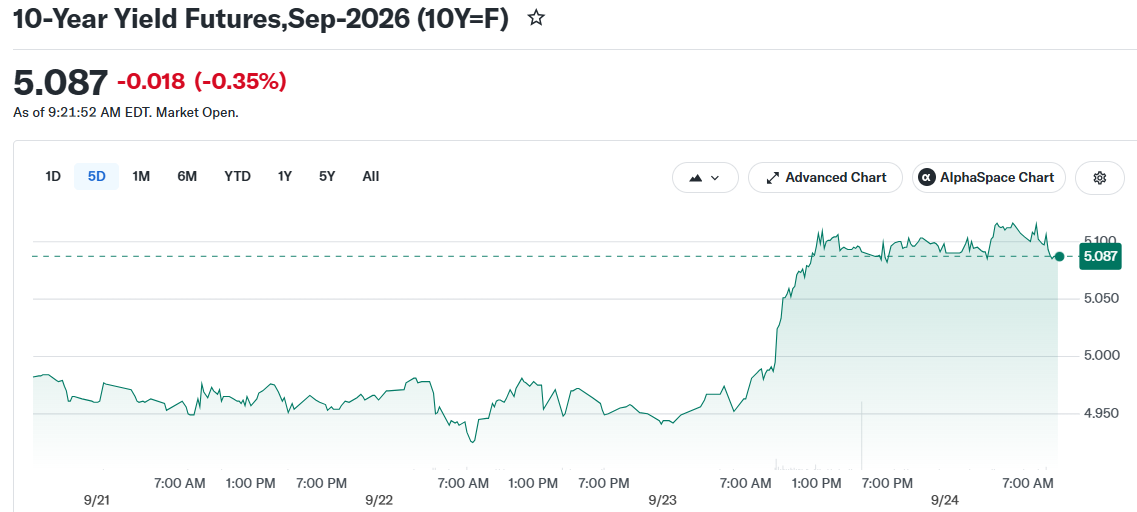
- The 10-year Treasury yield climbed from 3.94% in February to 5.00% last week, with real yields rising from 1.68% to 2.67%.
- UBS strategists say the yield rise reflects stronger, broadening growth rather than inflation fears, driven by a capex cycle in defense, AI equipment, infrastructure and power.
- Energy, banks, chemicals and basic resources have gained over the past three months, while construction, telecoms, utilities and food and beverage stocks have declined.
- European stocks traded cautiously on Thursday as investors watched the US-Iran conflict and a summit between the Chinese and U.S. presidents.
Rising bond yields are becoming a bigger problem for European stocks. That’s according to a new note from UBS, which says the impact is not spread evenly across the market.
The U.S. 10-year Treasury yield has climbed sharply since the start of the year. It rose from 3.94% at the end of February to 5.00% last week. Real yields, which strip out inflation, rose from 1.68% to 2.67% over the same period.
UBS strategists Gerry Fowler and Sutanya Chedda looked at how the MSCI Europe index performs during weeks when yields rise versus when they fall. Since March 1, weeks with rising yields saw an average of just 42% of the index gain in weight. Weeks with falling yields saw 64% gain.
That 22-percentage-point gap is the widest UBS has recorded in its sample.
What Yield Levels Mean For Stocks
The strategists say it’s not the level of yields alone that matters. It’s the combination of level and speed of change.
Below a 10-year yield of 3%, even sharp weekly moves left most of the index higher. Rising yields in that range were seen as a sign of growth.
In the 4% to 4.5% range, the picture changes. Breadth fell from 61% on weeks when yields dropped to just 30% when yields jumped more than 20 basis points.

Above 4.5%, UBS says sharp weekly increases are what cause the damage.
Why Yields Are Rising
UBS argues the yield increase is not driven by inflation fears or a bond market accident. Instead, it points to a buildup in industrial capacity across defense, AI equipment manufacturing, infrastructure and power.
The bank calls this the first synchronized capex cycle of its kind in a generation. It says this type of activity moves money faster through the economy than services-driven growth typically does.
UBS describes this as a regime change that hasn’t been priced in for thirty years. Rising velocity against a stable monetary base means nominal GDP grows faster, and policy that looked neutral becomes loose. That could require more rate hikes, not fewer.
The bank also warned that the effects of policy changes may take longer to show up than usual. Industrial cycles run on multi-year planning. Money already committed to grid connections, defense contracts and factory construction won’t be pulled back by a single rate decision.
For investors, UBS recommends favoring stocks with low sensitivity to bond yields, where earnings growth can outpace the discount rate. Over the past three months, energy, banks, chemicals and basic resources have gained. Construction, consumer products, telecoms, utilities and food and beverage stocks have declined.
The strategists say the real distinction isn’t cyclical versus defensive stocks in general. It’s whether earnings growth is strong enough, and valuations cheap enough, to offset pressure from rising yields.
On Thursday, European stocks traded cautiously. Both the STOXX 50 and STOXX 600 swung near the flatline.
Investors were watching developments in the US-Iran conflict, which kept oil prices higher and bond yields near multi-year highs. Markets were also awaiting a summit between the Chinese and U.S. presidents for any progress on trade tensions.
Technology and banking stocks were among the weakest performers Thursday. SAP, UBS, Infineon, Mercedes-Benz and Rheinmetall all fell, and H&M shares dropped nearly 3% after third-quarter results missed expectations. LVMH, Novartis and Siemens were higher.
Stop guessing and start investing with confidence. KnockoutStocks gives you the AI insights, market intelligence, and stock research you need to spot opportunities, cut through the noise, and make smarter investment decisions — all in one powerful platform.
Sign up today and get 50% OFF full access to our premium stock picks.
Simply use coupon code SPECIAL50 at checkout to claim your exclusive discount.


Be the first to comment