

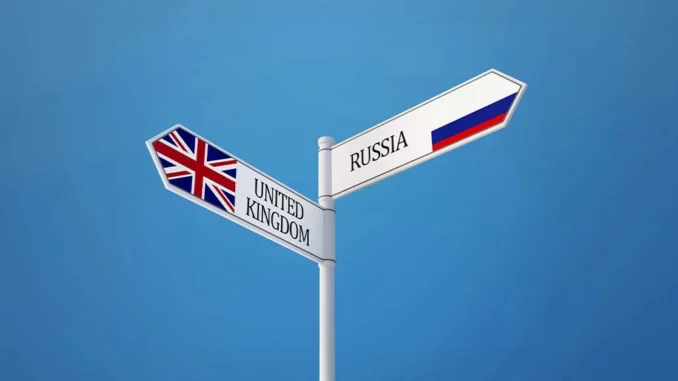

The United Kingdom’s Foreign Secretary, Yvette Cooper, has announced new sanctions targeting digital currency in a bid to shut off “financial lifelines that sustain Putin’s war machine,” including adding digital asset exchange HTX to the country’s list of sanctioned entities over its support of Russia.
On May 26, the U.K. Foreign Office revealed it would be ramping up measures against digital asset networks used to bypass Britain’s sanctions, in an effort to prevent Russia from exploiting the sector to circumvent the heavy economic sanctions placed on the country since its illegal invasion of Ukraine in February 2022.
“If the Kremlin thinks it can evade our sanctions by hiding behind crypto networks and shadow financial systems, it is gravely mistaken,” Foreign Secretary Cooper said in a May 26 press release. “The UK is adapting and strengthening our approach to target the evolving tactics Russia is using to evade restrictions.”
She added that “we are tracking down and shutting off the financial lifelines that sustain Putin’s war machine. There will be no safe havens for those enabling Russia’s aggression.”

The package of 18 designations announced by the Foreign Office was designed to directly target Russia’s illicit financial infrastructure used to move funds, procure goods, and sustain its war.
Amongst those designated was Seychelles-based digital currency exchange HTX, formerly Huobi Global, with the U.K. authorities saying they had “reasonable grounds to suspect” the platform has been supporting Russia’s government
through financial services and funds facilitated by the A7 Limited Liability Company and Garantex—the sanctioned Moscow-based digital asset exchange that alone has reportedly facilitated transfers of more than $20 billion in Tether since early 2022—as well as other sanctioned entities.
A7 was also a major target of the U.K.’s new sanctions. The Kremlin-backed system designed to bypass Western sanctions has claimed to have moved more than $90 billion last year.
In response, the U.K. government announced new measures to hit “key A7-linked individuals.”
Sanctions taking effect
The U.K. has now sanctioned over 3,300 individuals, businesses, and ships connected to Russia’s war economy. According to the U.K. government, Putin’s regime is increasingly feeling economic pressure from these actions.
“As existing sanctions continue to bite, the Kremlin has increasingly turned to dark networks and shadow financial systems to bypass legal restrictions,” said the Foreign Office. “Today’s action shows the UK is moving faster and further than ever before to clamp down on these routes and adapt its approach to stay ahead of Russian evasion tactics.”
The new measures pile more pressure on Russia on top of previous global sanctions, ranging from freezing the assets of Russian state-linked individuals to barring major Russian banks—including Bank Otkritie, Novikombank, Promsvyazbank, Rossiya Bank, Sovcombank, VEB, and VTB—from the international financial messaging system, Society for Worldwide Interbank Financial Telecommunication (SWIFT).
As a result of these unprecedented measures, Russia’s gross domestic product (GDP) fell in 2022 and 2023 after the invasion.
These various measures also made Russia among the most sanctioned nations in history and caused the pariah state to increasingly look to alternative trade and finance routes, particularly to help it mitigate its exclusion from the SWIFT payment system. Thus, the pseudoanonymity and supposed decentralization afforded by digital assets seemed a logical bedfellow for the rogue state.
More recently, the country’s economic outlook began to recover as a consequence of the war in Iran and spiraling global fuel costs, with surging oil prices triggered by the war boosting Russia’s oil revenue.
Naturally, this unexpected windfall for Russia reduced the effectiveness of economic sanctions on the country’s war machine and diminished the prospects for peace in the immediate future.
This served as a large part of the impetus for renewed sanctions efforts, such as those announced by the Foreign Secretary on Tuesday. The U.K. claims this, along with other recent efforts, caused Russia in May to slash its economic growth forecast for this year from 1.3% to just 0.4%, and halve its forecast for 2027.
However, the U.K. government’s announcement of new sanctions targeting the digital asset sector has not met with universal praise.
Politically motivated overreach?
In light of the U.K.’s Foreign Secretary’s announcement, Roger Gherson, founding partner at London-based law firm Gherson Solicitors, argued that the most recent package of sanctions targeting financial institutions and crypto networks demonstrates “that the UK Government remains fully committed to using this largely political tool to restrict those alleged to be associated with Russia.”
In comments to Coingeek, he suggested that: “With the failure of the UK courts to act to protect the rights of individuals we see no immediate easing of this draconian application of the sanctions regime and its use as a “quick fix” political win to distract the public from the hard political decisions the Government need to make to try and bring back economic growth to a country sinking into oblivion because of its mistakes.”
Watch: Breaking down solutions to blockchain regulation hurdles
title=”YouTube video player” frameborder=”0″ allow=”accelerometer; autoplay; clipboard-write; encrypted-media; gyroscope; picture-in-picture; web-share” referrerpolicy=”strict-origin-when-cross-origin” allowfullscreen>



Be the first to comment