



- Existing divergence suggests a competition for risk capital between BTC and the Nasdaq.
- Institutional capital has concentrated heavily in mega-cap tech stocks throughout 2026.
- History reveals that sharp tech sell-offs typically hurt Bitcoin before helping it.
Bitcoin and the Nasdaq Composite index are exhibiting a complex relationship. The latest divergence between them suggests an ongoing competition for risk capital. The Nasdaq’s AI-led gains have left Bitcoin users curious about the cryptocurrency’s future amid worries that it could remain range-bound even if broader risk sentiment stays strong.
The Nasdaq Composite index is trading around historic highs at $26,644. Meanwhile, Bitcoin remains suppressed, trading at $64,237, approximately 50% below its all-time high of over $126,000 achieved in October 2025 at the time of writing, according to TradingView data. This divergence reflects the prevailing trend and raises critical questions among investors aiming to understand what the future may hold, particularly for Bitcoin.
Nasdaq is Pulling Capital Away From Bitcoin
It is crucial to note that the persistent strength in tech equities throughout 2026 has successfully diverted institutional and retail liquidity away from the crypto market. Capital has concentrated heavily in mega-cap tech stocks and revolved around robust corporate earnings and unprecedented capital expenditure in AI infrastructure.
Glassnode’s data highlights this trend, citing AI trade as the key driver of the tech market while leaving Bitcoin out of the capital rotation. Nonetheless, the analytics platform emphasized the drop in Consumer Confidence, which is highly divergent from the US Stock Market Index.

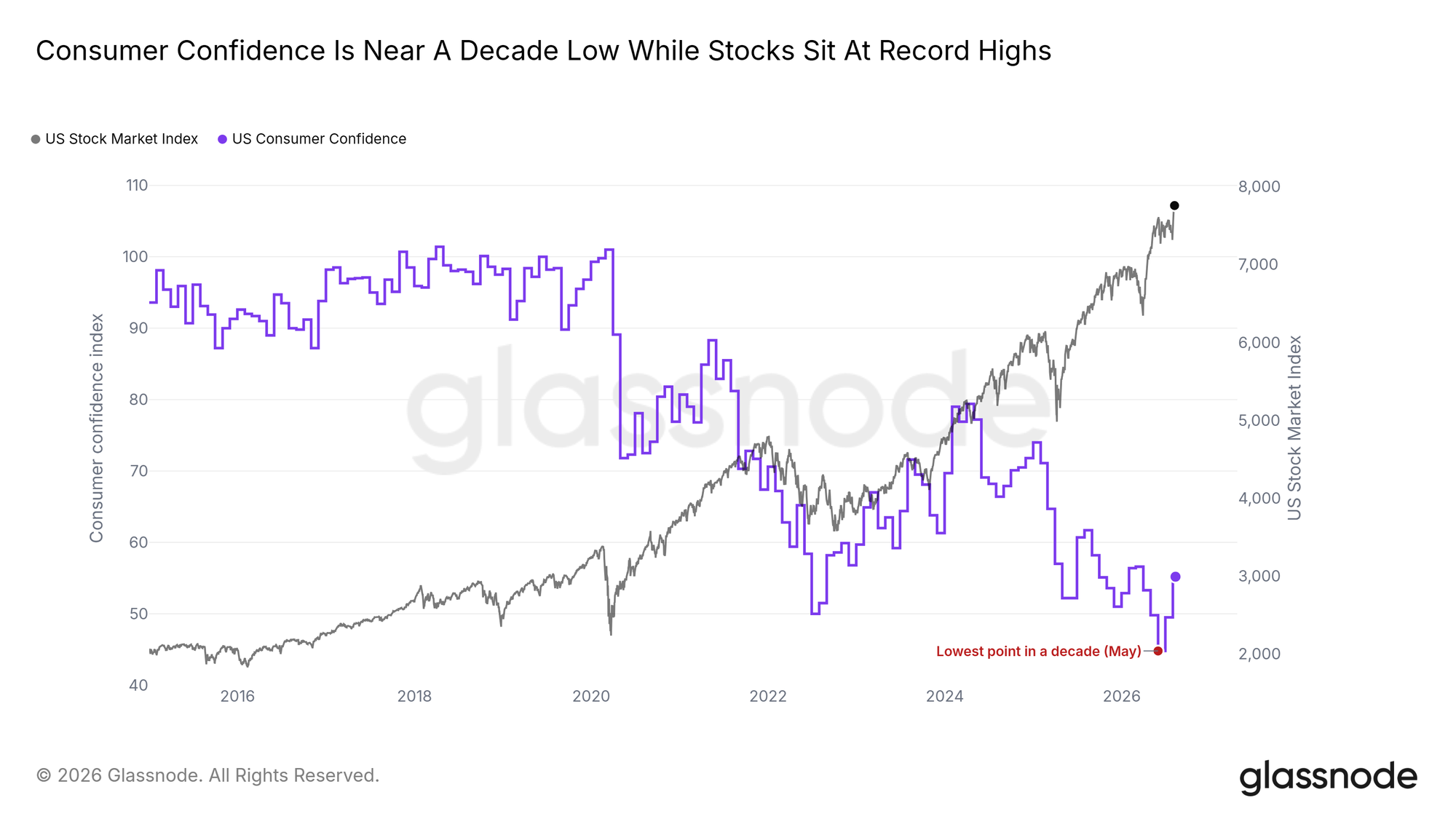
Source: Glassnode
While the Nasdaq is experiencing significant capital inflow, cautious spot ETF demand and structural delays in critical regulatory structures, such as the postponed US Senate floor vote on the CLARITY Act, have left Bitcoin starving for fresh, aggressive liquidity. As a result, Bitcoin has traded flatly while traditional tech indices push boundary extensions near their historical ceilings.
Does BTC Offer Better Risk/Reward Than Nasdaq?
It is no gainsaying that the momentum is behind tech stocks. However, it is crucial to note that most of these stocks, particularly the AI-focused assets, are trading at historically steep multiples. Chasing them at current extensions increases the risk of catching a local top. Meanwhile, Bitcoin is currently range-bound and trading significantly below historical levels.
From a purely structural perspective, Bitcoin offers a more asymmetric risk/reward entry than chasing overextended AI equities. Buying BTC near the lower band of its prolonged accumulation zone minimizes downside risk. However, investors need to be patient, as the asset would require a major catalyst to regain its typical bullish momentum.
BTC Levels to Watch for Breakout Confirmation
Bitcoin’s price trajectory over the past months has established some key structural boundaries. Monitoring these levels could offer useful direction to traders, helping them confirm a directional shift.
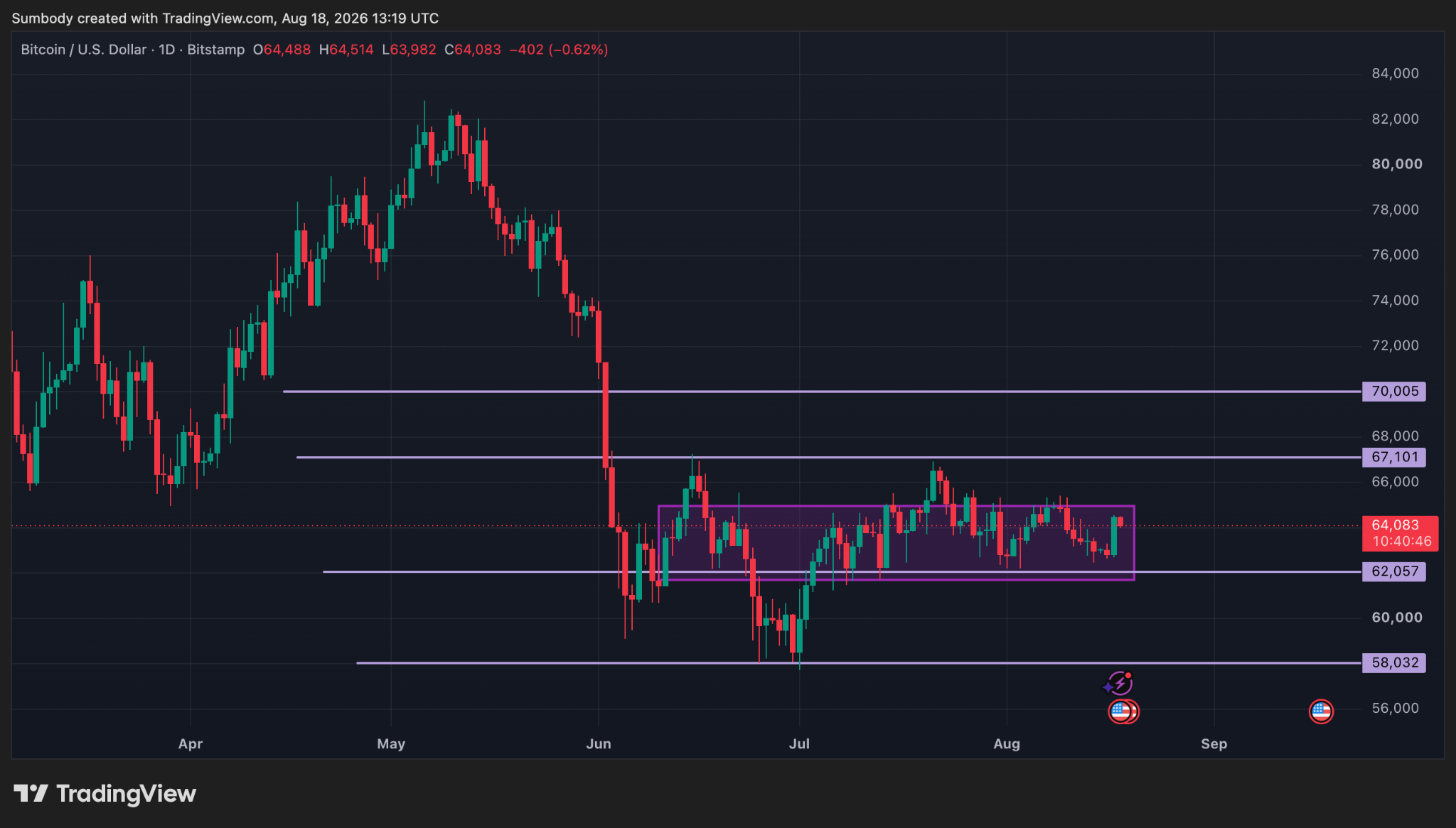
BTCUSD Daily Chart on TradingView
The $64,000-$65,000 region represents Bitcoin’s immediate resistance. It is a cluster of strong spot volume, and the price needs to clear it to register an initial “sign of life.” A confirmed close above this region would represent a technical breakout, indicating that range-bound sellers are becoming exhausted.
If the cryptocurrency extends further and registers a decisive daily close above $67,000, it would have broken a multi-month ceiling. That would confirm a stronger technical breakout and shift the bias from range-bound accumulation to an active uptrend targeting the $70,000 region.
On the downside, Bitcoin could return to the macro floor at $58,000 if it fails to hold the $62,000-$58,000 support.
How Would a Nasdaq Reversal Affect BTC?
Going by historical data, sharp tech sell-offs typically hurt Bitcoin before helping it. Therefore, expecting a potential pullback in the surging index to imply capital rotation into BTC would not be an ideal projection for the cryptocurrency’s users. However, it is not wrong to expect that a gradual, orderly cooling of equity markets can cause profit-taking to rotate into alternative stores of value.
For context, when the Nasdaq drops violently, the rolling correlation between the two assets temporarily spikes. This usually happens when institutional players liquidate high-beta positions across the board to cover margin calls or accumulate cash, causing Bitcoin to plummet alongside tech equities before any constructive rotation occurs. Hence, Bitcoin could benefit from a reversal in the Nasdaq in the long run.
Which Market Between Bitcoin and the Nasdaq Has Stronger Momentum?
As indicated earlier, the Nasdaq is currently trading near its historical highs with a clearly defined trend. It is also consistently supported by secular corporate earnings. Conversely, Bitcoin is stuck within a horizontal range with low volatility. Hence, the Nasdaq index’s momentum is significantly stronger than Bitcoin’s, which is currently devoid of a clear direction.
Related Articles:
Dow Jones, Sensex and Nasdaq Fall: What It Means for Crypto Investors
AI Spending Fears Push Nasdaq to 7-Week Low as Bitcoin Drops Below $63K
Disclaimer: The information presented in this article is for informational and educational purposes only. The article does not constitute financial advice or advice of any kind. Coin Edition is not responsible for any losses incurred as a result of the utilization of content, products, or services mentioned. Readers are advised to exercise caution before taking any action related to the company.



Be the first to comment