


The United States may seize approximately $1 billion in cryptocurrency linked to Iran this week, Treasury Secretary Scott Bessent said, as Washington intensifies its economic campaign against Tehran. The proposed action raises questions about the scale of Iran-related crypto enforcement, the legal mechanisms behind asset seizures and the potential consequences for cryptocurrency platforms handling transactions connected to sanctioned entities.
Bessent Signals a New $1 Billion Iran Crypto Seizure
Speaking at Newsmax’s NPolicy Summit in Washington on October 8, Bessent said authorities could seize approximately $1 billion in Iran-linked cryptocurrency within the week. He indicated that officials knew where the assets were located but did not identify the cryptocurrencies, wallet addresses or entities holding them. The remarks came as the administration expanded its efforts to restrict Iran’s access to international financial and transportation networks.
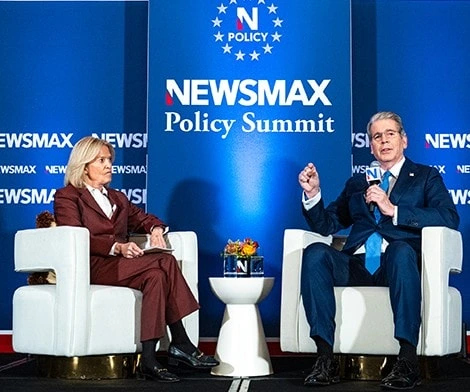
The latest target follows Bessent’s announcement that the United States had already seized approximately $1 billion in Iranian crypto assets. He also previously estimated that Iran was moving between $400 million and $500 million monthly through sanctions evasion, according to reporting by The Block. However, officials have not clarified whether the October target represents an additional seizure or overlaps with previously announced amounts.
Also Read: Tether Reserve Deal Faces Senate Scrutiny Over Iran-Linked USDT

Seven Iranian Crypto Exchanges Face US Sanctions
The proposed seizure comes amid a broader enforcement campaign targeting cryptocurrency businesses accused of facilitating Iranian financial activity. The U.S.
Treasury designated Nobitex, Wallex, Bitpin and Ramzinex in June, followed by additional exchange-related sanctions in August and action against BitBank in September. These measures extend enforcement beyond individual wallets to the platforms that may facilitate transactions.
The Treasury’s June announcement said Nobitex processed more than 50% of the country-linked digital asset inflows in 2025. The department alleged that the exchange facilitated sanctions evasion and transactions linked to the Islamic Revolutionary Guard Corps (IRGC). This provides important context for the seizure effort because authorities are targeting financial infrastructure as well as cryptocurrency holdings.
OFAC Rules Explain How Iran Crypto Assets Are Blocked
The Treasury’s Office of Foreign Assets Control (OFAC) provides the regulatory framework for blocking assets connected to sanctioned Iranian financial institutions. Its FAQ 1250 states that Iranian digital asset exchanges meet the regulatory definition of the country-linked financial institutions under applicable sanctions rules. Property within U.S. jurisdiction, or held or controlled by U.S. persons, must be blocked and reported when the rules apply.
The restrictions can also affect overseas businesses. In its FAQ 1257, OFAC explains that non-U.S. persons conducting significant transactions with designated Tehran-linked exchanges may face sanctions exposure.
For cryptocurrency exchanges, stablecoin issuers and other service providers, this creates incentives to screen wallet addresses and investigate suspicious transactions. However, a sanctions designation or wallet freeze is not automatically equivalent to a completed government seizure or permanent forfeiture.
A notable example of enforcement activity came in July, when U.S. authorities announced wallet sanctions that reportedly resulted in approximately $130 million being frozen.
On-chain analyst Specter linked the action to four Tron addresses holding roughly $131 million in USDT, which Tether blacklisted. The case illustrates how blockchain records and cooperation from centralized stablecoin issuers can help authorities restrict access to assets.
The latest announcement does not identify the targeted assets, so its direct effect on Bitcoin, Ether or stablecoin prices cannot yet be established. A seizure involving a specific wallet does not necessarily mean that the same value will be sold on an open market, and no verified market-wide price reaction can be attributed to this announcement alone.
The next indicators to watch are an official Treasury or OFAC notice, identified wallet addresses, confirmation from relevant asset issuers and clarification of whether the $1 billion target is additional to earlier actions.
Also Read: Cantor Fitzgerald Tether Deal Draws Scrutiny Over Iran Sanctions



Be the first to comment