


What to know:
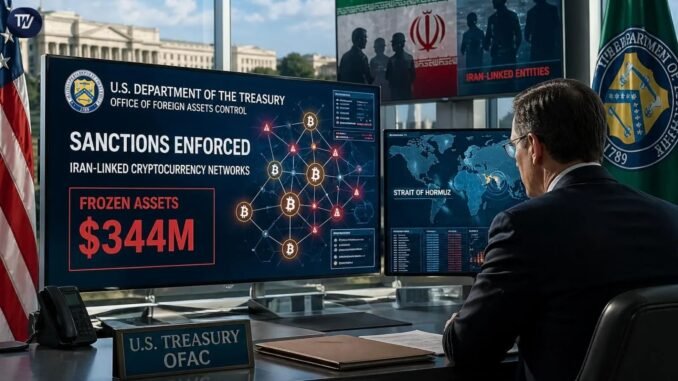
- US Treasury intensifies crackdown on Iran-linked crypto activity, freezing $344M in digital assets.
- OFAC sanctions target wallets on the Tron blockchain tied to IRGC and Hezbollah networks.
- Tether freezes over $344M USDT following a US law enforcement request on illicit activity concerns.

The US Department of the Treasury has increased its enforcement actions against activities related to cryptocurrencies of Iranian origin by imposing sanctions on individuals or organizations involved, resulting in a freeze on digital currencies worth $344 million.
This action was taken by OFAC, an arm of the Treasury Department responsible for tracking financial networks associated with entities under sanction.
On April 24, 2026, Treasury Secretary Scott Bessent, in his post on X, stated that the operation is part of a larger plan to “systematically undermine Tehran’s capacity for fund generation, transfer, and repatriation.” According to him, American officials will be monitoring all money flows linked to Iran, and they will act on any channel supporting Iran’s leaders and their associates.

Also Read | XRP Triangle Formation Intensifies as 10% Move Nears Breakout Zone
US Targets Iran Crypto Holdings
These sanctions arise amid the continuing geopolitical rivalry, after the recent attacks carried out jointly by the U.S. and Israel against Iran. America has been putting pressure on Iran in several ways, including military force and economic sanctions, to deny access to funds worldwide.
According to the OFAC’s amended list of Specially Designated Nationals, there have been sanctions imposed on two wallets utilizing the Tron blockchain. It is believed that these addresses are associated with Iran’s IRGC and Hezbollah movement. In total, the amount of assets stored in these wallets reached almost $344 million.
Additionally, Tether, the provider of stablecoins, disclosed that it had frozen over $344 million worth of USDt (USDT) on the day preceding the announcement by the Treasury Department.
According to Tether, the freezing of these stablecoins was carried out upon the request of US law enforcement with regard to “activity associated with unlawful activity” without specifically mentioning Iran.
US Sanctions Amid Crypto Diplomacy
However, the time of these moves is particularly noteworthy considering the rumors that were spread about the Iranian government possibly using Bitcoin to collect tolls in the Strait of Hormuz, one of the most important waterways around the world in terms of oil transportation. Forbes reported on Thursday that the country has already earned money through crypto tolls.
Although there have been declarations made by the president of the United States, Donald Trump, regarding the existence of an understanding for a ceasefire with Iran, the region is still in turmoil due to the events occurring within the Strait of Hormuz.
The most recent sanctions show that cryptocurrencies are gradually gaining importance in international diplomacy and financial strategies, with governments seeking ways to prevent the use of alternative funding channels by countries under sanctions.
Also Read | Aster (ASTER) Price Consolidates at $0.66: Can Bulls Push Toward $20 Next?



Be the first to comment