


What to know:
- USDT demand surges as the bolivar drops 16% in 30 days. Venezuelans use it to preserve value, not speculate.
- P2P becomes the USD-on-ramp bypassing banks for fast, local USDT conversions used in remittances and daily spend.
- P2P/exchanges bring counterparty, compliance, and rate-gap issues despite boosting financial inclusion.
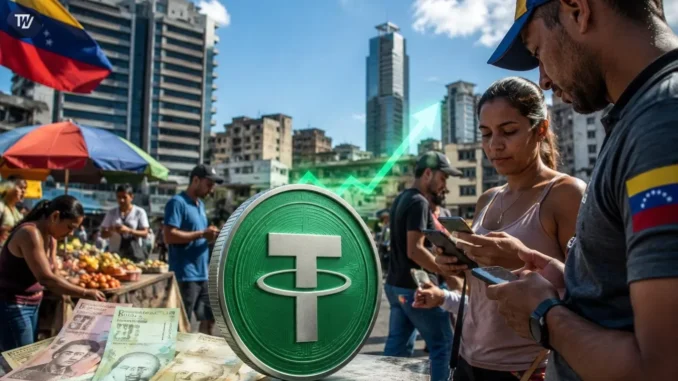
USDT demand has surged as Venezuela’s currency woes reignite interest in digital dollar alternatives. Based on various reports, Venezuelans are turning to Binance P2P markets in large numbers to get USDT as their national currency, the bolívar, steadily loses its value.
In fact, the stablecoin has been trading approximately 16% higher against the local currency over the past month, indicating a rising tilt towards crypto for safeguarding value. This pattern is only a reflection of how stablecoins are becoming a favoured option in countries experiencing foreign exchange market turbulence.
P2P Bypasses Banks
With P2P becoming a significant platform for converting bolivar to USDT, rising USDT demand allows peer-to-peer settlements without the involvement of traditional banking channels. The increased level of transactions reflects that, in reality, users are looking for liquidity, speed, and confirmed marketability through a platform that also enables local payment methods.

Usually, when USDT purchasing power rises on P2P trading venues, it is considered a harbinger of the broader market for digital assets, attracting retail clients during times of currency stress.
Macro Drivers Behind Stablecoin Use
The 16% increase of USDT against the bolivar in 30 days reflects continuing inflation, foreign currency scarcity, and rising USDT demand. For most people in Venezuela, stablecoins serve as a US dollar equivalent they use to send remittances, save, and carry out day-to-day transactions.
Here, USDT and similar digital currencies become merely instruments of settlement rather than tools of speculation, which is the pattern of blockchain implementation in most emerging economies.
Also Read: Tether Freezes $72M USDT After Monero Surge Raises Market Questions
Opportunities and Risks
More use of stablecoins can enhance financial inclusion and the efficiency of cross-border flows. Still, the surge in USDT demand via centralized exchanges and P2P networks also means participants must consider counterparty risk, platform compliance, and regulatory oversight. As USDT demand keeps rising, market participants also have to factor in the price differences between the on-chain and the local rates.



Be the first to comment