


XRP utility continued to grow in the first quarter of 2026 as institutional adoption of the XRP Ledger (XRPL) increased.
According to a new report from Messari, growth came from tokenized real-world assets (RWAs), stablecoins, and decentralized finance applications.
The report showed that XRP usage within the XRPL ecosystem continued to rise. Average daily transactions increased 35.3% quarter-over-quarter to 2.48 million.
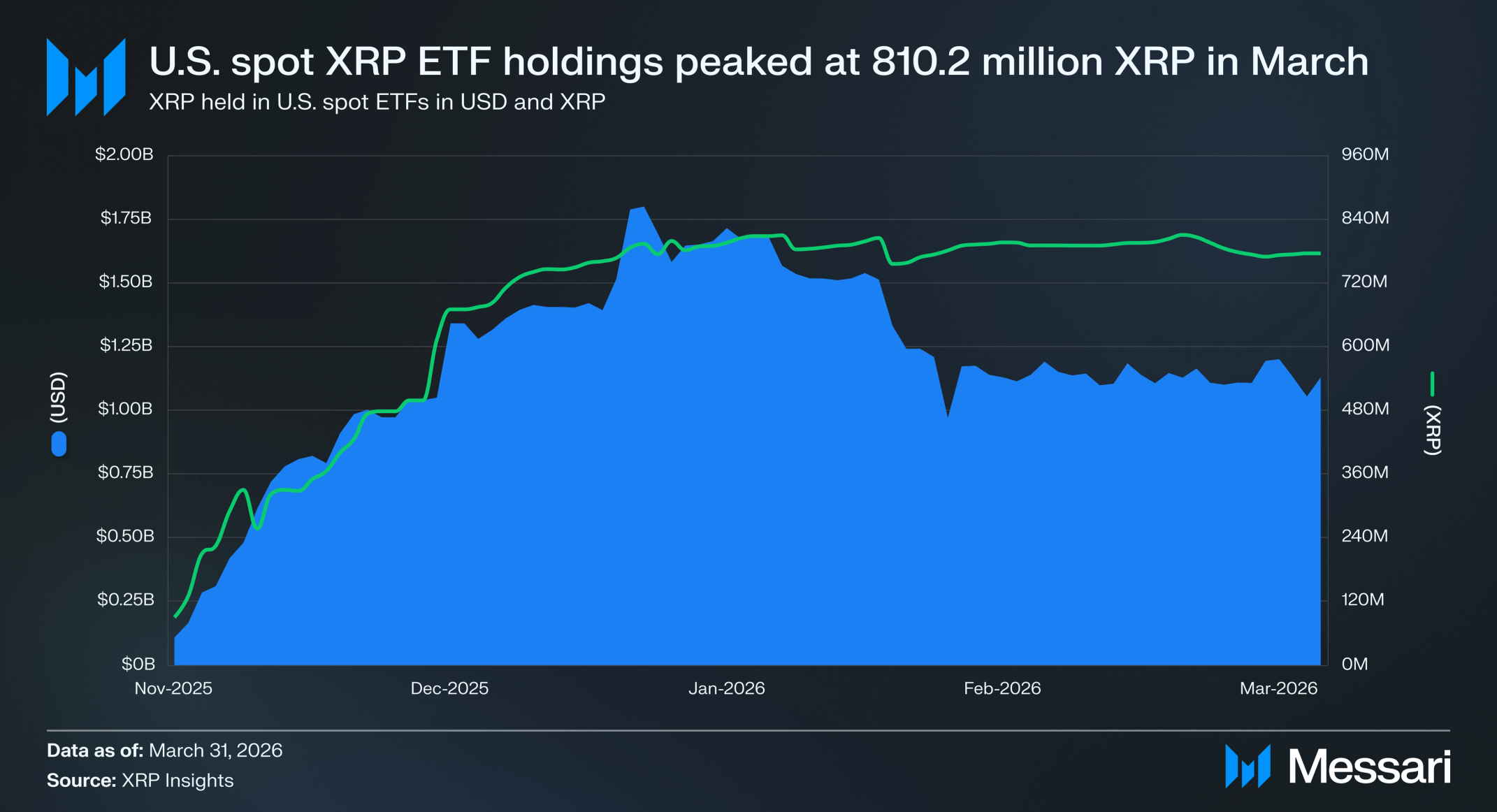
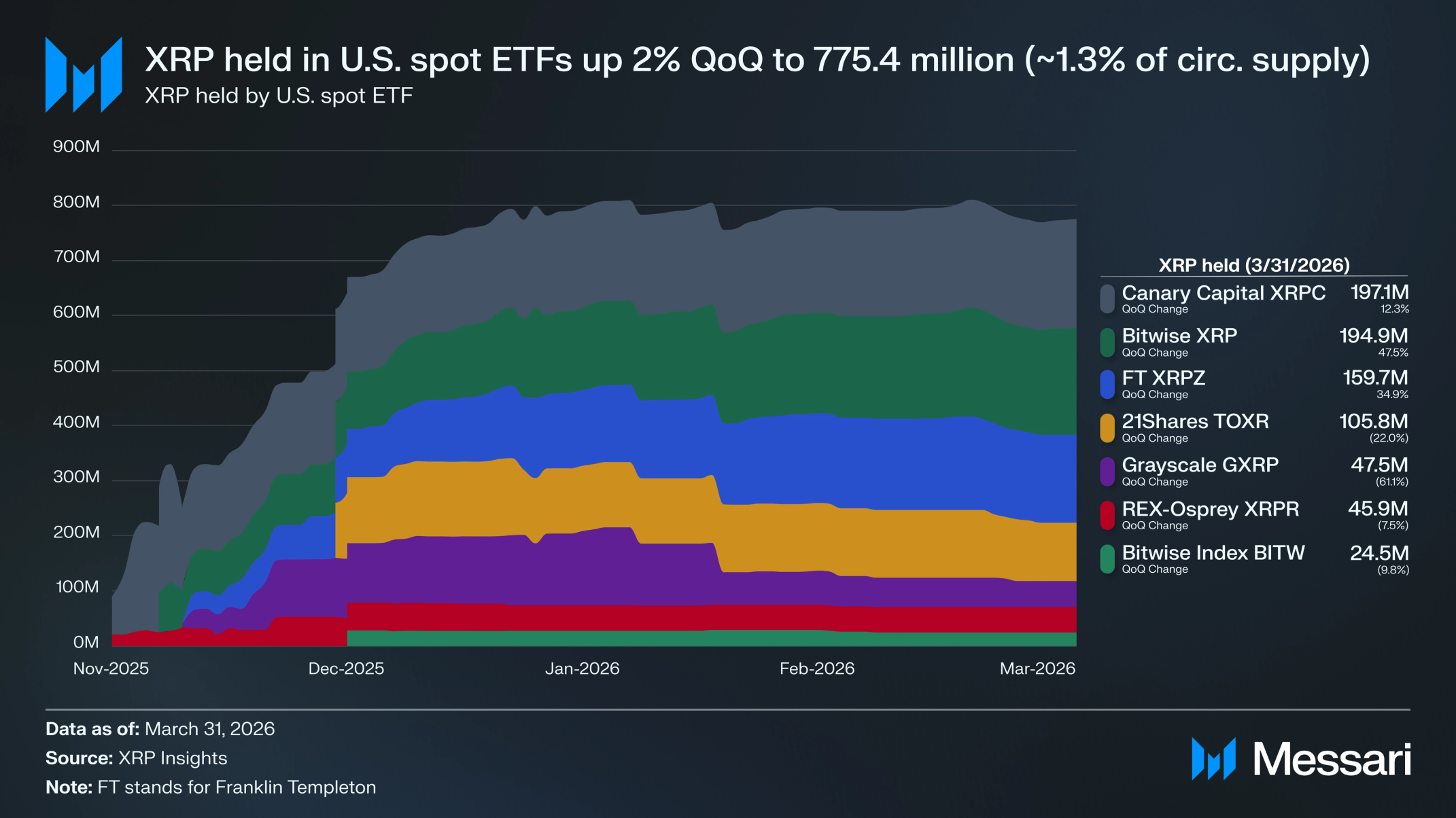
At the same time, U.S. spot XRP ETFs expanded their holdings to 775.4 million XRP. That represents about 1.26% of XRP’s circulating supply.
Key Points
- XRP utility grew in Q1 as daily XRPL transactions jumped 35.3% to 2.48 million and ETF holdings reached 775M XRP.
- XRPL’s tokenized real-world asset market surged 124% to $2.25 billion, ranking fourth among blockchain networks.
- Ripple’s RLUSD stablecoin expanded 45% to $340.3 million, becoming the largest stablecoin on XRPL.
- Messari says ETFs, RLUSD, and new XRPL features are driving institutional adoption and expanding XRP utility.
XRP Maintains Top Market Position Despite Quarterly Decline
Notably, XRP ended Q1 2026 as the fourth-largest cryptocurrency excluding stablecoins. Only Bitcoin, Ethereum, and BNB had larger market capitalizations.
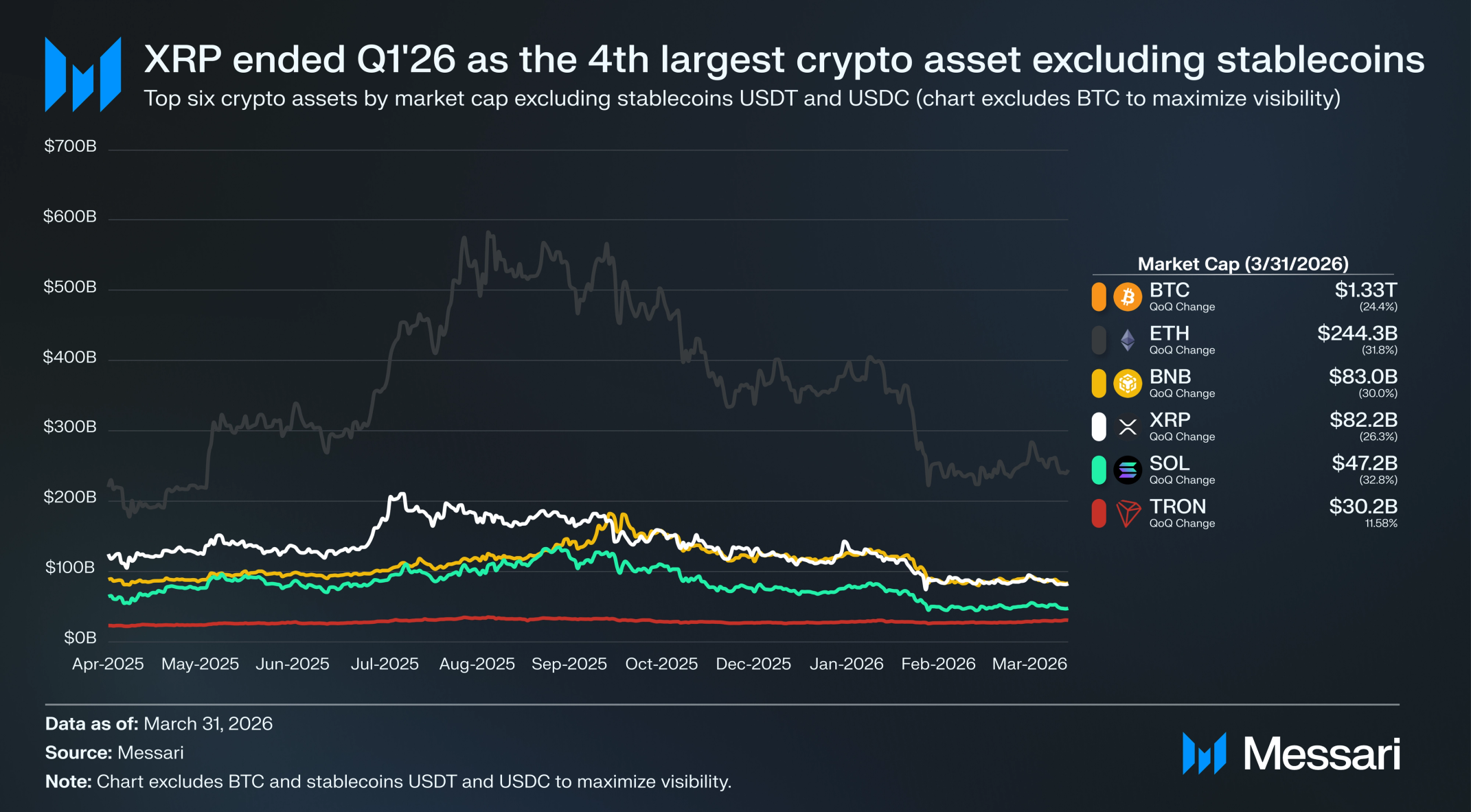
The asset closed the quarter with a market cap of $82.21 billion. That was down 26.3% from the previous quarter as the crypto market corrected amid the bear season.
Despite the decline, XRP still accounted for 3.9% of the total crypto market capitalization excluding stablecoins. It also remained the dominant asset among chains that use federated consensus. XRP represented 93.7% of the native asset market value in that category.
Messari noted that XRP’s role within the XRPL ecosystem continues to expand. One example is the network’s upcoming native lending protocol. The feature will allow users to lend and borrow XRP directly on-chain, adding another layer of utility for the asset.
Spot XRP ETFs Continue to Accumulate
Institutional demand remained strong through U.S. spot XRP ETFs. By the end of Q1, the funds held 775.4 million XRP, up 1.9% from the previous quarter. ETF holdings reached a peak of 810.2 million XRP on March 3, 2026.
The market remained relatively balanced among four major issuers. Canary Capital’s XRPC led with 197.1 million XRP under management. Bitwise followed closely with 194.9 million XRP.
Franklin Templeton’s XRPZ held 159.7 million XRP. Meanwhile, 21Shares’ TOXR managed 105.8 million XRP.
According to Messari, spot XRP ETFs became possible after the Ripple-SEC legal dispute was resolved in August 2025. The outcome removed regulatory uncertainty surrounding XRP’s status in secondary market trading.
RLUSD and XRPL Real-World Assets Post Explosive Growth
Meanwhile, tokenized real-world assets were among the fastest-growing sectors on XRPL.
The network’s RWA market capitalization jumped 124% quarter-over-quarter to a record $2.25 billion. This growth helped XRPL move into the top tier of blockchain networks supporting tokenized assets.
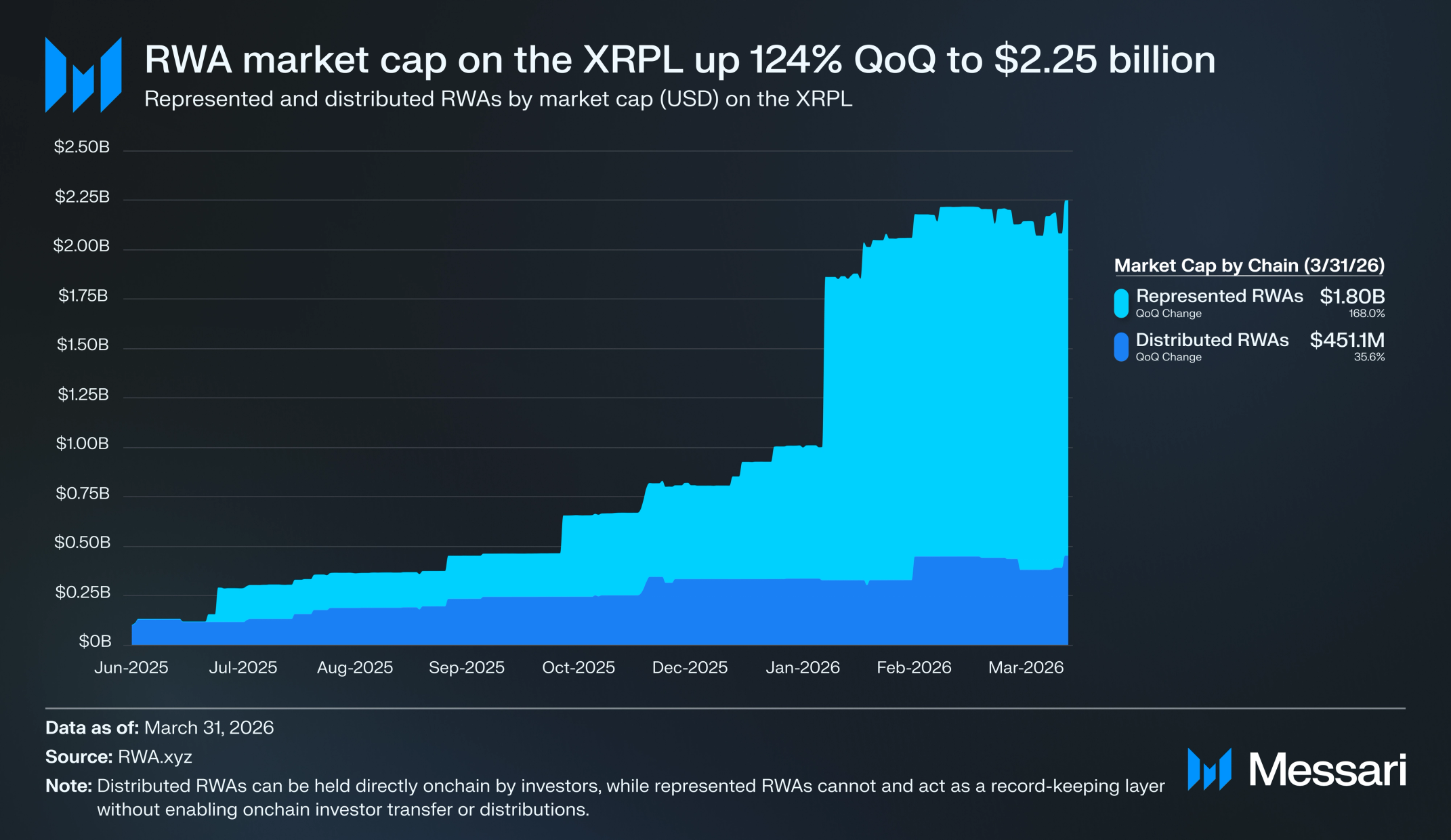
At the time of publication, Messari ranked XRPL as the fourth-largest blockchain network by RWA market capitalization.
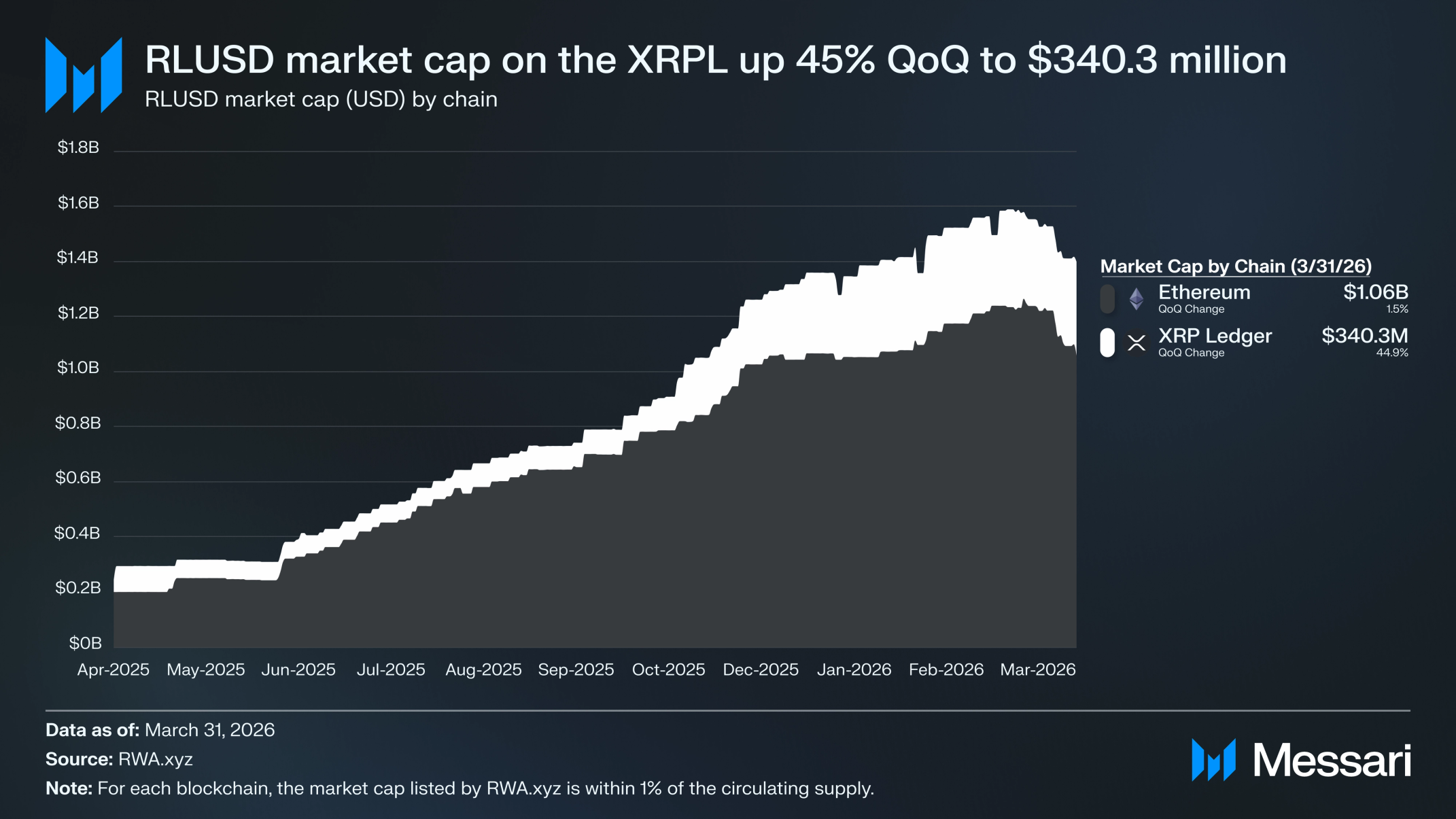
Ripple’s stablecoin, RLUSD, also expanded rapidly. Its market capitalization on XRPL grew 45% during the quarter to $340.3 million. That made it the largest stablecoin operating on the network.
Messari said new identity, compliance, and privacy-focused upgrades are helping attract institutional participants. As adoption increases, XRP benefits from several forms of network activity. These include transaction fees, reserve requirements, liquidity provisioning, and asset bridging.
Network Activity Climbs While Trading Volumes Cool
Network activity increased significantly during the quarter. Trading volumes, however, moved lower.
Average daily XRP spot trading volume fell 32% quarter-over-quarter to $2.69 billion. Average daily perpetual futures volume also dropped 28.6% to $2.99 billion.
The decline was broadly in line with XRP’s falling market capitalization during the quarter.
Despite weaker overall trading volumes, decentralized trading activity continued to grow. XRP spot volume on decentralized exchanges rose 9.4% quarter-over-quarter to $11.7 million.
The increase suggests that more trading activity is gradually shifting toward on-chain infrastructure.
XRP Supply Continues to Face Deflationary Pressure
The report also highlighted XRP’s built-in burn mechanism. On XRPL, transaction fees are permanently destroyed instead of being distributed to validators.
During Q1, transaction fees paid in XRP fell 12% to 50,750 XRP. Measured in dollars, fees declined 39.3% to $80,710.
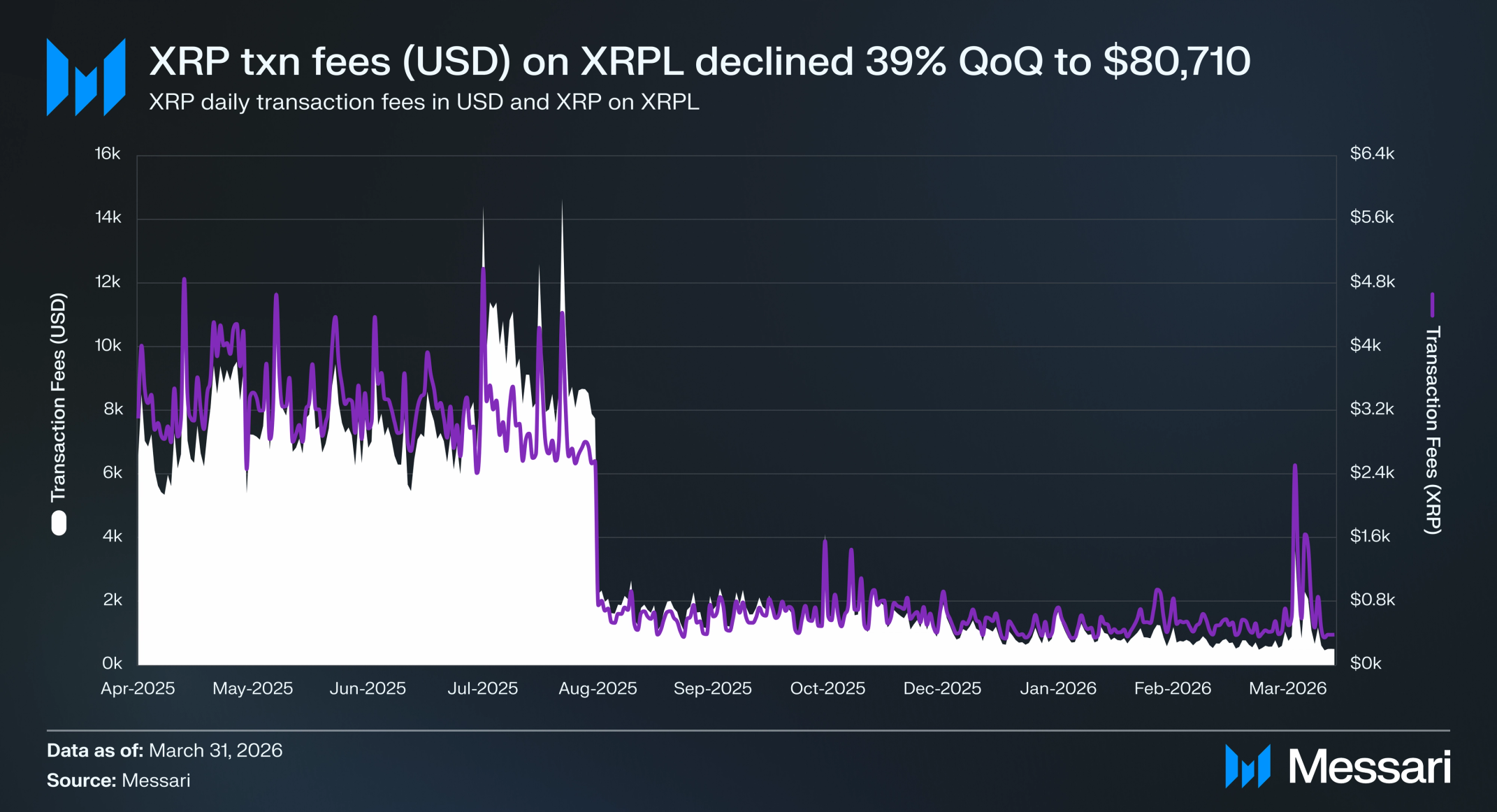
Since the network launched, approximately 14.3 million XRP has been burned through transaction fees.
The burn rate remains relatively small because XRPL transaction fees are extremely low. Even so, the mechanism continues to create gradual deflationary pressure on XRP’s fixed maximum supply of 100 billion tokens.
Institutional Adoption Remains a Key XRP Narrative
Messari’s latest report suggests that XRP’s growth story is becoming increasingly tied to institutional adoption rather than speculation alone.
Spot ETFs now hold more than three-quarters of a billion XRP. RLUSD continues to expand, while the XRPL’s tokenized asset market has surpassed $2 billion.
These developments are helping position XRPL as infrastructure for regulated financial applications.
As new lending, compliance, privacy, and tokenization features are introduced, Messari believes XRP’s utility within the ecosystem could continue to expand throughout 2026.
DisClamier: This content is informational and should not be considered financial advice. The views expressed in this article may include the author’s personal opinions and do not reflect The Crypto Basic opinion. Readers are encouraged to do thorough research before making any investment decisions. The Crypto Basic is not responsible for any financial losses.



Be the first to comment