



Traditional finance is increasingly embracing blockchain, and recent developments suggest tokenization is moving beyond experimentation. Against that backdrop, DTCC completed its first live tokenized securities trades.
In addition, JPMorgan tokenized QQQ, and over 50 firms joined the initiative ahead of October’s broader rollout.
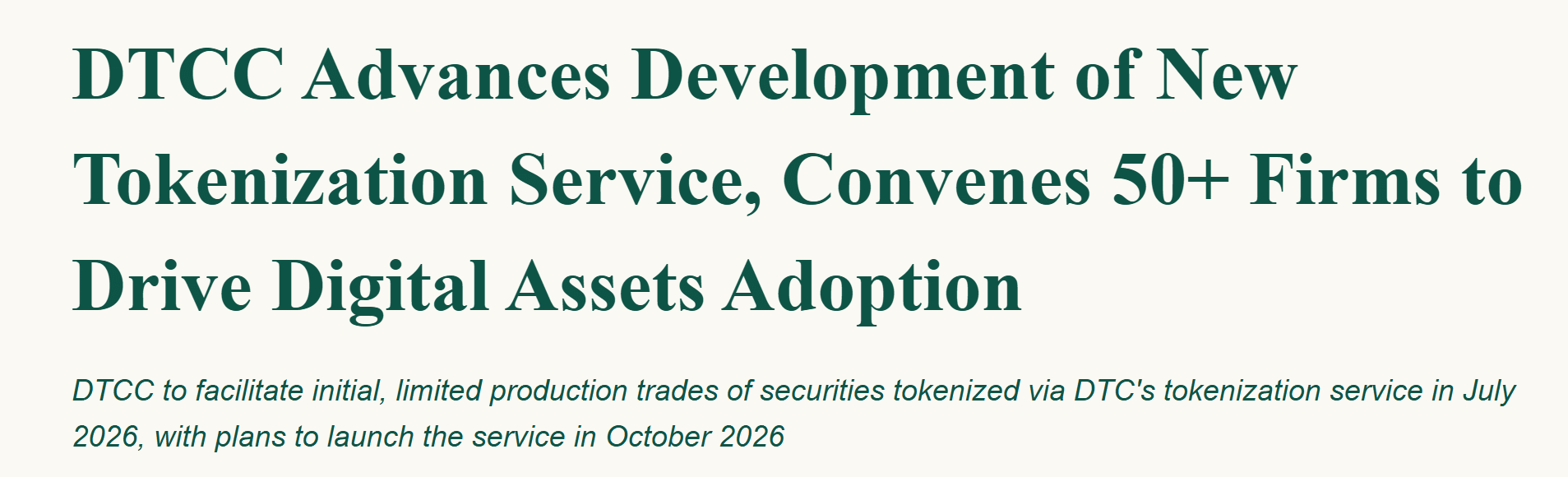
This progress highlights how blockchain can shorten settlement times, enable continuous trading, and expand fractional ownership. Meanwhile, investor preferences reflected a similar shift during H1 2026.
However, rather than focusing on investing directly in tokenized exposures to digital assets. Furthermore, investors have increasingly been favoring companies generating operational revenues.

This indicates that institutional capital continues to prioritize scalable infrastructure and regulated financial innovation versus speculative investments.
Traditional assets move on-chain
Crypto first changed how digital assets traded. Now it is beginning to change how traditional assets move across financial markets.
Investors already expect instant settlement and global access after years of using crypto. In a post on X, DTCC reinforced this, noting,
Tokenization continues to move from discussion to real-world market activity.
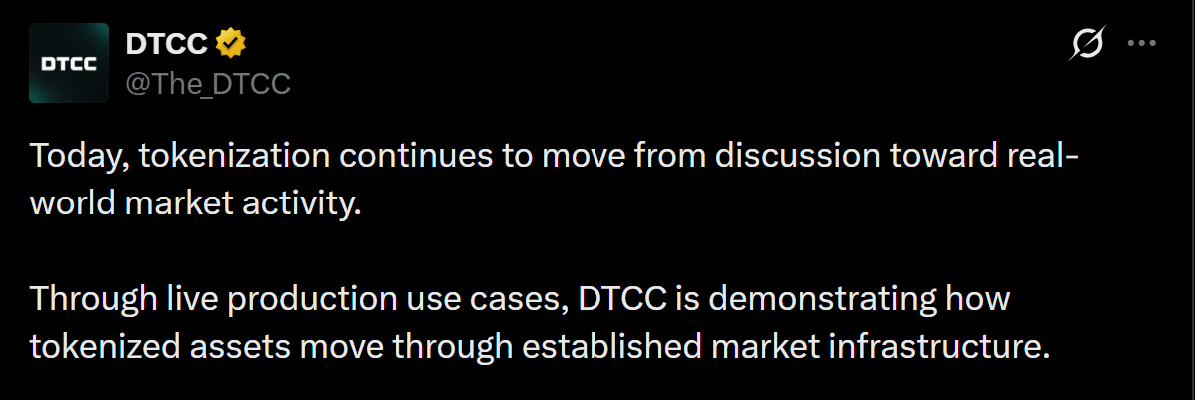
As a result, the focus now shifts to tokenized stocks, funds, and Treasuries. Earlier on, Robinhood listed more than 200 tokenized U.S. stocks and ETFs for European users, while BlackRock and Franklin Templeton expanded on-chain investment products.
Rather than changing the assets themselves, tokenization changes how investors access, trade, and use them after purchase. This shift suggests blockchain is becoming a shared financial network that connects traditional markets with digital finance instead of replacing either one.
Regulatory clarity builds confidence
As tokenized markets continue expanding, regulatory clarity is becoming the next factor shaping institutional participation.
The House Financial Services Committee’s 17th of July hearing on the CLARITY Act reflects continued efforts to establish clear rules for digital assets.
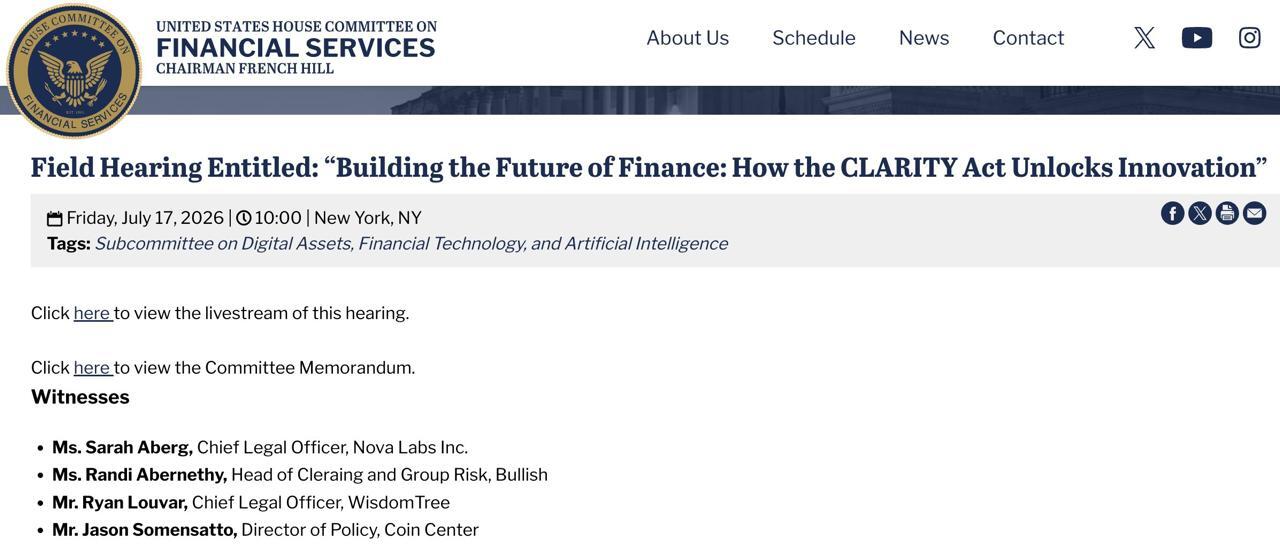
The hearing also brings together legal and industry leaders. This implies that policy discussions are increasingly focusing on practical implementation rather than broad adoption.
Listed crypto companies are likely to be among the first to benefit from the development of this regulatory framework. This is because they already operate within established compliance, custody, and reporting standards.
This helps explain why institutional capital continues favoring crypto-related equities over direct token exposure.
If the CLARITY Act progresses, increased regulatory clarity should help build investor confidence. Moreover, it may increase the flow of institutional capital to compliant crypto companies. This is prior to when the broader market for tokens becomes fully developed.
Final Summary
- Tokenization is expanding institutional access to blockchain-based financial markets.
- Clearer regulation could accelerate institutional adoption of tokenized financial markets.






Be the first to comment