

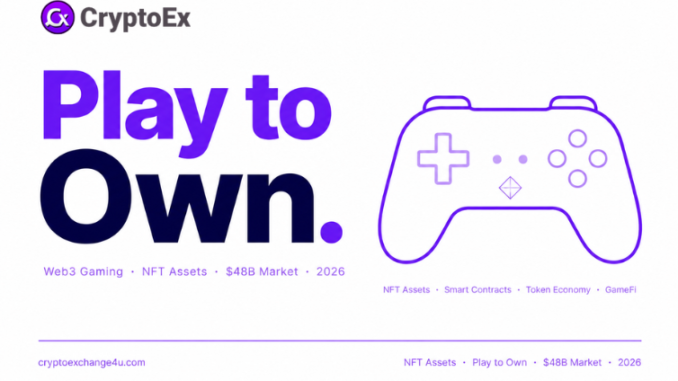

Traditional gaming taught an entire generation to pay to play. Web3 gaming is teaching the next one to play to own — and in some cases, to earn. That shift sounds simple, but it changes nearly everything about how games are built, monetized, and grown. In 2026, the Web3 gaming market is valued at approximately $48 billion and is projected to cross $108 billion by 2030. This isn’t a speculative trend anymore. It’s a maturing industry — one that serious entrepreneurs and blockchain investors are now moving into with purpose.
Here’s what you need to understand about Web3 game development before you start building.
What Makes a Game “Web3”
At its core, a Web3 game is a game where in-game assets — characters, skins, weapons, land, items — are owned by the player as NFTs stored in their wallet, not by the game developer on a centralized server. This single design decision changes the entire player relationship.
In a traditional game, if the servers shut down, your account and everything in it disappears. In a Web3 game, your assets are yours. You can sell them, trade them on third-party marketplaces, or carry them into compatible ecosystems. The game becomes an economy, not just an experience.
Blockchain also powers transparent rule enforcement through smart contracts. Token rewards, governance votes, and marketplace royalties are all governed by code rather than corporate policy — which builds trust with players who’ve been burned by centralized platforms changing the rules mid-game.
The Business Models That Actually Work
One of the biggest misconceptions about Web3 gaming is that play-to-earn is the only revenue model. In practice, the most sustainable Web3 games stack multiple revenue streams.
NFT primary sales remain the most immediate revenue source — selling initial in-game assets, characters, or land plots directly to players. These launches generate upfront capital and create early community investment in the game’s success.
Secondary marketplace royalties are where long-term revenue compounds. Every time a player sells an NFT on a secondary market, the developer earns a percentage — automatically, through the smart contract. Games with active trading economies can generate consistent revenue long after launch without additional development spend.
Battle passes and subscriptions translate a proven Web2 model into Web3. Players pay for seasonal access to exclusive content, with the NFT version of a battle pass actually tradeable — adding resale value that traditional passes never had.
Token economies and staking allow players to lock governance tokens and earn rewards, which deepens retention while providing an additional revenue layer. Tokens also fund community treasuries, enable governance participation, and give invested players a reason to stay engaged beyond the game itself.
Transaction fees from custom chains — more advanced studios launch their own blockchain or Layer-2 network, collecting a fee on every in-game transaction. At scale, this becomes a significant and highly passive revenue stream.
The Market Opportunity in 2026
The numbers make the case clearly. The global Web3 gaming market sits at roughly $48 billion in 2026, growing at a 22% CAGR. There are currently 3.2 billion gamers globally, and daily active wallets in blockchain gaming average 4.5 million — a user base that’s both growing and highly engaged, with blockchain gamers averaging 12 to 16 hours of play per week.
Play-to-earn games lead the game-type breakdown, holding 42% of total market share. Mobile drives 73% of blockchain game engagement. And 76% of blockchain gamers cite asset ownership as the primary reason they prefer Web3 games over traditional titles — meaning the core value proposition is landing with real users, not just crypto speculators.
What Builders Need to Get Right
Building a Web3 game that retains players is substantially harder than launching one that generates initial hype. The most common failure points are tokenomics that inflate too fast, NFT economies with no underlying demand, and onboarding flows so complex that non-crypto-native players abandon the game before they understand it.
The technical stack matters equally. Smart contract architecture for asset minting, wallet integration, marketplace infrastructure, cross-chain compatibility, and anti-cheat systems in decentralized environments all require specialized expertise. A traditional game studio can’t simply bolt blockchain onto an existing product — the economic layer needs to be designed in from the start.
That’s exactly where the right development partner makes the difference. At Gegosoft, we build Web3 games and GameFi platforms from the ground up — smart contracts, token economies, NFT systems, and gameplay mechanics all working together. If you’re exploring a Web3 game concept and want to understand what it would take to build it properly, start a consultation with our team and let’s map out the full architecture together.





Be the first to comment